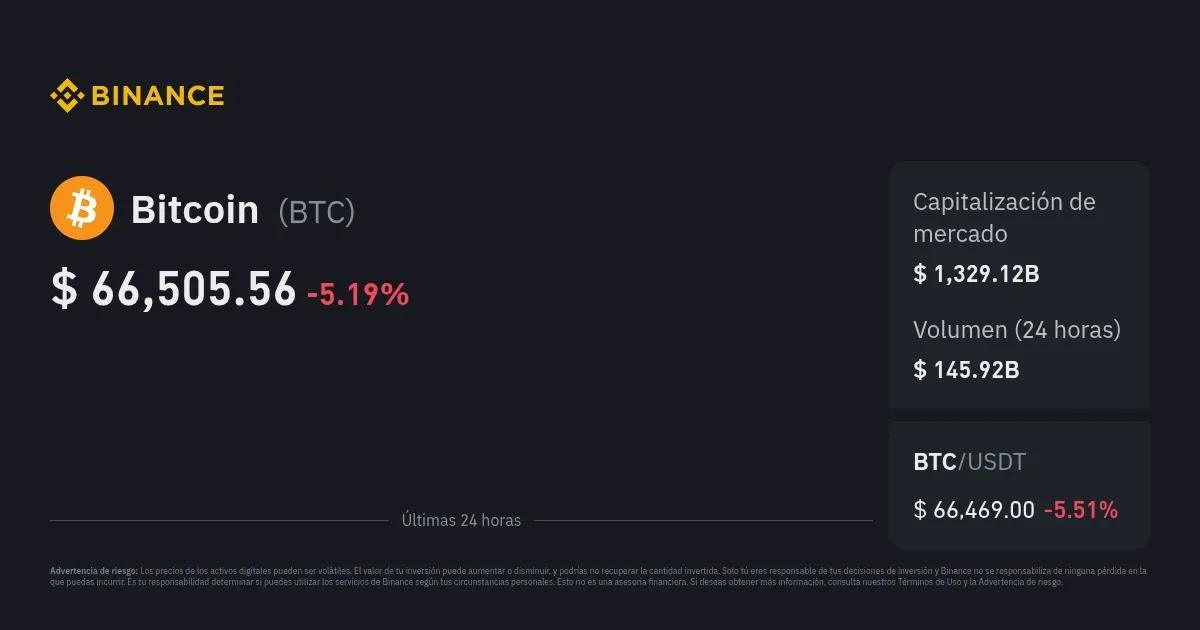
Bitcoin, the most recognized cryptocurrency worldwide, has generated intense debate about its viability as a financial asset and its role in the global economy. With a price that has fluctuated notably, reaching $65,866.09 USD in the last 24 hours, interest in this cryptocurrency shows no signs of slowing down. What does this trend imply for emerging economies like Argentina? This analysis seeks to explore the economic impact, the reasons behind Bitcoin's popularity, and the lessons that can be drawn from international experiences.
📈 Current Situation and Context
The phenomenon of Bitcoin has gained traction in the context of economic instability and high inflation affecting several countries. According to a report from the Central Bank of Argentina, annual inflation surpassed 100% in 2023, leading many citizens to seek refuge in alternative assets like cryptocurrencies. In this environment, Bitcoin has been seen not only as a speculative investment but also as a possible lifeline against the depreciation of the Argentine peso. Additionally, the trading volume of Bitcoin has reached $146,202,451,362 in the last 24 hours, reflecting growing interest and participation from the global market.
🔍 Analysis of Causes and Factors
The mass adoption of Bitcoin can be attributed to multiple factors. First, the recurring economic crisis in Argentina has led to widespread distrust of the traditional banking system. Historically, during crisis periods such as the hyperinflation of 1989, Argentines sought alternatives to protect their capital. Second, the technological boom and accessibility to the internet have allowed more people to enter the world of cryptocurrencies. According to data from the Ministry of Economy, the number of digital wallets in Argentina has grown by 300% since 2020. Lastly, the relatively flexible regulatory framework regarding cryptocurrencies has also facilitated their adoption.
🌍 International Comparison and Global Impact
The Argentine case is not unique; other countries have experienced similar phenomena with Bitcoin. In Venezuela, for example, hyperinflation led many citizens to adopt cryptocurrencies as a means for daily transactions. According to a study by the Inter-American Development Bank (IDB), the use of cryptocurrencies in Venezuela increased by 500% between 2018 and 2021 due to the economic crisis. On the other hand, in countries like El Salvador, where Bitcoin was declared legal tender in 2021, both significant benefits and challenges have been observed. While some sectors celebrate the financial inclusion offered by this measure, others warn about the risks associated with the inherent volatility of the asset.
⚖️ Implications and Consequences
The implications of the widespread use of Bitcoin are profound for Argentina and other emerging countries. Economically, it could represent an alternative way to preserve value against ineffective monetary policies. However, it also poses significant risks; for example, the lack of adequate regulation can lead to fraud or massive losses for less experienced investors. Furthermore, heavy use of cryptocurrencies can hinder the government's ability to implement effective fiscal policies. A recent study indicates that approximately 10% of Argentina's GDP may be beyond fiscal control due to the growing use of cryptocurrencies.
🚀 Strategic Perspective and Future Outlook
Looking ahead, it is essential for Argentina to develop a clear strategy on how to regulate and encourage the responsible use of Bitcoin and other cryptocurrencies. A possible recommendation is to establish a regulatory framework that promotes both technological innovation and consumer protection. Additionally, consideration should be given to how to use this technology to improve financial inclusion in vulnerable sectors. International experience suggests that well-designed regulation can mitigate risks without stifling opportunities; for example, countries like Switzerland have managed to create a favorable ecosystem for fintechs while maintaining high regulatory standards.
In conclusion, while Bitcoin presents significant opportunities to address current economic challenges in Argentina and other emerging countries, it is crucial to address its inherent risks through appropriate regulation and educational strategies that enable citizens to navigate this new financial landscape with confidence.
Comments