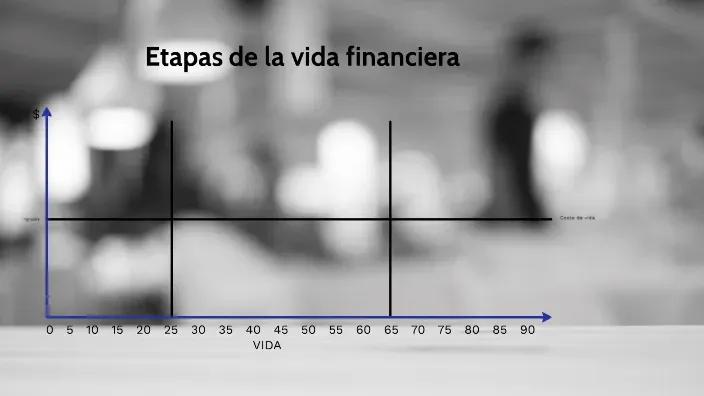
Financial Stages
Age and financial life stage must be taken into account when investing. The selection of a portfolio of financial assets should consider risks, liquidity, and potential returns, in accordance with the stages and profiles of individuals:
Let's look at some ideas for each life stage:
1- Youth, single or recently graduated. (Ages 20 to 30)
Young people need maximum growth of their small capital, they have time to make mistakes and succeed, they have labor or professional income, and they can accept greater risk in their investments in exchange for higher returns. Some investments at this stage could be:
40% in US Nasdaq index ETF (QQQ)
30% of your Capital or income in a personal business or startup.
10% in Bitcoin.
10% shares of fintech & ecommerce companies.
10% to start a Private Retirement Plan.
2- Own family, newlyweds, children arrive, stable partner, and greater responsibility. (Ages 30 to 45).
Expenses and responsibilities increase with the arrival of children or a marriage, requiring greater financial prudence. One must think about protecting financial assets and planning:
50% in US S&P 500 ETF
40% in Fixed Income Instruments or Bonds.
10% Gold & Bitcoin
(*) Start a Life Insurance for the economic protection of the family.
3- The Contemporary Adult: (Ages 45 to 55)
Between 45 and 55 years, many people achieve financial fulfillment; it is a stage that combines experience and capital. Some need to finance their children's higher education, and in other cases, they cease to be an economic burden on their parents.
It is the phase leading up to the retirement stage, where it is essential to better diversify assets.
40% Real Estate Assets or REITs
30% US Dow Jones ETF ($DIA)
20% High-quality Bonds (Investment Grade)
10% Gold and Bitcoin
(*) Make special contributions to the Retirement Fund and keep your life insurance active.
4- Elderly, Retirement & Withdrawal (From age 60 onwards).
People inevitably reduce energy, job competitiveness, and income begins to disappear. One must prioritize capital preservation and passive income.
40% Investment Grade Bonds and preferred stocks.
30% Real estate
20% Stocks that pay high dividends or "Blue Chips."
10% Cash/Liquidity (Emergencies)
A good Financial Advisor can help you successfully navigate each stage to make the best investment decisions.
Roman Eduardo Gutierrez
CEO Money Smart Wealth Management
@GutierrezRom

Comments