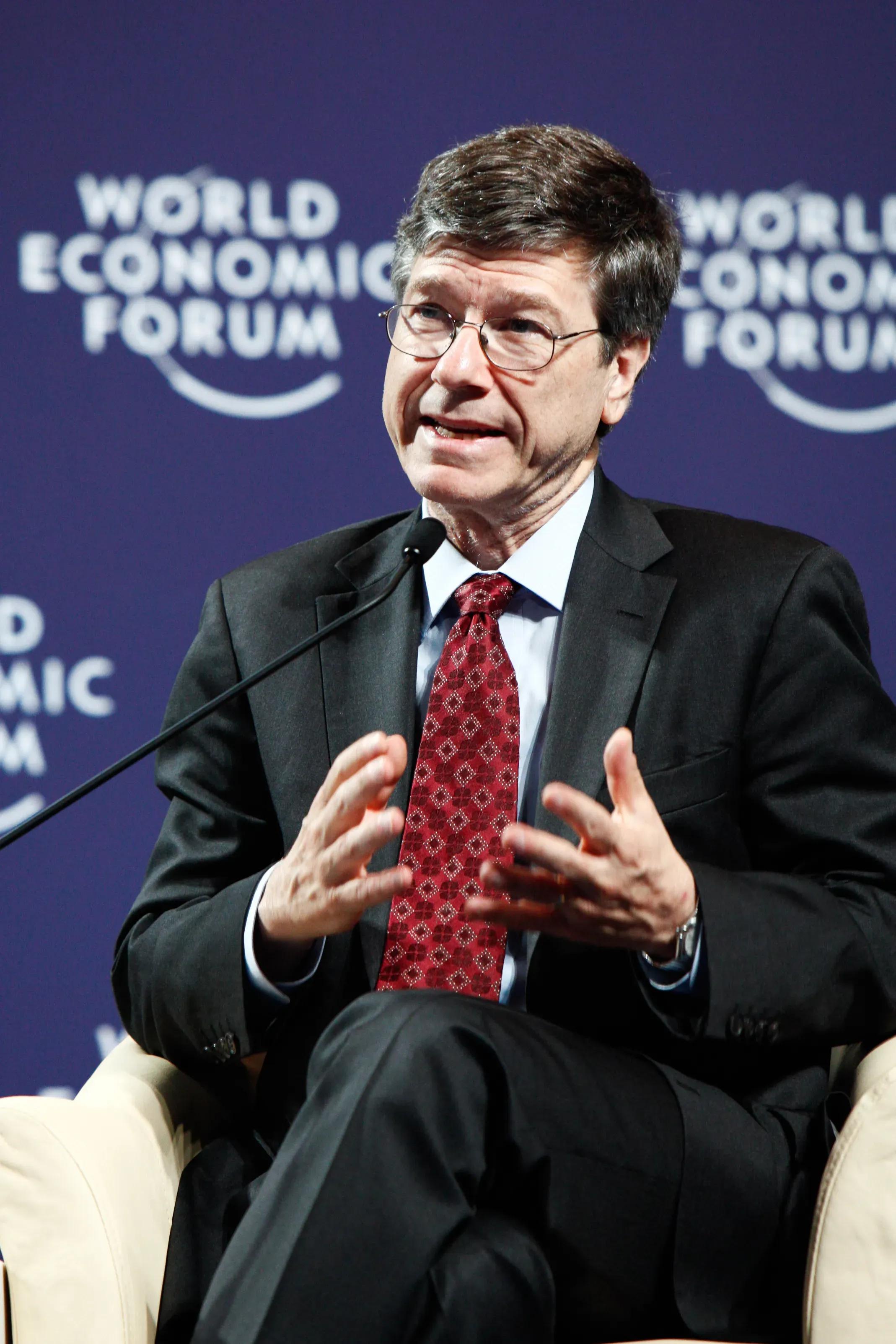
Jeffrey Sachs, an economist and professor at Columbia University, has been an influential figure in the debate on sustainable development and economic policies since the 1990s. His pragmatic approach and insistence on the interconnection between economy, environment, and politics have sparked both admiration and criticism. In a global context marked by climate crisis, economic inequality, and geopolitical tensions, his work is becoming increasingly relevant. This analysis examines Sachs' contributions, his impact on public policies, and the implications of his ideas in the current landscape.
🌍 Current Situation and Context
At a time when climate change has become an existential crisis, Sachs' work gains new relevance. According to the Intergovernmental Panel on Climate Change (IPCC), extreme weather events have increased by 50% since 1980, underscoring the urgency of adopting sustainable policies. Economically, the COVID-19 pandemic exacerbated existing inequalities; the World Bank reported that approximately 97 million people fell into extreme poverty in 2020. These figures reveal a context where the solutions proposed by Sachs are more pertinent than ever.
🔍 Analysis of Causes and Factors
Sachs' ideas center on the premise that sustainable development cannot be achieved without simultaneously addressing economic and environmental issues. Historically, his approach has been influenced by his work in countries like Bolivia and Russia during their economic transitions. In his book "The End of Poverty," he argues that investing in education and health is fundamental to breaking cycles of poverty. However, his critics point out that the proposed measures often require financing that many countries cannot sustain. This dilemma raises crucial questions about how to balance economic growth and sustainability.
🌐 International Comparison and Global Impact
Sachs' comprehensive approach has found resonance in various international policies. In Sweden, for instance, a national strategy has been implemented to achieve carbon neutrality by 2045, supported by massive investments in renewable energy; this contrasts with the more fragmented approach adopted by many Latin American countries. In Costa Rica, where approximately $1.5 billion has been allocated for environmental conservation since 2011, deforestation has been reduced to less than 10%, demonstrating that it is possible to integrate economic development with environmental sustainability. These examples highlight how Sachs' recommendations can be successfully implemented if there is political will.
⚖️ Implications and Consequences
The influence of Jeffrey Sachs extends beyond the academic realm; his ideas have shaped key public policies. The adoption of the concept of "sustainable development" has led to initiatives such as the Sustainable Development Goals (SDGs) established by the UN in 2015. However, these initiatives face significant challenges: according to a report from the United Nations Development Programme (UNDP), only 40% of countries are making adequate progress toward the SDGs. This raises concerns about whether theoretical recommendations are effectively translating into practical actions.
🔮 Strategic Perspective and Future Outlook
Looking ahead, it is imperative to consider how to implement Sachs' ideas within the current global context. The increasing pressure on natural resources demands a radical transformation in our economies toward more circular and sustainable models. International alliances will be crucial; however, current geopolitical conflicts complicate this type of cooperation. As we face challenges like global inflation —which reached rates exceeding 8% in several developed economies— it is essential for political leaders to make informed decisions based on concrete data to ensure a sustainable future.
Jeffrey Sachs' work and critical thinking remain fundamental to addressing the complex issues of the 21st century. The path to truly sustainable development will require not only economic innovation but also long-term political commitment to inclusive and effective strategies.
Comments