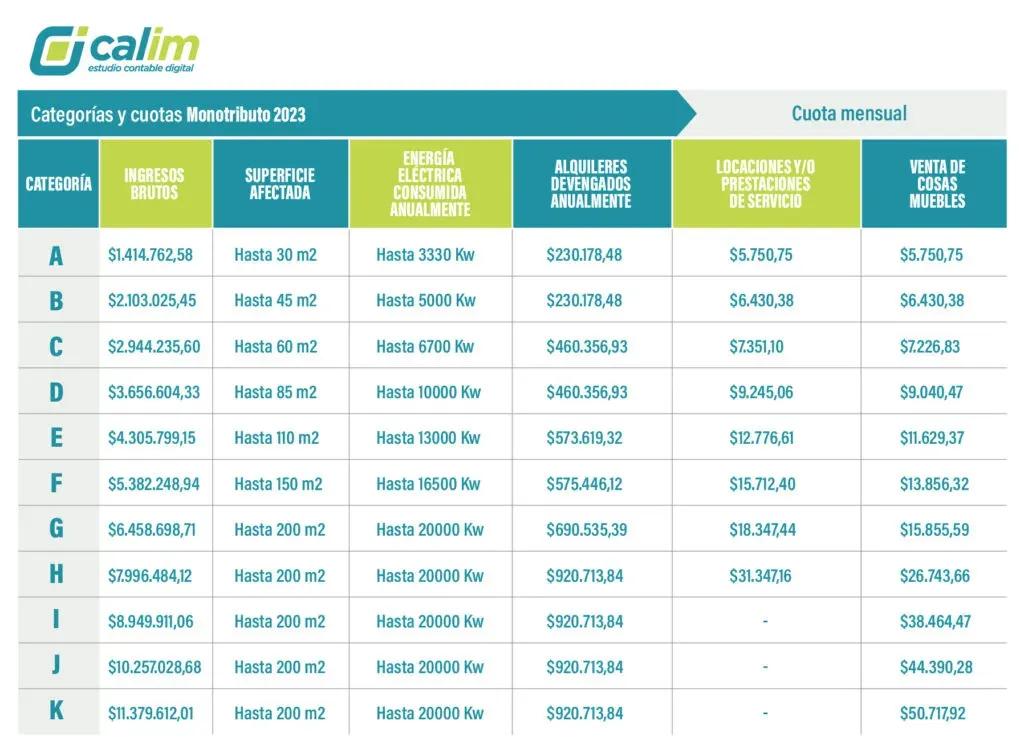
The Monotributo regime in Argentina has been the subject of debate in the current context of economic crisis. This system, which simplifies the tax burden for small taxpayers, is crucial to understanding how fiscal policies affect entrepreneurs and informal workers. The central question is: is Monotributo a relief or a fiscal trap in a country where inflation and informality are rampant? Its relevance is heightened by the growing number of people opting for this regime due to the lack of formal employment and the high costs associated with the traditional economy.
📊 Current situation and context
According to data from the Ministry of Economy, in 2023, approximately 4 million Argentines were registered in the Monotributo, which represents a 15% increase compared to the previous year. This growth is largely due to the economic crisis that has led many to seek more flexible work alternatives. The annual inflation reached 120%, which has eroded purchasing power and pushed more people towards informality. In turn, the revenues from Monotributo have increased, but this does not necessarily indicate an improvement in the overall economic situation; rather, it reflects a forced adaptation to the adverse conditions of the labor market.
🔍 Analysis of causes and factors
The expansion of the Monotributo regime can be attributed to several interrelated factors. First, the economic crisis has led to a significant increase in unemployment, which reached rates above 10% according to INDEC. This has led many workers to choose independent activities for survival. Furthermore, the complexity and costs associated with other tax regimes have contributed to Monotributo being presented as an attractive option.
Historically, the system was implemented in 2003 as part of an effort to formalize the economy and increase tax collection. However, over time, it has faced criticism for its ineffectiveness in capturing all informal workers and for the difficulties taxpayers face in meeting their tax obligations. The lack of tax education and institutional support has also limited its effectiveness.
🌍 International comparison and global impact
Compared to other Latin American countries, Argentina presents a less efficient tax regime for small taxpayers. For example, in Chile, the simplified system for microenterprises allows for greater expense deductions and clearer tax incentives that promote formalization. According to data from the World Bank, Chile manages to capture about 80% of its informal workers through systems similar to Monotributo.
Another relevant case is Brazil, where microenterprises also enjoy significant tax benefits under its Simples Nacional system. This system not only offers tax reductions but also access to credit facilitated by state policies that promote entrepreneurship. These comparisons highlight that Argentina still has a long way to go in terms of tax optimization and support for the informal sector.
⚖️ Implications and consequences
The implications of the Monotributo regime are profound both socially and economically. Firstly, while it provides some fiscal relief to small taxpayers, it may also perpetuate informality by not offering sufficient incentives for transitioning to more formal regimes. This negatively affects public finances; according to estimates from the Center for Economic Studies (CEE), around $500 million is lost annually due to tax evasion associated with informal activities.
Additionally, there is a latent risk regarding how this regime may affect the competitive capacity of formal enterprises compared to those operating under the Monotributo umbrella without complying with all labor and fiscal regulations. The imbalance generated may discourage the formal investments necessary for sustainable growth.
📈 Strategic perspective and future outlook
Looking to the future, it is imperative to rethink the Monotributo regime within a broader fiscal strategy that considers both incentives and effective controls. The possibility of implementing reforms based on successful international models could help not only to increase revenue but also to foster a stronger tax culture among citizens.
The challenge lies in finding a balance between facilitating informal economic activity and ensuring that everyone contributes equitably to national development. Opportunities include improving financial education for entrepreneurs and implementing public policies that enable greater access to credit and training.
In conclusion, as Argentina navigates through uncertain times marked by inflation and labor precariousness, it is essential to critically assess whether Monotributo remains an adequate tool or whether it needs to be radically transformed to meet current challenges. Without strong institutions or trust between citizens and their fiscal policies, it will be difficult to achieve true sustainable economic growth in the country.
Comments