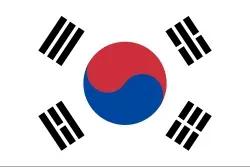
The Republic of Korea, commonly known as South Korea, has emerged as a key player in the global economy. With sustained growth over the past few decades, its development model has been the subject of international study and admiration. This analysis focuses on the central question: how has South Korea managed to maintain its economic stability, and what implications does this have for the rest of the world? In a context marked by global economic uncertainty, it is crucial to understand the factors that have allowed this country to not only survive but thrive.
📈 Current Landscape
South Korea has shown remarkable growth, with a 3.1% increase in its Gross Domestic Product (GDP) in 2022, according to the Bank of Korea. This growth has been driven by the technology sector, where companies like Samsung and LG dominate the global market. However, the country faces significant challenges, such as a youth unemployment rate reaching 9.4%, well above the national average. Additionally, inflation stood at 5.6% in 2022, prompting the government to implement stricter monetary policies. These figures indicate a mixed outlook: while some sectors are thriving, others face serious obstacles.
🌍 International Comparison
When comparing South Korea to other Asian countries like Japan and China, important lessons emerge. Japan has experienced economic stagnation for over two decades, while China faces a slowdown due to its zero COVID-19 policy and trade tensions with the United States. In contrast, South Korea has diversified its economy and maintained strong trade relations with multiple international partners. For example, while Japan's GDP growth was only 1.7% in 2022, South Korea kept a superior pace due to its focus on technological innovation.
⚖️ Implications
The implications of South Korea's economic strategy are profound both nationally and internationally. Investment in research and development (R&D) represents approximately 4.5% of the South Korean GDP, far exceeding the global average of 1.7%. This not only fosters local innovation but also attracts foreign investment. However, this dependence on specific sectors can also be risky; for example, any significant slowdown in the technology sector could have dominating effects across the economy.
🔮 Strategic Perspective and Future Outlook
Looking ahead, South Korea faces both risks and opportunities. The transition to a more sustainable economy is crucial; currently, only 11% of its energy comes from renewable sources. This contrasts with countries like Germany, where this figure exceeds 40%. The pressure to adopt clean technologies may present an opportunity to further diversify its economy and reduce dependence on imported fossil fuels.
In conclusion, while South Korea continues to be a model for its ability to adapt and grow in challenging times, it is essential to maintain constant vigilance over global economic changes and internal dynamics that could affect its future stability.
Comments