The paradox of Beijing: more income, less spending
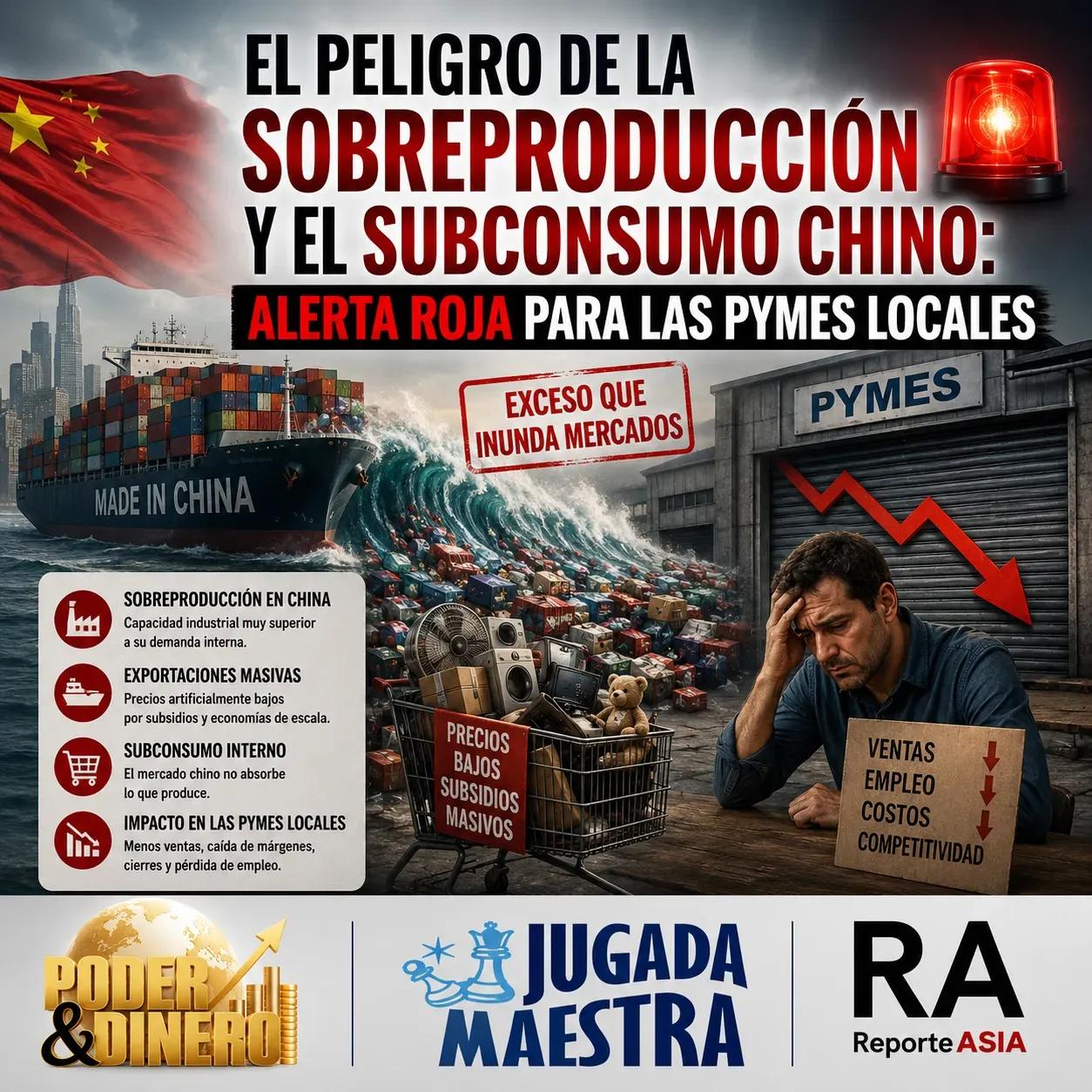
Despite the Chinese government's attempts to turn consumption into a driver of growth, reality is moving in the opposite direction. During the first half of 2026, disposable income per capita increased by 4.2% year-on-year in real terms, according to the National Bureau of Statistics. Consumer spending, however, lagged severely, with a real increase of only 2.7%.
Before the pandemic, Chinese families allocated between 68% and 69% of their income to consumption. Today, that proportion has fallen below 65%. Not even official pressure on banks to provide soft loans for consumption has been able to reverse this trend.
X-ray of savings: the defensive strength of households
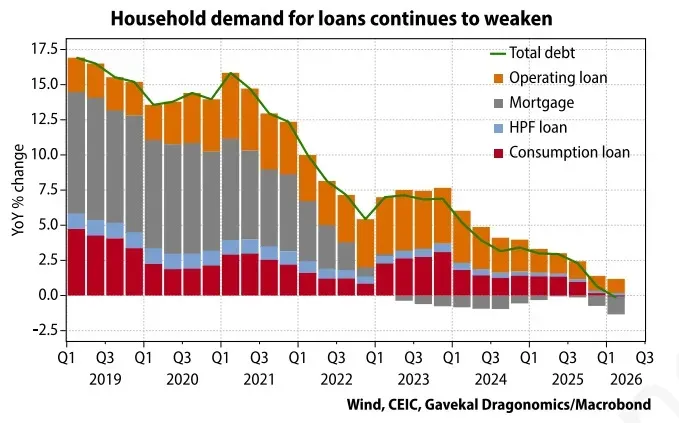
A recent report from the consulting firm Gavekal Dragonomics, authored by analyst Xiaoxi Zhang, helps understand the logic behind this behavior. After the real estate crash of 2021, which destroyed a huge portion of household wealth, Chinese households systematically focused on rebuilding their balance sheets: they save around 35% of their income, reduced their debt to the point where total household debt contracted in absolute terms by early 2026, and directed their surpluses into ultra-conservative assets.
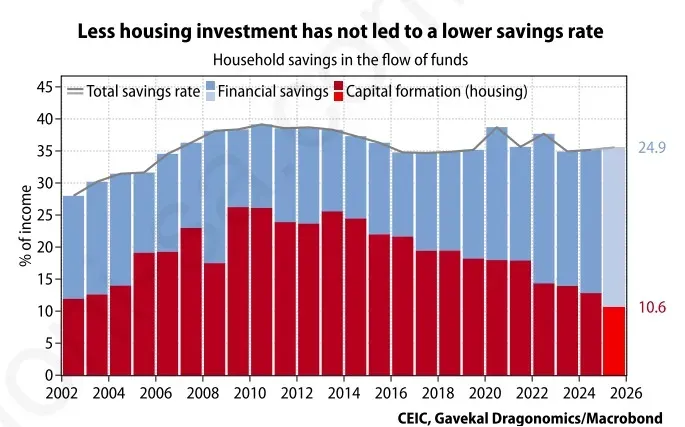
Cash and bank deposits now account for nearly 40% of household assets and have displaced housing as the main component of family wealth, a historical shift for a society that for two decades bet everything on real estate.
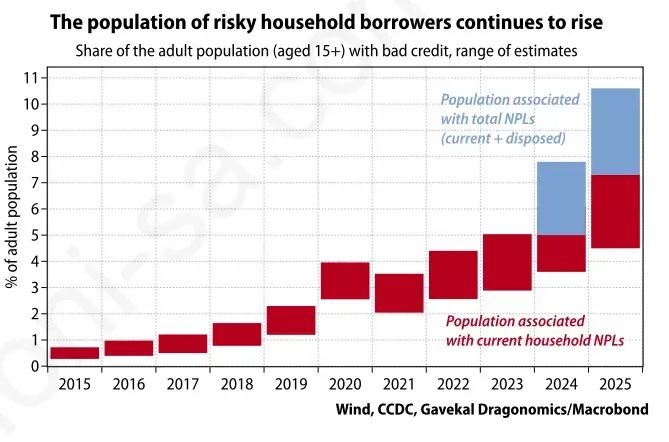
The underlying explanation, Gavekal points out, is the labor market. After years of weak job creation and wage deceleration, families are accumulating a cushion of liquid assets for emergencies instead of consuming or investing. It is not irrationality: it is precautionary savings in the face of a future they perceive as uncertain. The most alarming data from the report is the deterioration at the base of the pyramid: the delinquency rate of household loans rose to 2.15% in 2025, and it is estimated that between 7% and 11% of the adult Chinese population are burdened with unpaid debts.
While the net worth of households grew by 7.3% in 2025—driven by the stock market rally that mainly benefits the wealthiest 10%, who concentrate nearly 60% of financial assets—the number of families in difficulty continues to rise. The new Chinese wealth is more unequal than that of the real estate boom.
Exporting the crisis: the tide that is coming
With an internal market that does not absorb what it produces and without genuinely profitable domestic investment destinations, China has one escape valve left: exporting. While domestic consumption stagnates, June 2026 exports surged by 27% year-on-year to a record $412 billion, the fastest pace since 2021, with a monthly trade surplus of $125.6 billion.
In the first half of the year, shipments accumulated a rise of 17.6%. China supplies the world with semiconductors and electric vehicles, as well as the most basic consumer goods, with an industry supported by subsidies and state credit.
The impact on the suburbs: silent deindustrialization
This is where the core of the warning lies. In a context of deregulation and economic opening, the industrial fabric of Latin American suburbs does not compete against Chinese companies: it competes against Beijing's macroeconomic need to liquidate its surpluses. The massive arrival of Asian manufactures at discounted prices destroys the margins of small and medium local businesses, which are unable to compete with the costs of a hypersubsidized economy.
And Gavekal's own report suggests that this will not be corrected soon: Chinese households could return to borrowing and consuming—their payment capacity allows it—but they do not want to do so while employment does not rebound. Chinese underconsumption is not cyclical; it is structural.
The combination of a desperate China looking to offload stock and a defenseless local policy is lethal. If trade defense tools are not wisely calibrated, the result will not be greater efficiency but the systematic closure of workshops and factories, with thousands of industrial jobs destroyed.
China's macroeconomics has been warning for some time now, while more SMEs in the region risk paying the price.

Comments