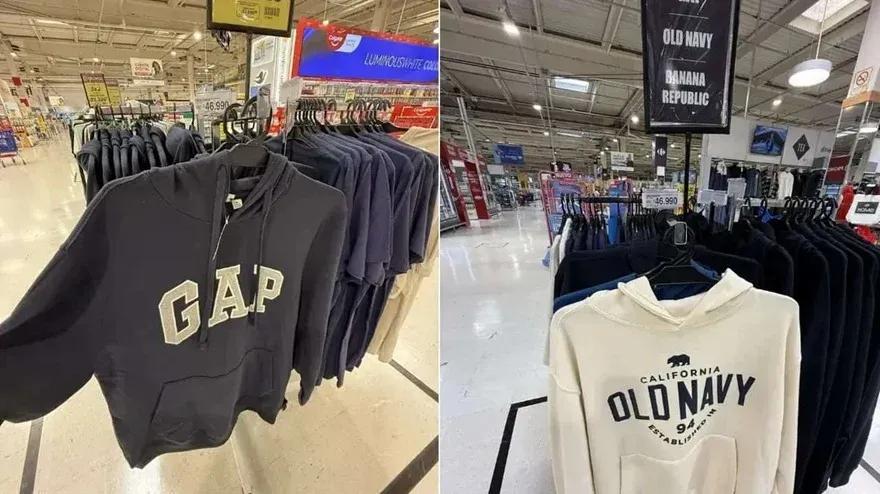
The recent announcement by Carrefour Argentina regarding the incorporation of clothing brands such as GAP and Banana Republic into its offering raises questions about the retail giant's commercial strategy in a challenging economic context. The central question is: can this diversification help stabilize its position in an increasingly competitive and volatile market? This analysis aims to explore the economic and social implications of this decision, considering the current context of the country and comparing it with international precedents that may offer valuable lessons.
📊 Current Landscape
According to recent data, Carrefour has decided to implement a pilot test to sell clothing from recognized brands, representing a significant strategic shift in its business model. This move comes at a time when the retail sector faces considerable challenges, including inflation that reached 124% annually, according to INDEC, affecting the purchasing power of consumers. In this context, the company seeks not only to diversify its offering but also to attract a broader audience looking for accessible alternatives amid the economic crisis. However, such strategies are not new; other chains have attempted to diversify without necessarily achieving the expected results.
🔍 Analysis of Causes and Factors
Carrefour's decision can be interpreted as a response to multiple structural factors in the Argentine economy. First, the deterioration of purchasing power has led consumers to seek more economical options. Additionally, the lack of confidence in the economic system has resulted in a decrease in impulsive purchases and a rise in rational consumption. According to a Central Bank study, private consumption has contracted by 8% since 2022, indicating an urgent need for retailers to adapt. However, the question persists: will this strategy be sufficient to reverse the negative trend?
🌍 International Comparison and Global Impact
Looking to other countries, we find relevant examples that can serve as a reference. In Chile, supermarket chains have successfully incorporated non-food product lines; for example, Walmart Chile reported a 15% increase in total sales after diversifying its offering in 2020. In contrast, in Brazil, companies like Grupo Pão de Açúcar attempted similar strategies but faced criticism due to inconsistent approaches and a lack of adaptation to the local market. These precedents highlight the importance not only of diversifying but also of deeply understanding the sociocultural and economic context before implementing significant changes.
⚖️ Implications and Consequences
The strategy adopted by Carrefour has significant implications for the Argentine market. On one hand, it could help revitalize sales and increase foot traffic in its physical stores by offering attractive options for consumers looking for competitive prices. However, it also poses risks associated with public perception; if the products do not meet expectations or are perceived as "inaccessible imported goods" due to the high cost of the blue dollar (currently around 400% above the official rate), this could generate distrust among customers.
Moreover, this move could have repercussions for other local retailers who must adapt quickly or risk losing market share to a competitor that seems to be seeking new opportunities for growth.
🔮 Strategic Perspective and Future Outlook
Strategically, Carrefour must consider how this new line can align with its overall proposition and how it can effectively communicate these changes to its consumers. While there are opportunities to capture new market segments, there are also risks associated with product execution and acceptance. The key will be to closely monitor consumer reactions and adjust its approach as necessary.
In the long term, this strategy could provide valuable lessons on how companies can navigate uncertain economic times through continuous innovation and adaptation. However, it is crucial to remember that "without strong institutions, there is no trust; without trust, there is no investment," therefore, Carrefour must ensure that it maintains high standards in both quality and public perception if it wishes to capitalize on this new direction.
In conclusion, while Carrefour attempts to strategically position itself amid a challenging economic environment through its diversification into the textile sector, it must remain attentive to market reactions and continually adapt its approach to ensure sustainable positive results in the long term.
Comments