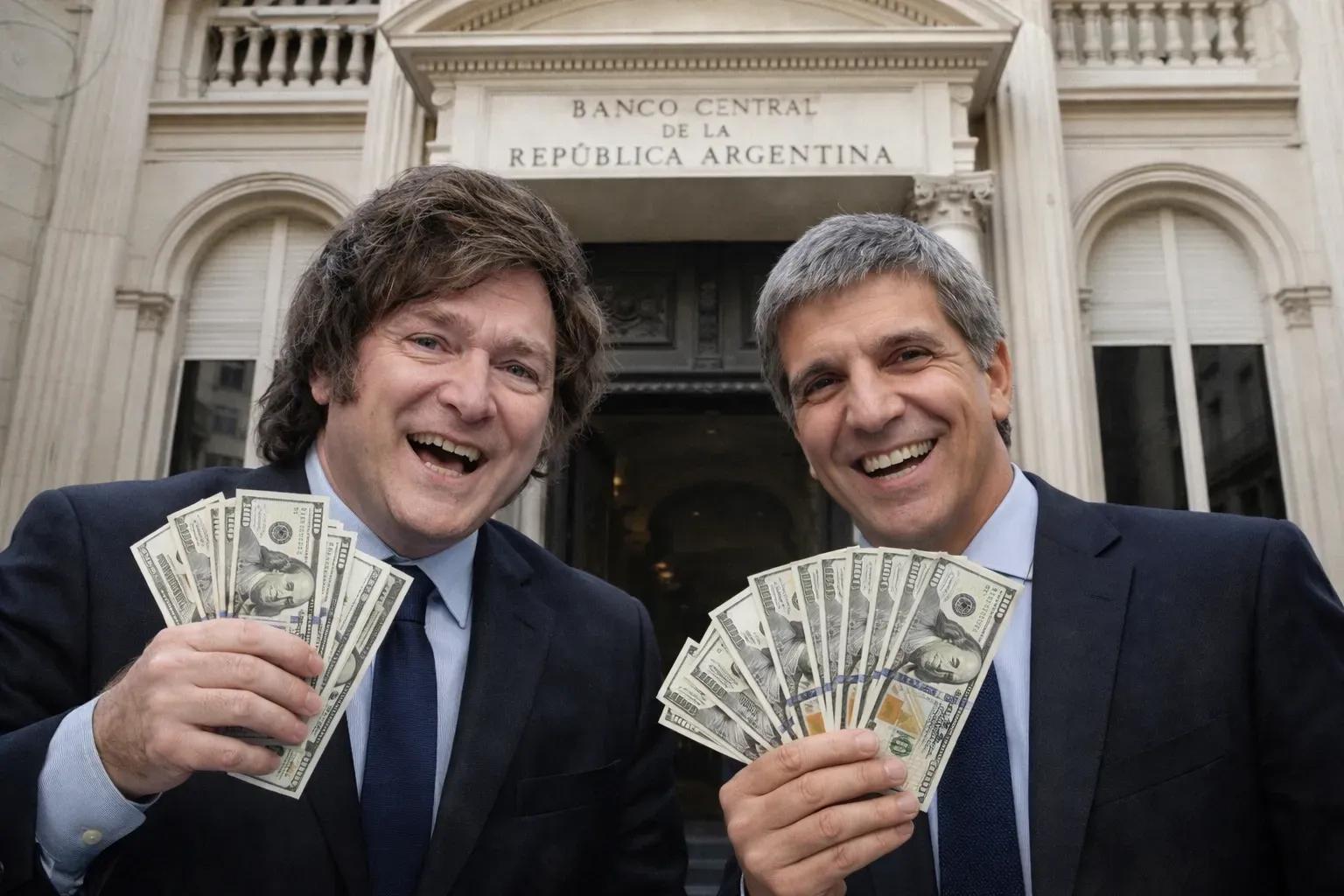
The Central Bank of the Argentine Republic (BCRA) ended the last week with purchases of foreign currency amounting to almost USD 300 million, which means that international reserves increased again and surpassed USD 45 billion, a level not seen since September 2021.
According to official data, the monetary authority achieved 15 consecutive days with a net buyer position in the foreign exchange market, accumulating almost USD 978 million during this period. This boost came from both direct purchases and the positive effect of rising international gold prices —which the BCRA holds at nearly 1.98 million ounces— and greater liquidation of exports from the agri-export sector.
A sustained recovery
This progress fits into a broader pattern of reserve accumulation in recent months. In January, for example, the BCRA had already purchased over USD 800 million, with reserves exceeding USD 45 billion, the highest level in over four years.
The recovery of reserves —which had been depressed for long stretches in recent years due to macroeconomic imbalances, fiscal deficits, and capital outflows— represents a sign of exchange rate strength in times of global volatility. Since 2021, reserves had not reached these figures: the previous highest record was around USD 45.169 billion in September of that year.
Why this growth matters
International reserves are one of the main indicators of a country's macroeconomic strength. They serve as a buffer to meet debt payments, support the official exchange rate, intervene in currency markets, and instill confidence in investors and multilateral organizations. An increasing level of reserves reduces external vulnerability and expands maneuverability in the face of global shocks.
The key point highlighting this moment is that it had not been seen a reserve figure of over USD 45 billion since 2021, before the Argentine economy faced several challenging quarters with fiscal deficits, inflationary pressures, and tensions in the foreign exchange market.
Factors behind the rebound
Analysts agree that the improvement is due to several factors:
Greater dollar supply from the export sector, especially the agro-industrial complex, which is liquidating foreign currency at a more active pace.
Active purchasing policy of the BCRA, which has set daily limits for acquiring foreign currency without distorting the market.
Revaluation of gold in international markets, which has amplified the value of existing reserves.
Additionally, the BCRA itself estimated that if current conditions remain, the acquisition of foreign currency could range between USD 10 billion and USD 17 billion throughout the year, depending on the dynamics of peso demand and the influx of dollars into the market.
What does this mean for the Argentine economy?
Reaching reserve levels not seen since 2021 is undoubtedly a positive signal for the external front of the economy. Far from being an isolated data point, this recovery puts the perspective of improving access to stable dollars in a country where the scarcity of foreign currency has been a recurring issue in recent years.
The sustained accumulation of reserves allows the BCRA to have greater capacity for exchange rate intervention, reduce the risk of abrupt tensions, and provide a more solid backing against external commitments. For the markets, the news is also interpreted as a sign of greater macroeconomic certainty in a region and international context of high volatility.

Comments