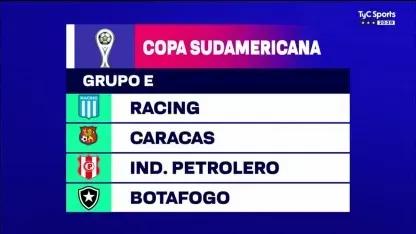
The recent draw for the 2026 Copa Sudamericana has generated significant interest in both the sporting and social spheres, raising questions about its impact on local economies and the international projection of South American football. This event is relevant not only because of the competition itself but also because of the context in which it unfolds, marked by an uncertain economic climate and institutional challenges. What does this draw mean for the participating teams and their respective nations? How does it affect the perception of South American football on a global scale?
🏟️ Current Landscape
The 2026 Copa Sudamericana has been structured into several groups where teams from different countries compete for a spot in the knockout stages. According to CONMEBOL data, the tournament will feature 44 teams distributed across 8 groups. In this context, it is worth noting that the participation of Argentine clubs like Boca Juniors and River Plate generates considerable expectations due to their history and legacy in international competitions. Economically, the event could attract significant investments, given that projections indicate that broadcasting rights will generate revenues exceeding 100 million dollars, contributing to local economies through tourism and brand promotion.
🌍 International Comparison
When analyzing how other countries have handled similar sporting events, we find relevant examples. In Europe, the UEFA Europa League has proven to be an effective platform for the development of local football. For example, according to a UEFA report, the participating clubs in this competition generated an economic impact that exceeded 1.3 billion euros in 2022, highlighting the importance of these tournaments in strengthening national leagues. Similarly, Brazil has been a pioneer in this regard; its hosting of the 2014 World Cup showed how a sporting event can transform infrastructures and enhance long-term tourism.
📈 Implications
The implications of the draw are manifold and affect both clubs and their communities. Participation in international tournaments not only improves the visibility of the teams; it can also be crucial for attracting sponsors and investors. However, there are associated risks: if the teams fail to advance beyond the group stage, this could result in significant economic losses due to lower revenues from broadcasting rights and ticket sales. Moreover, there is constant pressure on clubs to maintain competitive standards that allow them not only to participate but to excel.
📊 Critical Analysis
Historically, sporting performance is tied to the economic and social context of each country. In Argentina, where economic difficulties are evident —inflation reached 50% annually according to INDEC— an additional challenge arises for clubs seeking to compete at the highest international levels. The lack of sustained investment can limit their ability to acquire talent or improve necessary infrastructures to compete effectively. This situation contrasts with countries like Chile or Uruguay, where more effective strategies have been implemented to foster the development of professional sports through public-private partnerships.
🔮 Strategic Perspective
Looking ahead, it is crucial for Argentina and other South American countries to seize this opportunity not only from a sporting perspective but also from an economic one. A strategic approach should include policies that promote sustainable investments in sports infrastructure and training programs for young talents. The international projection of South American football depends not only on performance on the field; it also requires a clear vision of how these events can contribute to regional economic growth.
In conclusion, the draw for the 2026 Copa Sudamericana is a reflection of both opportunities and economic and social challenges. As we move toward this crucial event, it will be essential to observe how each country manages its expectations and economic realities to maximize the positive impact of sports on their societies.
Comments