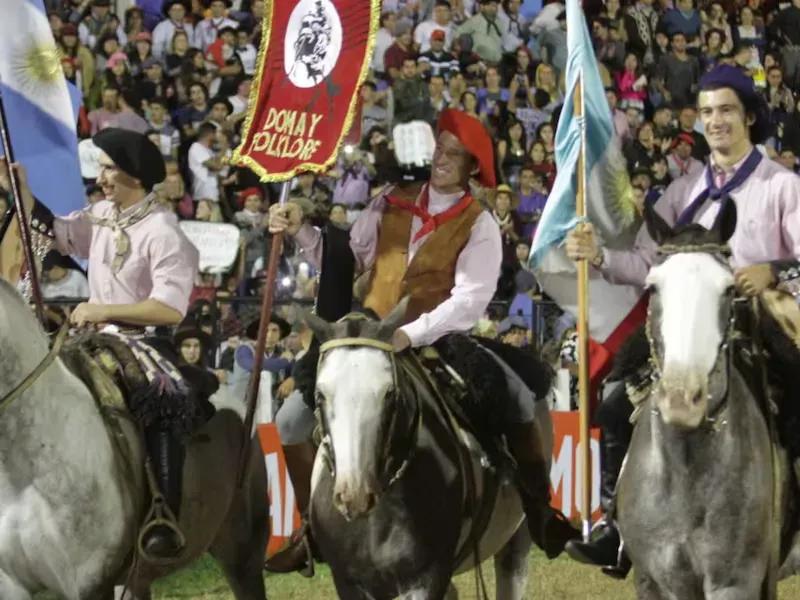
The National Festival of Doma and Folklore in Jesús María has become a cultural pillar in Argentina, where gaucho tradition is celebrated with passion and fervor. But why is this event so relevant in the current context? In a country where cultural identity is often threatened by globalization, the festival not only preserves Argentine roots but also injects vitality into the local economy. In this article, we will explore the cultural and economic impact of the festival, its evolution over the years, and how it compares to other similar events around the world.
📈 Current Situation and Context
Since its inception in 1965, the National Festival of Doma and Folklore has grown exponentially, attracting over 100,000 visitors each year. According to provincial government data, a record attendance was reported in 2023, generating approximately $200 million in revenue for the region. This event stands out not only for its doma shows but also for its musical offerings, which include renowned artists like Soledad Pastorutti and Los Chalchaleros. In a context where culture faces economic challenges, this festival acts as a beacon that revitalizes not only the national spirit but also the local economy.
🎶 Analysis of Causes and Factors
The popularity of the Doma and Folklore Festival can be attributed to various factors. First, there is a strong desire to preserve gaucho traditions in an era dominated by global trends. Moreover, support from the local government has been crucial; from subsidies to promotional campaigns that have elevated the event's visibility. Historically, similar festivals in countries like Mexico or Peru have faced similar challenges in trying to keep their cultural traditions alive. However, the Argentine approach has been more successful due to a unique combination of popular passion and institutional backing.
🌎 International Comparison and Global Impact
When compared to other international cultural festivals like Rio's Carnival or the International Guitar Festival in Spain, the Doma and Folklore Festival shows its own uniqueness. For example, while Carnival attracts over 1 million tourists each year, Jesús María has a more community-oriented approach that allows for more intimate interaction between artists and audiences. In Chile, festivals like La Fiesta de La Vendimia have managed to attract international tourists with aggressive promotional strategies; however, they still struggle to capture national attention like Jesús María does. This demonstrates that there is room for growth and mutual learning between cultures.
💡 Implications and Consequences
The impact of the festival goes beyond the cultural sphere; it has significant repercussions on the regional economy. With each edition, thousands of temporary jobs are created in areas such as gastronomy, hospitality, and transportation. According to a study conducted by the National University of Córdoba, every peso invested in the festival generates $3.50 for the local economy. This highlights how cultural events can be economic engines if well managed. Additionally, it fosters a sense of community by bringing together people from various provinces under one roof to celebrate their shared identity.
🔮 Strategic Perspective and Future Outlook
Looking ahead, the National Festival of Doma and Folklore has several opportunities to expand its reach and impact. One strategy could be to partner with digital platforms to live-stream events to international audiences. This would not only increase its global visibility but could also attract virtual tourism in the months leading up to the physical festival. However, there are risks; it is essential to maintain cultural authenticity while seeking to modernize. In a world where trends change rapidly, finding that balance will be key to ensuring that this festival remains relevant for future generations.
The National Festival of Doma and Folklore is not just a celebration; it is a living testament to the Argentine spirit that defies economic adversities while continuing to celebrate its cultural roots. As we move towards an uncertain but possibility-filled future, it is vital to remember that our culture is what unites us; let us nurture it with all our being.

Comments