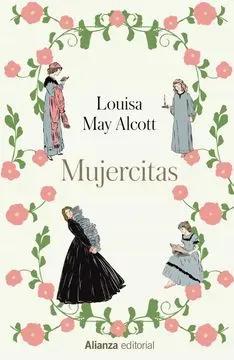
Christmas won't be Christmas without presents - Jo murmured, lying on the carpet.
This is how Little Women begins, the masterpiece of Louisa May Alcott and universal literature. A must-read for any girl in the process of becoming a "little woman," this story centers on the adventures of four sisters - Beth, Amy, Meg, and Jo - while their father fought for the Union during the Civil War in the United States. Each with a different personality, their characters have served as role models for many girls for over a century.
Meg (Margaret) March, the eldest, the one most like her mother and the most responsible, marries John Brooke, a humble yet loving tutor, thus ignoring the advice of her wealthy aunt, who sought a more "advantageous" suitor for her.
Jo (Josephine March) is the second of the sisters. She is a bookworm and dreams of becoming a writer. Her friendship with Laurie (Theodore Lawrence), the orphaned neighbor of the March family, marks her transition from childhood to adulthood. She is the protagonist of the novel and the alter ego of Louisa May Alcott. Considered one of the first feminist characters in universal literature, young Jo March inspired millions of women worldwide to pursue and fight for their dreams.
Beth (Elizabeth) March was the third of the sisters. The shyest and sweetest, she spent her days playing the piano and taking care of her dolls and kittens. Of fragile health, she died young of scarlet fever without being able to grow up. She was "the best of all," the most tender and kind-hearted.
Amy March is the youngest of the little women. An ambitious young woman with a strong personality, she often had intense clashes with Jo. Passionate about the fine arts, she dreams of traveling to Europe and becoming a painter. While her aunt hopes for her marriage to Fred Vaughn, a young millionaire, she ends up preferring Laurie, the family friend she has always been in love with.
Besides being a heartwarming story, the success of Little Women is based - in my opinion - on the truthfulness with which it addresses the difficult process of growing up for women. The sweetness and complexity with which it narrates the sisterly relationships among women, with their moments of tension and joy, helped construct a classic that speaks to girls and women in the 19th and 21st centuries.
The different personalities of the sisters, their dreams, and life goals offer a feminist reading on the importance of young women and the value of their dreams. One can identify with Meg, Amy, Beth, or Jo, as each represents a different way of being a woman and navigating the obstacles of a patriarchal society. This contribution gives the novel a unique richness that keeps it relevant more than 150 years after its publication.
Despite its tragic ending, I always identified with Beth. I immediately saw myself in her shyness and calm the first time I read the book at age 9. Perhaps there exists a world where young Beth survived so that all the little women could be together again.

Comments