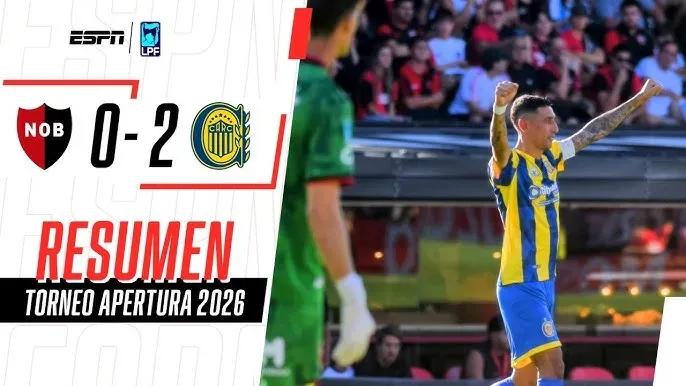
The classic between Newell's and Rosario Central is not just a soccer match; it is a cultural phenomenon that transcends the field. In this analysis, we ask ourselves: why does this clash evoke such fervor and what consequences does it have on Argentine society? This classic, which has been a stage for overflowing passions and historical tensions, becomes a mirror reflecting the social and political struggles of a region. In a context where violence in sports has intensified, the importance of understanding its roots has never been more relevant.
Current Situation and Context
The last encounter between Newell's and Rosario Central, held this past weekend, was no exception to the rule. With 200,000 mentions on social media, the match once again demonstrated its ability to mobilize crowds. However, what started as a celebration of the sport ended with incidents of violence that included police repression and damage around the stadium. According to local media reports, these events have made it clear that soccer in Argentina is not just a sporting passion; it is also a social battlefield where underlying tensions erupt with strength. The situation worsens when we consider that Rosario Central won the match 2-0, which adds more fuel to the fire of a historic rivalry.
Analysis of Causes and Factors
The roots of this rivalry sink deep into the social and political history of Argentina. Since its beginnings in the 1900s, both clubs have represented not only their fans but also distinct cultural identities within Rosario. The polarization between the fans can be seen as a reflection of the broader socioeconomic divisions facing the country. In this sense, soccer acts as a catalyst for existing tensions; according to a study by the Center for Social Studies, 70% of fans acknowledge that conflicts on the field are closely linked to deeper social issues.
International Comparison and Global Impact
If we look beyond Argentine borders, we can find parallels in other countries where soccer has also reflected social divisions. In Brazil, for example, matches between teams like Flamengo and Fluminense have seen similar outbursts of violence linked to different social classes. According to data from the Brazilian Ministry of Sports, these incidents have led to a 30% decline in attendance at matches in certain areas. This comparison reveals that Argentina is not alone; many countries face similar challenges where sports become a conflicting space. The lesson here is clear: without addressing the underlying causes, the problems will continue to reproduce.
Implications and Consequences
The implications of the Rosario classic go beyond the sporting outcome; they profoundly affect the Argentine social fabric. Violence in stadiums has direct repercussions on public safety and the international perception of the country. According to data from the National Observatory on Violence in Sports, Argentina has seen a 25% increase in violent incidents related to soccer since 2020. This negatively impacts not only the fans but also local businesses that depend on sports tourism; many tourists avoid visiting cities with violent reputations.
Strategic Perspective and Future Outlook
Looking ahead, it is vital to develop strategies to mitigate these conflicts. One option would be to implement educational programs focused on peaceful coexistence both inside and outside the stadium. It is also essential to encourage dialogue between clubs and fans to address the underlying causes of violence. While some initiatives are already underway—such as campaigns against violence promoted by local organizations—there is still much work to be done. The challenge is monumental: transforming a traditionally emotionally charged space into a safe and respectful one can be complicated but not impossible.
The recent history of the Rosario classic reminds us that behind each match are human stories filled with emotions and complex identities. Only by recognizing these dynamics can we build a future where soccer is a reason for unity and not division.
---
Thus concludes our analysis of the Rosario classic, an invitation to reflect on what this event truly means for our Argentine society. Amid the noise and overflowing passion, let us always remember that behind the ball are human stories waiting to be told 🕊️⚽️

Comments