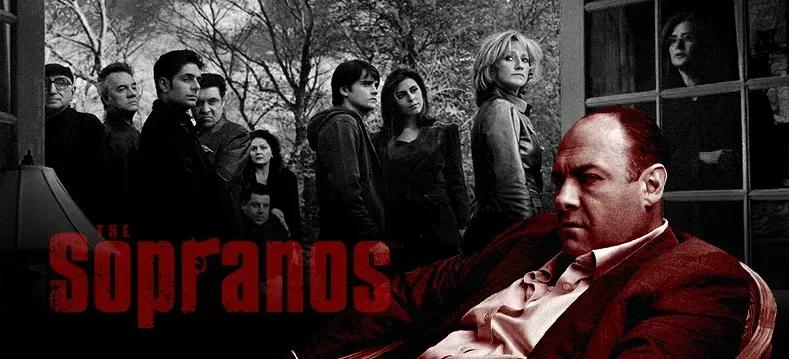
The importance of The Sopranos (1999-2007) in the history of television does not lie solely in the fact that it was one of the first television series to place an antihero as the protagonist, but rather in that it lacks conventional narrative arcs. The Sopranos is a study of its characters on various themes that develop throughout. It does not revolve around the rise and fall of a mob boss (in the style of Goodfellas, Scarface, or The Godfather), but rather delves into the circular ruins in which its protagonists find themselves trapped, exposing their own misery, anguish, and contradictions. The Sopranos aims to establish itself as a treatise on the human condition.
The series is a masterful deception towards the viewers. On its surface, it appears to be a crime drama, but this scenery on which the program is mounted is merely an excuse to explore much deeper and universal themes.
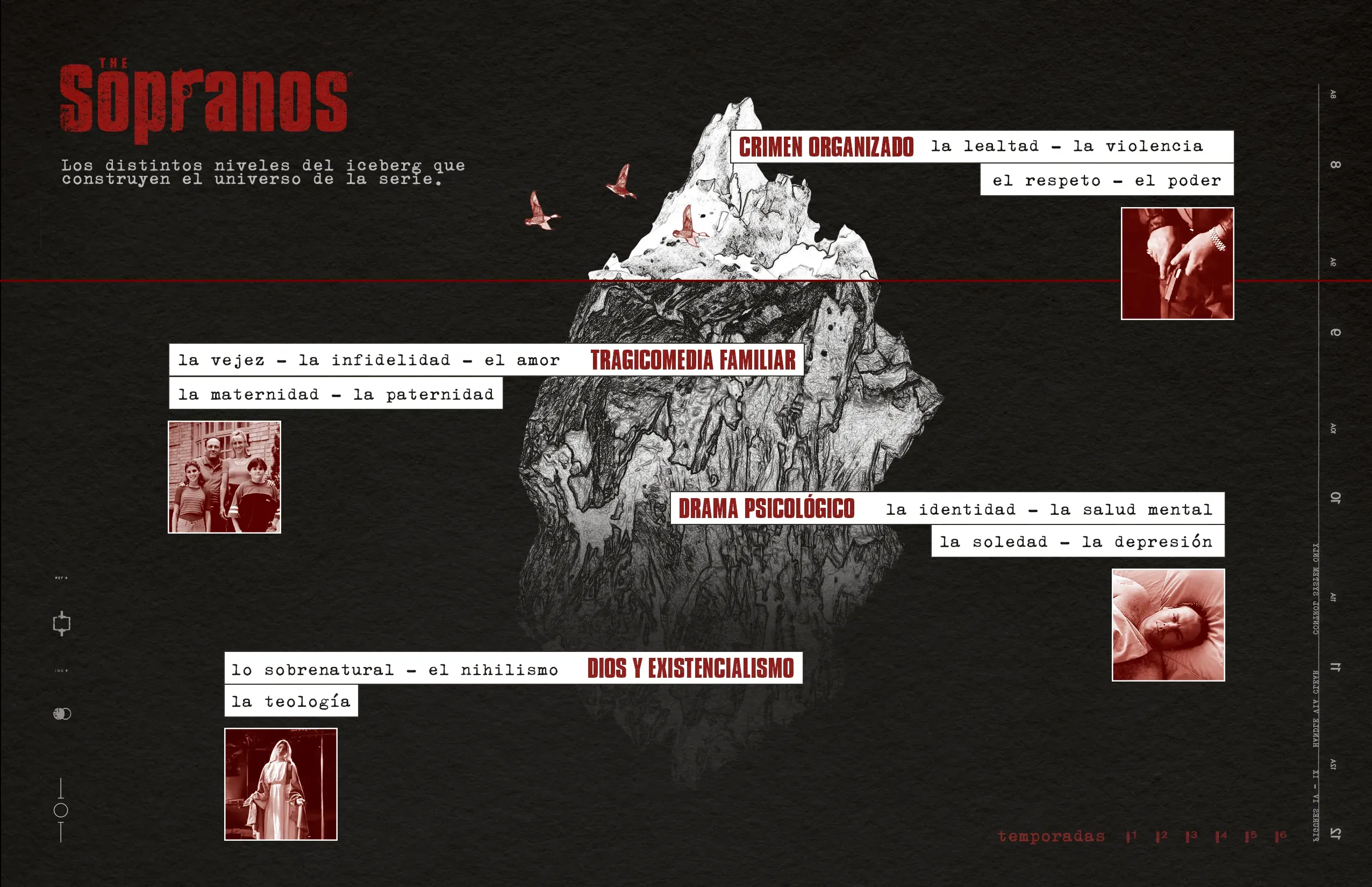
Of course, every corner of this iceberg merits its own article, but I am interested in going straight to the bottom. It is down there where the series truly becomes wild and the readings become much denser and more transcendent. To do this, we will review some key scenes, but without spoilers. Because what matters is not the who killed whom, but to delve into that limit where, in my view, the series engages in a dialogue with God.
It may seem obvious to point this out, but it is very important to shed a prejudice: the series is not titled Tony Soprano, it is The Sopranos. And that difference, subtle but fundamental, is not a minor detail. Although Tony is the axis around which the plot revolves, the series is not a one-man show; it is a chronicle in which everyone is a protagonist. The series presents us with a circle of sinners, where each must deal with their own miseries. The moral burden does not rest solely on Tony's shoulders: the entire cast is completely permeated by the seven deadly sins.
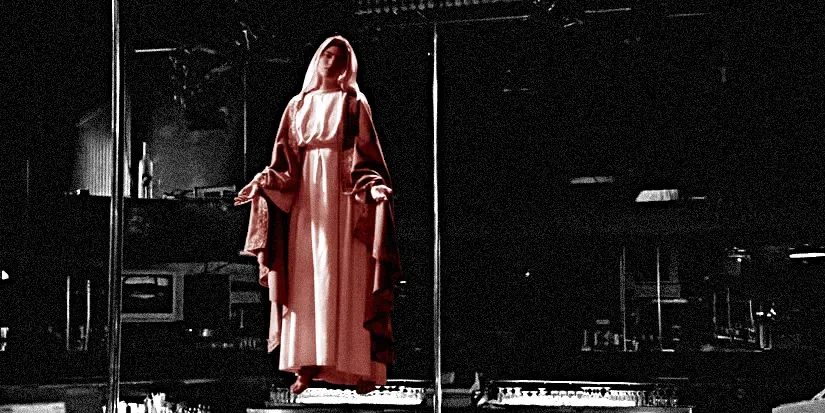
But if there is a moment when The Sopranos breaks its own mask of crime drama to touch upon the mystical, it is undoubtedly in the scene of the Revelation of the Virgin Mary to Paulie Gualtieri.
It lasts only a few seconds, but it is one of the most transcendent and disturbing passages of the entire series. Let us see the setting: a brothel (sanctuary of flesh and sinful profanation), a loud punk music cutting through the air, and amidst that chaos, the figure of the sacred appearing before a violent and superstitious gangster. There is no angelic light, no harps, no heavenly choirs. The discordance is absolute.
It is a subversive revelation that seeks not to comfort, but to warn with severity. It is the beyond filtering through the cracks of the brothel to remind us that moral corruption will be punished. What the series tells us is that there are no hierarchies before the divine: the humblest strippers, whom they mistreat, exploit, beat (even kill), are also God's daughters. By despising their lives, they are despising the sacred.
The choice of music is not casual either: punk is a genre directly linked to rebellion and anti-system sentiments. And there has never been a more rebellious and anti-system idea in human history than the conviction that we are all equal in the eyes of God: from Roman emperors to prostitutes and outcasts.
Thus, redemption is not presented to us as a comforting miracle, but as something ghastly: it is a terrifying revelation that removes us from the comfort of thinking that God is indifferent. The series suggests to us, with an almost chilling vehemence, that we are not alone. That, although they live submerged in misery and crime, there exists a supreme and inexplicable spiritual force that watches over everything, and whose justice is infallible. That dialogue with the divine is not an inner peace, but a confrontation with one’s own darkness.
The appearance of the Virgin Mary is not the only sign that in The Sopranos the rules of the earthly plane can be broken. The series does not have an abundance of them, but there are small supernatural flashes and omens that haunt the characters like ghosts around them.
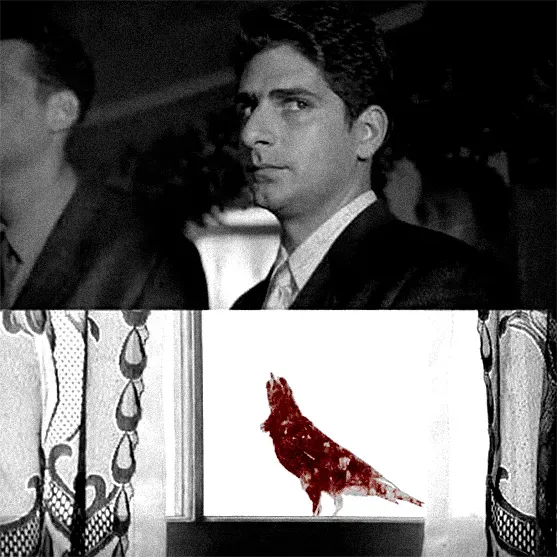
For example, the ritual in which Christopher Moltisanti pledges loyalty to the family. While they cut his finger and burn the image of a saint in his hand, a raven watches him closely from the window, being a harbinger of death and destruction. Chriss is cursed, just like all those around him in that vicious cycle of blood, betrayal, and decay.
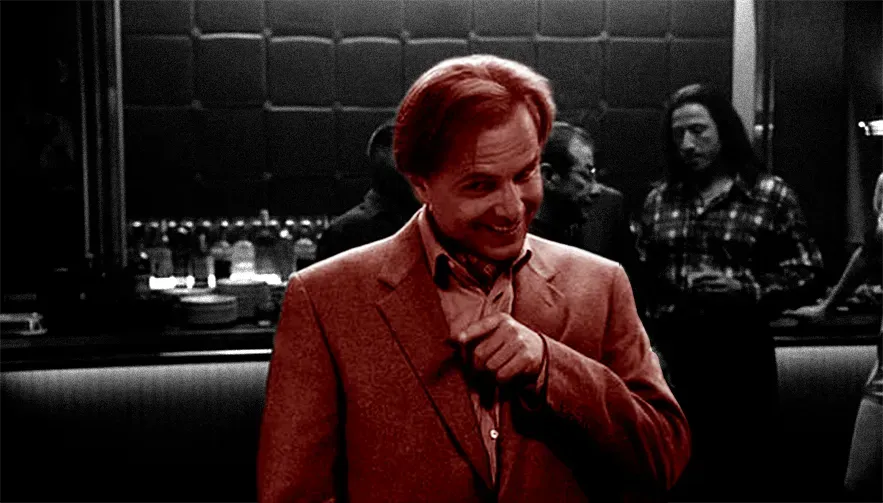
This presence of dark forces even fuels the darkest and craziest theories of the fandom, such as the one that claims that Ralph Cifaretto is the very embodiment of the devil. His psychopathy and sadistic cruelty escape the 'accepted' parameters of violence by his own mafia peers. The signs are subliminal: in one scene, he greets someone with a subtle 'Please allow me to introduce myself', the iconic opening line of Sympathy for the Devil by the Rolling Stones. And, if that were not enough, in an intimate confession with Father Intintola, he lets slip a phrase that seems to be taken directly from the same lyrics of the song about being present when Jesus had his moment of doubt and pain, to which Ralph falls silent in a funereal silence.
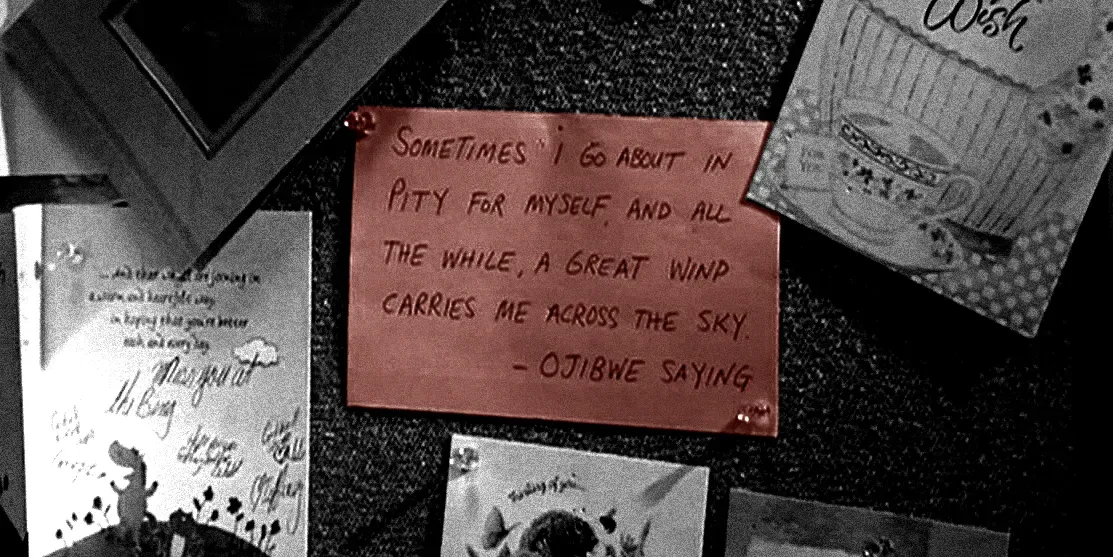
Another enigmatic touch is an anonymous note that Tony receives, with a phrase as profound as it is strange: 'Sometimes I walk with pity for myself, and in the meantime, a great wind carries me through the sky'. It is a real fragment of Ojibwe indigenous culture. But Tony, instead of interpreting it as an invitation to humility or to contemplate the immensity of the superior forces against his dramas, reduces and understands it as a manipulation tool to invalidate the problems of others.
In The Sopranos, the supernatural flows like a stream of crystal-clear underground water, which comes to the surface only in rare instances and in the most subtle and subliminal forms. Beneath all that world lies a supernatural force that is above everything. And it is precisely that invisible presence that pronounces the true and cruel sentence of the entire series: divine punishment manifests in the curse of being trapped in an eternal return.
All of them are condemned to repeat the same actions, the same mistakes, the same betrayals, over and over again, infinitely. Each character seems to embody their own Sisyphus Myth: they bear their guilt, pushing the stone uphill every day, only to see it fall back down into the same abyss of emptiness and contradiction. In Tony’s case, crime is not his destiny, but his life cycle.
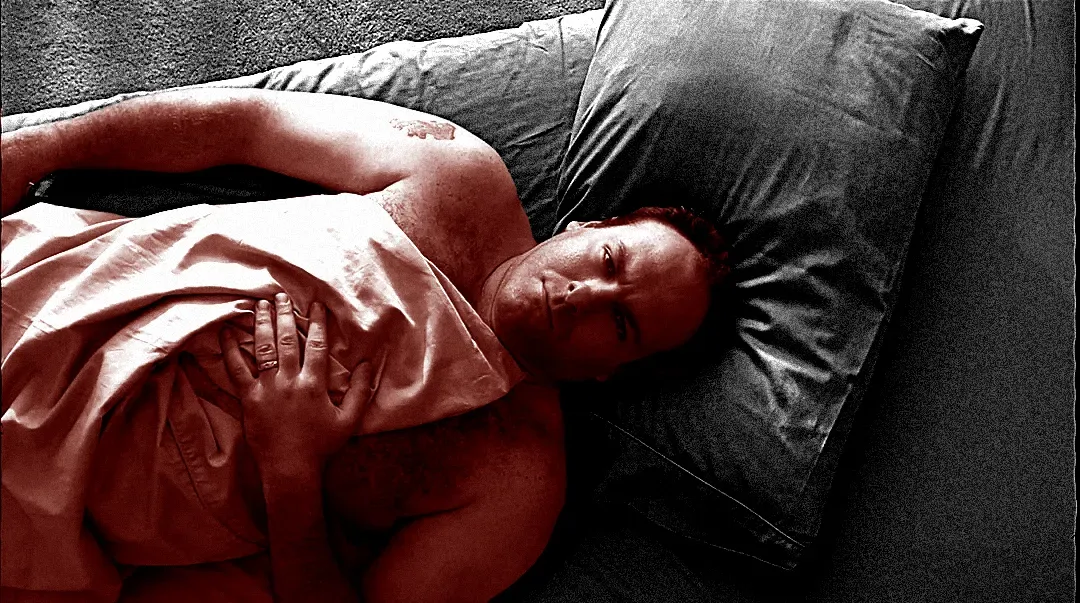
Similar to Borges' Circular Ruins, Tony dreams a new man, a better version of himself, stripped of his emotional burdens, an exemplary father, an honest citizen, and longs to make it a reality. He dreams of a normal family, of leaving crime behind, of living in peace. But in the end, he only discovers how irreparably dark and perverse his soul is.
The tragedy of the series is the absence of redemption. There are no heroes who achieve salvation, since for them free will and the gates of heaven are closed. The characters suffer the consequences of their actions and feel guilt, but at the end of the day, none of them are truly willing to change their lives. Each of them chooses, time and again, to continue drowning in their own sins: money, women, luxuries, power, and vices. They feel guilt, but not remorse. Their punishment is life itself: being condemned to live trapped in an infinite loop where there is no heroic outcome or possible resolution, only the eternal continuation of their existence in a venereal and corrupted world. In The Sopranos, the characters are cursed by their own inability to redeem themselves.
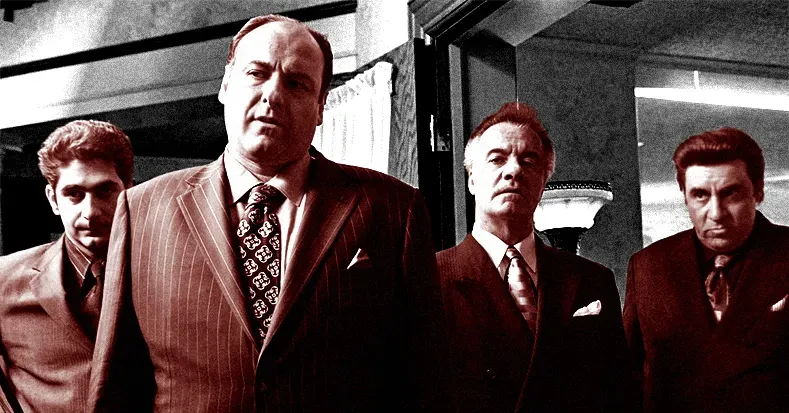
The Sopranos left an indelible mark. We are not only talking about the pioneer that opened the game and placed the antihero at the center stage but about nothing less than the mother of the golden age of modern television. Without it, there would be no phenomena like Breaking Bad, Mad Men, The Wire, Game of Thrones, Better Call Saul, Fargo, Sons of Anarchy, House of Cards or Prison Break. They all drew from that same well and inherited the courage to explore the gray areas of morality.
However, it must be warned: The Sopranos is not a series for everyone. By forgoing conventional narrative arcs, it carries its own pulse, is deliberately anticlimactic, evades sensational hits, and never serves things on a platter for the viewer. There is no type of fan service or cliffhangers. But once it captures you in its rhythm, there’s no turning back.
The great merit of The Sopranos is that it does not underestimate its audience. Far from explaining everything, the series fully trusts the intelligence of those on the other side, opening up an infinite range of possible interpretations. That is why it is often said that no one watches the same series twice: for each viewer, and at every stage of life, The Sopranos is a different story that dialogues with different fears and questions. Filled with layers, contradictions, and abysses, it rises like that great iceberg that resists being contained by the surface. Because great works do not provide us with comfortable answers, but leave us suspended at the edge of our own interpretations, and manage to challenge us to the depths of our consciousness.

Comments