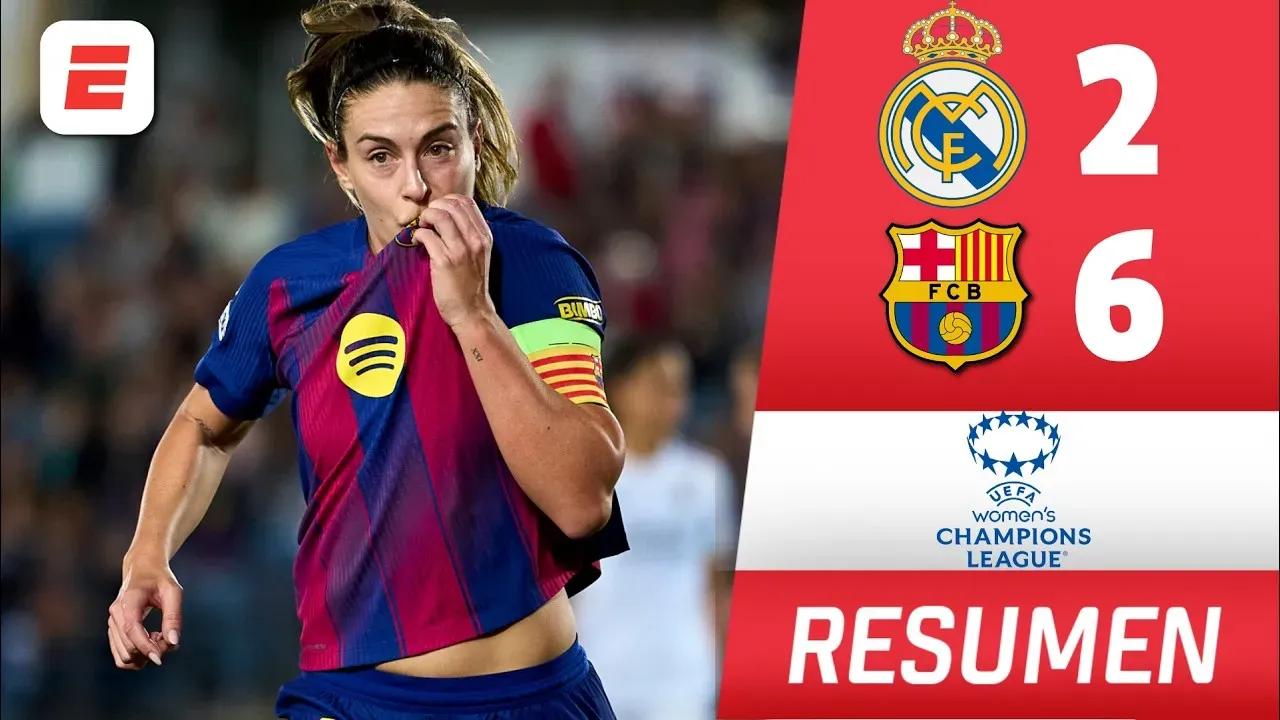
The recent thrashing of Barcelona against Real Madrid CF Women by 6-2 in the quarter-finals of the UEFA Women's Champions League not only left a mark on the scoreboard but also highlights the evolution of women's soccer. At a time when sports reflect the struggle for equality and recognition, this victory raises an essential question: what does this result mean for the future of women's soccer in Europe and the world? The importance of this match goes beyond the goals; it is a milestone that can influence the perception of the sport and its global development.
Current situation and context
The match held at the Di Stefano Stadium was a clear demonstration of Barcelona's power, which, with this victory, reaffirmed its position as one of the most competitive teams in women's soccer. According to UEFA data, this match attracted over 60,000 spectators, demonstrating a growing interest from the public in women's soccer. Compared to previous years, when women's matches were often underestimated or undervalued, there is now a positive trend towards professionalization and visibility. This change has translated into a 30% increase in attendance at women's matches compared to the previous season.
Analysis of causes and factors
The defeat of Real Madrid can be attributed to several interrelated factors. First, Barcelona has invested significantly in its players and infrastructure. Data indicates that its budget for women's soccer has increased by 40% since 2020, allowing them to attract international talent and offer optimal conditions for their development. On the other hand, Real Madrid is still in the process of consolidating as a women's club; although they have talented players, they still lack collective experience in international competitions. This imbalance between investment and development may be key to understanding the disparate results between the two teams.
International comparison and global impact
The impact of this thrashing is felt not only locally but also internationally. Teams like Lyon and Chelsea have demonstrated how adequate investment can transform a women's club into a global powerhouse. For example, Olympique de Lyon, considered one of the best women's teams in the world, has won the UEFA Women's Champions League seven times since 2011 thanks to its strategic focus on attracting outstanding players. In contrast, other countries like the United States have led the way with stable professional leagues and strong institutional support; the NWSL (National Women's Soccer League) has grown exponentially since its inception, boosting both athletic performance and the popularity of women's soccer.
Implications and consequences
The consequences of this match are significant for both clubs and for women's soccer in general. For Barcelona, this victory reinforces its reputation as a leader in the European and international arena. For Real Madrid, it represents a call to action: it is imperative to reevaluate their investment and development strategies if they wish to compete at the highest level. On a social level, these events generate conversation about equity and visibility; every goal scored is a step forward in the fight for equality within the sport. Recent studies have shown that adequate investments can increase not only the quality of the game but also the overall audience.
Strategic perspective and future outlook
Looking ahead, it is crucial for both clubs to continue investing in their squads and structures. Real Madrid must adopt a more aggressive strategy to attract young talent while working to consolidate its identity within women's soccer. At the same time, clubs like Barcelona must maintain their momentum and constantly innovate to remain competitive both nationally and internationally. The growth of women's soccer is just beginning; projections indicate that by 2026, a 50% increase in global audiences is expected. This trend presents unique opportunities for sponsors and investors willing to support this transformative movement.
In summary, every match is an opportunity not only to win or lose; it is a step forward on a path full of challenges but also full of possibilities. History teaches us that every great change begins with small steps; now more than ever, those players are ready to score not only goals but also history. 🌟

Comments