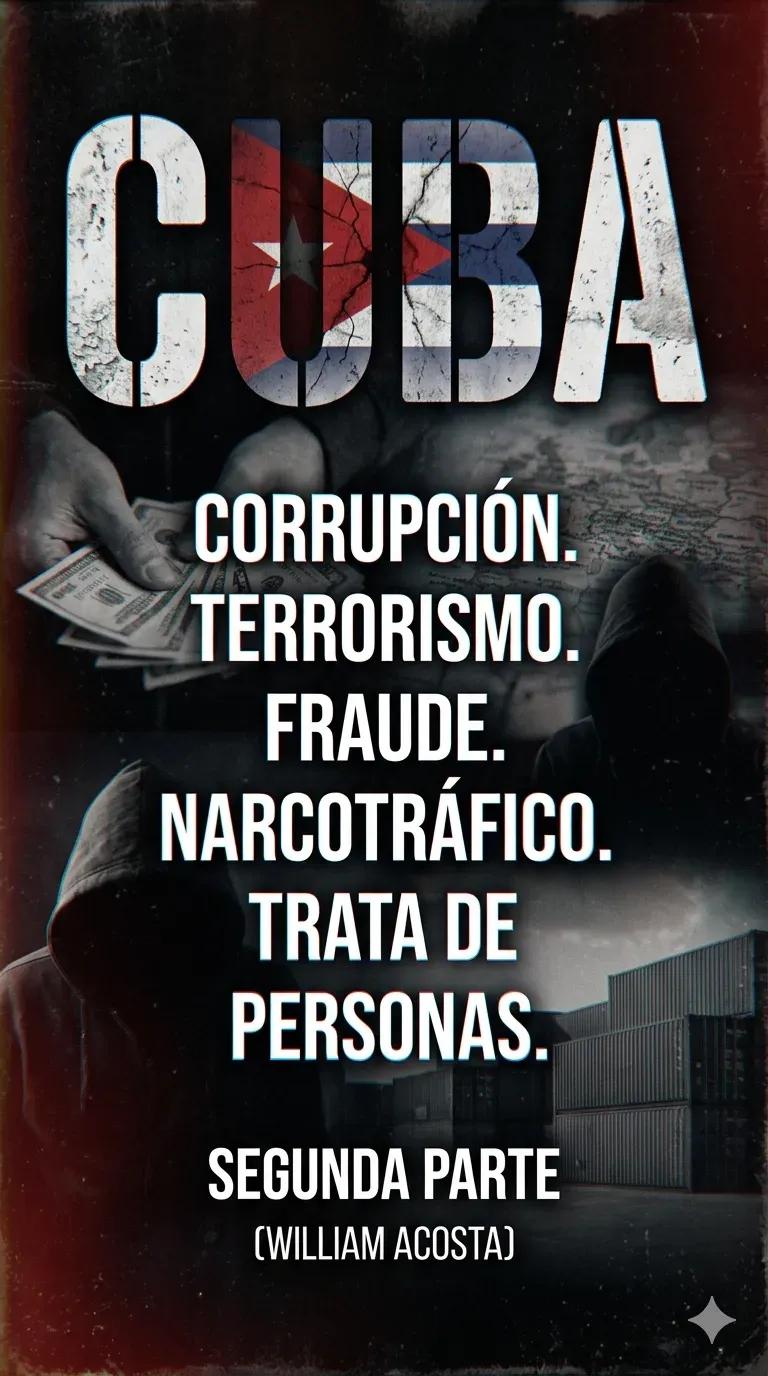
Family separation is perhaps the most silent crime of the Cuban regime, and the most massive. Since Fidel Castro took power on January 1, 1959, Cuba has not ceased to expel its own people. What began as the departure of the comfortable class turned into decades of a hemorrhage that affected all social classes, all educational levels, and all generations.
The first great fracture was immediate. Between 1960 and 1962, more than 14,000 Cuban children were sent alone to the United States by their parents in what is known as the Pedro Pan Operation, the largest evacuation of unaccompanied minors in the western hemisphere during peacetime (Smithsonian Institution; confirmed in Wikipedia, "Operation Peter Pan"). Their parents hoped to reunite in weeks. Many took years. Some never succeeded. Those children grew up in foster homes in Florida and New York, learning English before forgetting, building lives in a language that was not theirs to avoid losing the only one they had.
That story was repeated in every wave that followed: the freedom flights between 1965 and 1973, which brought 248,100 Cubans to the United States (Migration Policy Institute, July 2017); the Mariel exodus in 1980, with 125,000 people crossing in five months; the balseros crisis in 1994, when more than 35,000 Cubans launched themselves into the Florida Strait on improvised vessels, of which thousands never reached the shore (Migration Policy Institute, July 2017). Each wave was driven by the same engine: a regime that did not tolerate dissent, that did not allow independent prosperity, and that did not offer legal exit to those who simply wanted to live without fear.
Today, according to the Pew Research Center, there are 2.4 million people of Cuban origin in the United States, 92% more than in the year 2000. Of them, 1.3 million were born in Cuba, crossed a sea or border with what fit in a suitcase and the certainty that they would not return soon (Pew Research Center, August 2023). In Florida alone, 1.56 million Cubans live, making up 7.14% of the state's total population (U.S. Census Bureau, 2025). In Spain, nearly 200,000 Cubans reside, with flows of between 25,000 and 30,000 new arrivals per year. In Mexico, Brazil, Colombia, Argentina, and Italy, there are Cuban communities that started from scratch, without credit histories, without a network of contacts, often without complete documents, and yet they did it.
What the Cuban exile built from nothing has concrete and verifiable dimensions. Just in Miami-Dade County, Cuban-American entrepreneurs operate more than 117,000 businesses with sales exceeding $51 billion, 14.8% of the total sales of Hispanic-owned businesses in the United States (Association for the Study of the Cuban Economy, ASCE). 74.2% of the Cuban-owned businesses in the country are in Florida. Cuban doctors, engineers, lawyers, architects, and teachers have contributed to the economy and social fabric of their adoptive countries with the same energy that the regime tried to stifle on the island.
That contribution has also been measured in uniform. Since the early 1960s, exiled Cubans have enlisted in the Armed Forces of the United States. In January 1963, a contingent of 900 Cubans arrived at Fort Jackson base in South Carolina to receive military training and, with it, U.S. citizenship (Richland Library, September 2023). Since then, generations of Cuban-Americans have served in all branches of the military in conflicts ranging from Vietnam to Iraq and Afghanistan. According to the Migration Policy Institute, Cuba ranks among the top countries of origin for foreign-born veterans who served in the Armed Forces of the United States (Migration Policy Institute, May 2024).
That same spirit of service extended to security agencies and public order. Cuban-Americans have held key positions in the FBI, the DEA, the Department of Homeland Security, Customs, and police forces across the country. Detective Raúl Díaz, born in Cuba and trained in the Miami-Dade Police Department, created CENTAC-26, an elite DEA unit that dismantled high-level drug trafficking operations during the cocaine wars of the 1980s. His trajectory, from the streets of Havana to the pinnacle of the anti-drug fight in the United States, is representative of a community that did not come to ask but to contribute.
In politics, the impact is equally documentable. Since 1989, nineteen people of Cuban origin have been elected to the United States Congress (Cuban Research Institute, FIU, January 2025). Among them are Senator Marco Rubio, who represented Florida in the Senate for fourteen years before becoming Secretary of State under Donald Trump's second administration, Senator Ted Cruz of Texas, Representative Mario Díaz-Balart, who has served for more than two decades in the House, and Representative Ileana Ros-Lehtinen, who became the first Cuban-American and first Latina elected to the United States Congress in 1989, a position she held for thirty years (Cuban Research Institute, FIU, January 2025; Wikipedia, "Ileana Ros-Lehtinen"). Bob Menéndez, born in New York to Cuban parents, chaired the Senate Foreign Relations Committee. Cuban-Americans have also served as ambassadors, high-ranking executive officials, and federal judges.
Behind every founded business, every military rank achieved, every seat won, there is a family that paid the price of separation. A grandfather who died without seeing his grandchildren again. A mother who called from Havana every week for twenty years because there was no money for the fare. A young man who crossed the Darién on foot, without phone signal, not knowing if he would arrive, and he did, and now works in a city he had never heard of until the year he fled. Those stories do not have a federal case number nor do they appear in the DOJ records. But they are the real cost of what this report documents: not the price paid by the regime, but the one paid by the people.
About the Author
William L. Acosta is a graduate of PWU and Alliance University. He is a retired police officer from the New York police, a former military member of the United States Army, as well as founder and CEO of Equalizer Private Investigations & Security Services Inc., a licensed agency in New York and Florida, with international projection. Since 1999, he has led investigations into drug cases, homicides, and missing persons, in addition to participating in criminal defense at both the state and federal levels. A specialist in international and multi-jurisdictional cases, he has coordinated operations in North America, Europe, and Latin America.

Comments