The visit of Pope León XIV is the perfect example. Instead of explaining the depth of the event, we describe it like a match or a concert: what time it arrives, how many people there are, who greets him first.
And the 2000 years of the Church? And the voices that explained human dignity, the discard of the poor? Nothing. Hours of poor and insubstantial storytelling.
Instead of showing the enormous work of the Church and religions in so many places and fields, there was a continuous narrative of individuals mobilized in their fervor. Necessary, but very insufficient.
Where were the documentaries about schools, churches, dining halls, neighborhoods, hospitals, sacred art, the history of the Church and religions, and so much more?
Not doing so is a way for everything to be simply superficial and to pass like a photo in time.
And at the center, the culture of the tweet. Hardly had the Pope finished, when journalists were reading the politicians' tweets live. As if a tweet were thought.
It is not. A tweet is an expression, a reflection. A thought requires time, doubt, context. A tweet requires speed and impact. And we turned the tweet into the source of coverage.
The Pope speaks from eternity. The politician tweets from the current context. And the journalist chooses the latter because it is easier to headline.
Thus, what was important was lost. Instead of listening introspectively to a message for everyone, we sought who it favored.
Nor was what mattered looked at: the poor speech of the President, correct in protocol but which lost the historic opportunity to apologize as the leader of all and call for reconciliation among Argentinians.
The Pope was received at the Government House with the entire cabinet, with Santiago Caputo —without an official position— and without the Vice President. And the Pope, who knows about local miseries, himself going to greet her at the exit of the Palacio Libertad, when no one approached her.
Not to mention the VIP tent with its sumptuous catering and the non-sanctified business surrounding the mega-production.
Just cross the Río de la Plata to see that it can be done differently. In Uruguay, with much less fanfare, all the presidents from all parties, and even the widows of former presidents welcomed him. With the normality of a Republic. Without exclusions.
A society is nourished by its mediators. If the mediator confuses a tweet with a thought, society will believe that thinking is tweeting.
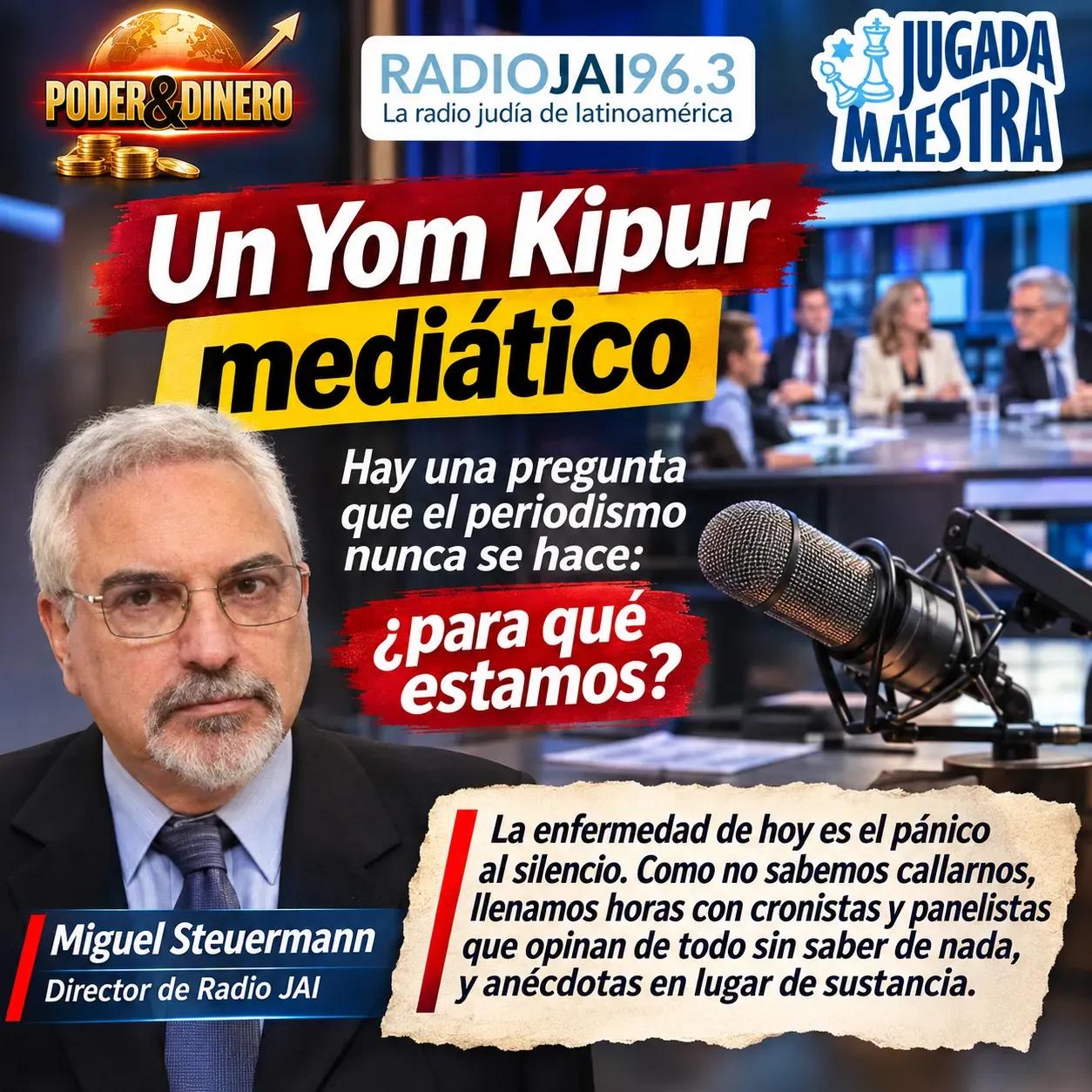
For that reason, how good a media Yom Kipur would be. A day when journalism says: Ashamnu, bagadnu —we have erred, we have sinned—. We have preferred superficiality to thought, anecdote to substance, division to unity, the tweet to the idea.
It is not self-flagellation. It is teshuvá, repentance, return. To return to being service, not spectacle.
The Pope will leave. Perhaps some will remember his words, his gestures, his visit to Claypole, Devoto and his messages.
Hopefully we learn to be a bit quieter, to say something worthwhile.
Miguel Steuermann is the General Director of Radio JAI, the Jewish Radio of Latin America

Comments