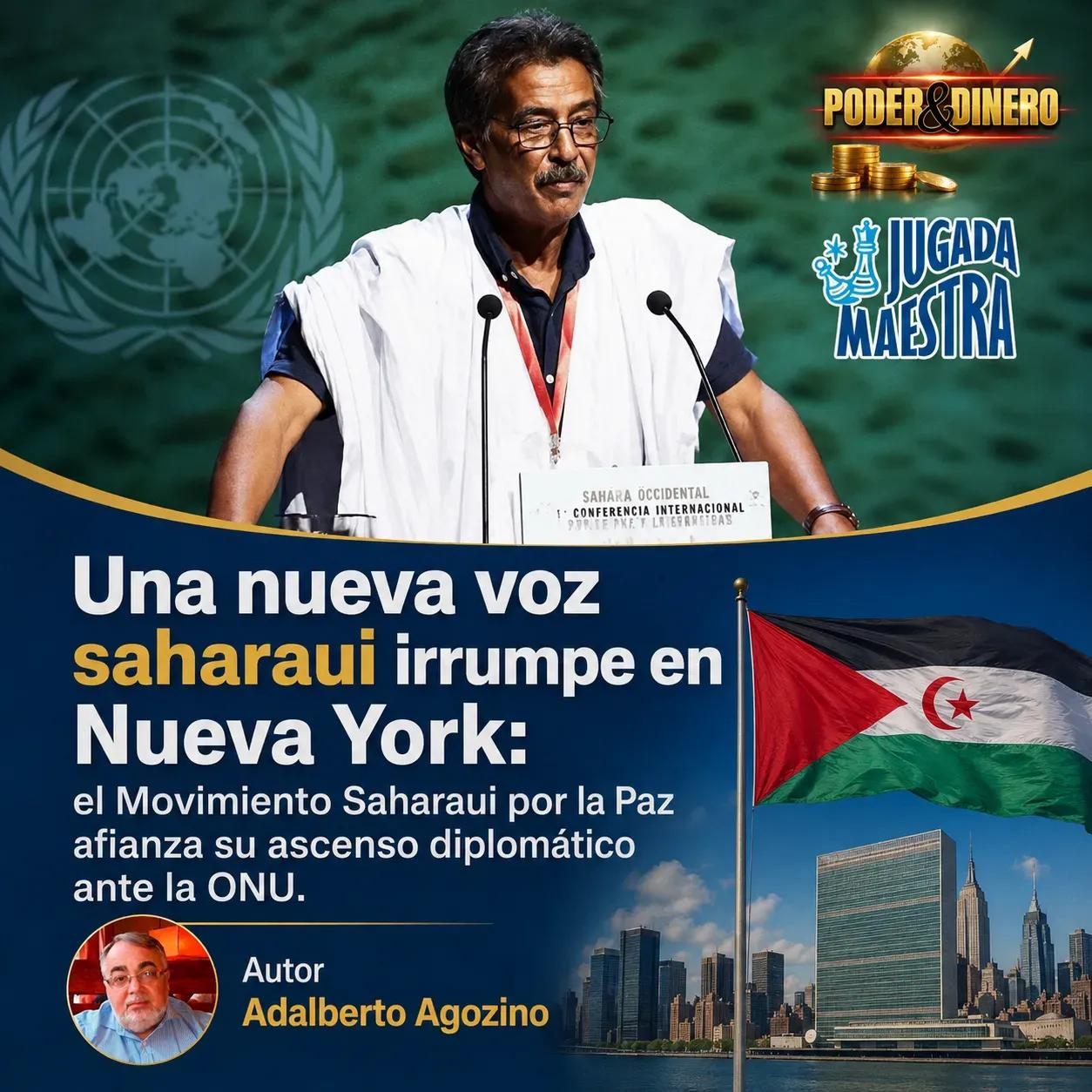
This displacement does not constitute a protocol gesture but rather the manifestation of an emerging dynamic within Sahrawi society. Created in April 2020 by former members of the Polisario Front disillusioned with its strategic immobilism and its one-party structure, the MSP defines itself as a pragmatic alternative that promotes political pluralism, internal reconciliation, and a negotiated solution prioritizing the well-being of the population above ideological rigidities. Its central purpose lies in overcoming stagnation through constructive dialogue, rejecting both violence and maximalist positions that have perpetuated the suffering of entire generations of Sahrawis trapped between exile in the Tindouf camps and a territory marked by decades of confrontation.
The composition of the delegation reflected the specific weight of the movement: alongside Baricalla, a veteran diplomat with previous experience in the Polisario's foreign service, Hadja Baboit and Mohamed Lamin Nafaa (or Ennafaa), members of the Permanent Political Commission, and Mohamed Cherif, a member of the Central Committee and head of International Relations, traveled. This high-level formation underscores the MSP's ambition to establish itself as a credible interlocutor, representing Sahrawi sectors from both inside and the diaspora that demand plural voices and realistic solutions.
Among the most significant meetings were those held with Mike Waltz, the Permanent Representative of the United States to the UN, and Jérôme Bonnafont, the French ambassador. Both permanent powers of the Security Council play a pivotal role in the United Nations peace architecture. In the meeting with Waltz on June 30, the Sahrawi leaders presented their analysis of the conflict as a legacy of the Cold War and delivered a comprehensive memorandum on the evolution of the issue. The American diplomat expressed his explicit support, posting on his official X account that he had met with "Sahrawi voices committed to peace, reconciliation, and the pursuit of a lasting solution", and adding that "the world should listen to them." An endorsement that significantly elevates the international credibility of the MSP.
Consulted diplomatic sources conveyed a favorable reception towards the constructive approach of the movement, which offers itself as a "serious, loyal, and constructive partner" willing to contribute to mediation efforts. The MSP has garnered increasing international support: its integration into the Socialist International, interventions in multilateral forums, and contacts with think tanks and lawmakers in Washington illustrate a projection that transcends its youth. It represents Sahrawis who, without mechanically aligning with any of the traditional parties, advocate for international guarantees, pluralism, and a future of dignity and socio-economic progress, exploring options like expanded autonomy under Moroccan sovereignty or any negotiated agreement that respects the original rights of the population.
This growing international visibility directly affects the positioning of the Polisario Front, whose claim to exclusive representation – forged in 1973 and sustained by Algerian support – now faces increasingly articulated internal and external contestation. The MSP erodes that monopoly by demonstrating that there are Sahrawi voices willing to engage in realistic compromise, questioning the Polisario's ability to renew itself and offer concrete perspectives beyond nationalist rhetoric. Analysts from the Maghreb view this process as a factor that forces the Polisario to confront its limitations and simultaneously opens a window of opportunity for the international community.
The New York visit, the second significant trip to the United States following last October's contacts in Washington and the Fourth Committee of the UN, consolidates the MSP as a disruptive element in a conflict that urgently requires resolution. In a context marked by recognitions of Moroccan sovereignty by western powers and global fatigue over frozen issues, the "Sahrawi third way" proposed by Hach Ahmed Baricalla – who knows firsthand the internal dynamics of the Polisario – brings freshness and pragmatism.
The Sahara continues to feature on the Security Council's agenda as one of the last vestiges of African decolonization. The diplomatic emergence of the MSP reminds us that sustainable peace does not arise from unmovable dogmas or historical inertia but from the will to listen to all legitimate voices and to build commitments with guarantees. If this dynamic solidifies, it could decisively contribute to closing a painful chapter and opening for the Sahrawis a horizon of reconciliation, development, and regional normalization. Time will tell if the international community is willing to seize this historic opportunity.
Adalberto Agozino is Doctor in Political Science. Professor at the National Gendarmerie University Institute and the National Defense Faculty of Argentina. Director of the Argentine Institute of Geostrategic Studies. Editor of Alternative Press Agency. Expert on Maghreb issues.
Comments