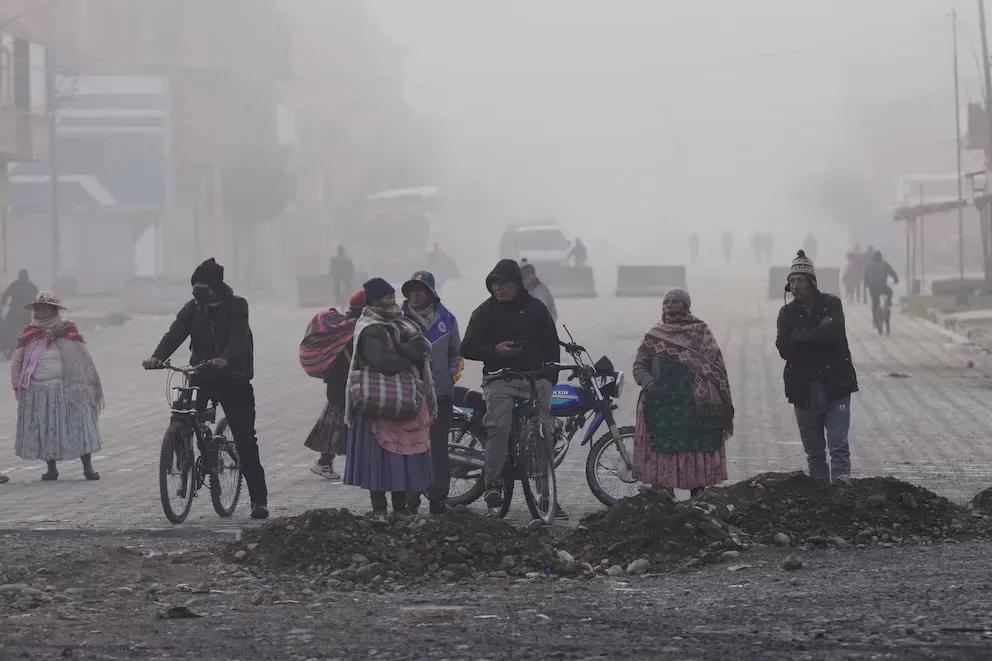
Bolivia is going through a deep political, social, and economic crisis that has escalated over the past few weeks and currently keeps the country in a scenario of strong uncertainty. Protests, roadblocks, clashes with security forces, and the deterioration of the economic situation have generated a climate of tension that impacts both the daily lives of millions of citizens and the institutional stability of the country.
The conflict unfolds just months after Rodrigo Paz took office as president, having assumed power in November 2025 after ending nearly two decades of dominance by the Movement for Socialism (MAS), the political force that governed Bolivia for a large part of the 21st century.
However, the initial expectations surrounding the new government quickly began to erode due to the worsening of the economic problems that the country had been facing for several years. The scarcity of dollars, the fall in international reserves, difficulties in importing fuels, and the sustained increase in the cost of living generated growing social discontent that ultimately led to a wave of nationwide protests.
The mobilizations gather diverse sectors: unions, transport workers, peasant organizations, miners, indigenous communities, and social movements demanding concrete answers in the face of the economic deterioration. Among the main demands are salary increases, guarantees for fuel supply, measures to contain inflation, and changes to various decisions driven by the Executive.
One of the most visible aspects of the crisis has been the multiplication of blockades on strategic roads and access points. These measures have affected the transportation of food, medicines, and fuels, generating episodes of shortages in several cities across the country, especially in La Paz and El Alto. Long lines at gas stations and the difficulty in obtaining basic products have become a recurring image in recent weeks.
Tension has also spilled onto the streets. In various parts of the country, clashes between protesters and security forces have been reported, with allegations of excessive force and fatalities amid control operations. Human rights organizations and different sectors of civil society have called for independent investigations to clarify the facts and prevent an even greater escalation of the conflict.
In light of this scenario, the government attempted to send signals of dialogue and announced some austerity measures, including a 50% reduction in the salaries of the president and his ministers. However, these initiatives did not succeed in defusing social discontent or halting the mobilizations. Meanwhile, criticism of the economic and political direction of the current administration continues from various opposition sectors and movements linked to former president Evo Morales.
The crisis has also begun to reflect in the financial realm. Analysts warn of rising economic uncertainty, deteriorating market confidence, and increased country risk, factors that could further complicate Bolivia's economic recovery in the coming months.
Today, Bolivia finds itself caught between the need to stabilize a weakened economy and the urgency of finding a political solution capable of containing the growing social discontent. As negotiations continue and protests persist in various parts of the territory, the country faces one of the most complex tests in its recent history, with an outcome that remains uncertain.

Comments