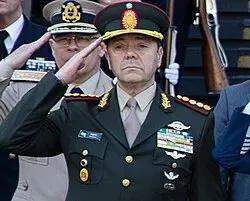
The recent appointment of Carlos Alberto Presti as head of the Argentine Army raises questions about the direction of the Armed Forces in a complex political and social context. Presti's figure, son of the repressor Roque Presti, resonates in a country that still grapples with the aftermath of its military past. This analysis seeks to explore how Presti's trajectory may influence defense policy and the social perception of military institutions in Argentina.
📊 Current panorama
Carlos Alberto Presti took command of the Argentine Army at a critical moment, where citizen trust in institutions is increasingly fragile. According to a study conducted by the Center for Studies of the New Economy (CENE), only 30% of Argentines trust the Armed Forces, a figure that has been decreasing since the year 2000. This distrust is linked to the country’s recent history, marked by human rights violations during the military dictatorship. The appointment of a military figure with controversial family backgrounds could further exacerbate this situation, generating both internal and external tensions.
🔍 International comparison
Internationally, it is interesting to observe how other countries have managed similar situations. In Chile, for example, after the end of Pinochet's dictatorship, transparency and historical reparation policies were implemented that helped rebuild public trust in the Armed Forces. According to data from the Chilean National Institute of Statistics, trust in the Armed Forces has increased to 70% since 2010. In contrast, Argentina has been more reluctant to confront its past; this reflects a lack of clear strategies to improve public perception of its military institutions.
⚖️ Implications
Presti's arrival in command of the Army could have significant implications for Argentina's internal and external politics. From an internal perspective, his leadership could be seen as a setback in efforts to distance the nation from its authoritarian military legacy. This could result in social protests and increased activism from human rights defender organizations. Externally, this situation may affect relationships with other countries that value human rights as an integral part of their diplomatic relations. According to a report by the Argentine Council for International Relations (CARI), a negative perception of the Army could limit opportunities for military or economic collaborations.
🔮 Strategic Perspective
From a strategic perspective, Carlos Alberto Presti's leadership presents both risks and opportunities. The lack of trust in military institutions could be used by opposing groups to question government decisions related to defense and national security. However, if policies that promote transparency and accountability within the Army are implemented, there is an opportunity to partially restore that lost trust. It is crucial that the Argentine government acts decisively to ensure that any actions taken under Presti's command align with democratic values and human rights.
In conclusion, the figure of Carlos Alberto Presti symbolizes more than just a simple change in military leadership; it represents a critical challenge for Argentina on its path toward a solid and reliable institutional framework. The future will depend not only on the behavior of the new head of the Army but also on how civil society responds to this new political-military scenario.
Comments