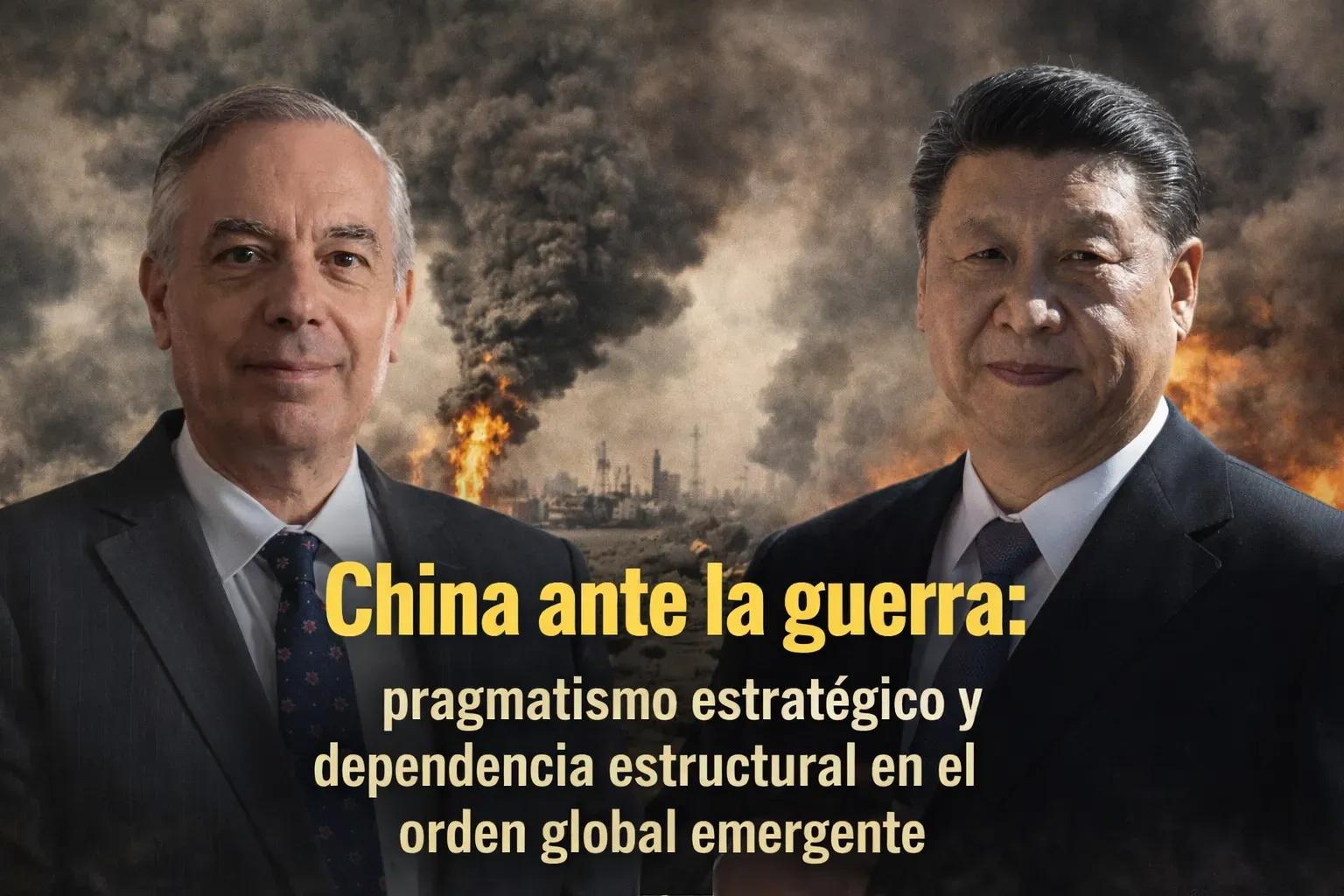
The evolution of the conflict in the Middle East unfolds in parallel to broader systemic dynamics. China's conduct in this scenario reflects a logic of strategic prioritization focused on economic stability and the preservation of key links. The interaction between energy, trade, and geopolitical variables allows us to observe behavioral patterns consistent with its global positioning.
In this context, the relationship with the United States acquires a centrality that transcends the regional conflict. The combination of competition and mutual necessity shapes a relevant analytical framework for understanding the current stage of the international system.
Strategic self-restraint and a culture of calculation in conflict scenarios
China's moderate response to the conflict fits into a pattern of action characterized by caution in scenarios away from its immediate sphere of influence. The logistical limitations for projecting capabilities over long distances, along with the assessment of costs and benefits, configure behavior aimed at avoiding unnecessary escalations.
In terms of strategic culture, this behavior can be linked to traditions of thought that prioritize observation and calculation over direct intervention, a logic often summarized in the idea of “observing the confrontation between other actors from a position of distance”, favoring the preservation of one's own capabilities and waiting for more favorable conditions.
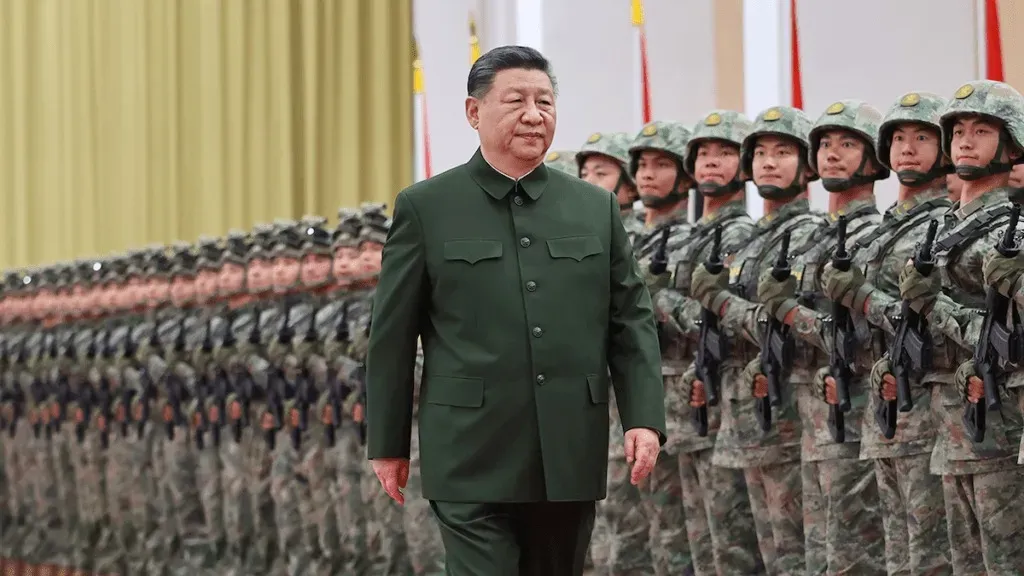
At the same time, this stance articulates with the need to preserve diplomatic maneuvering margins in an international environment characterized by high volatility and multiple interdependence.
Structural interdependence and the centrality of the Sino-American economic link
One of the most relevant structural factors is the economic relationship between China and the United States. Both countries concentrate a significant portion of the global economy, which generates an interdependence that directly conditions the strategic decisions of both parties.
Access to markets, investments, and trade flows continue to be central elements for the functioning of the international economic system. In this framework, spaces for bilateral dialogue and negotiation acquire strategic value, especially in contexts of global uncertainty.
Trade exchanges, value chains, and consumption dynamics create incentives to maintain levels of operational stability, even in contexts of political or commercial tensions. This relationship combines strategic competition with functional dependence, shaping one of the most relevant features of the contemporary international system.
Energy, markets, and flexibility: positioning vectors in the global order
The conflict introduces relevant variables in the energy domain, especially for economies with a high dependence on imports. Stability in oil and natural gas supply is key to sustaining industrial activity and production.
However, strategic analysis shows that the availability of energy resources is closely linked to the capacity for insertion in global markets. Both factors, energy and trade, are part of the same structural equation that conditions foreign policy decisions.
In this context, international relations tend to be structured based on specific interests rather than rigid commitments, reflecting a system characterized by flexible and adaptive links. The continuity of dialogue instances among major powers, even in conflict scenarios, reinforces the importance of maintaining selective coordination mechanisms.
Thus, the evolution of the global order is oriented towards dynamic equilibrium schemes, where the main actors simultaneously manage competition and cooperation based on their strategic priorities.

Comments