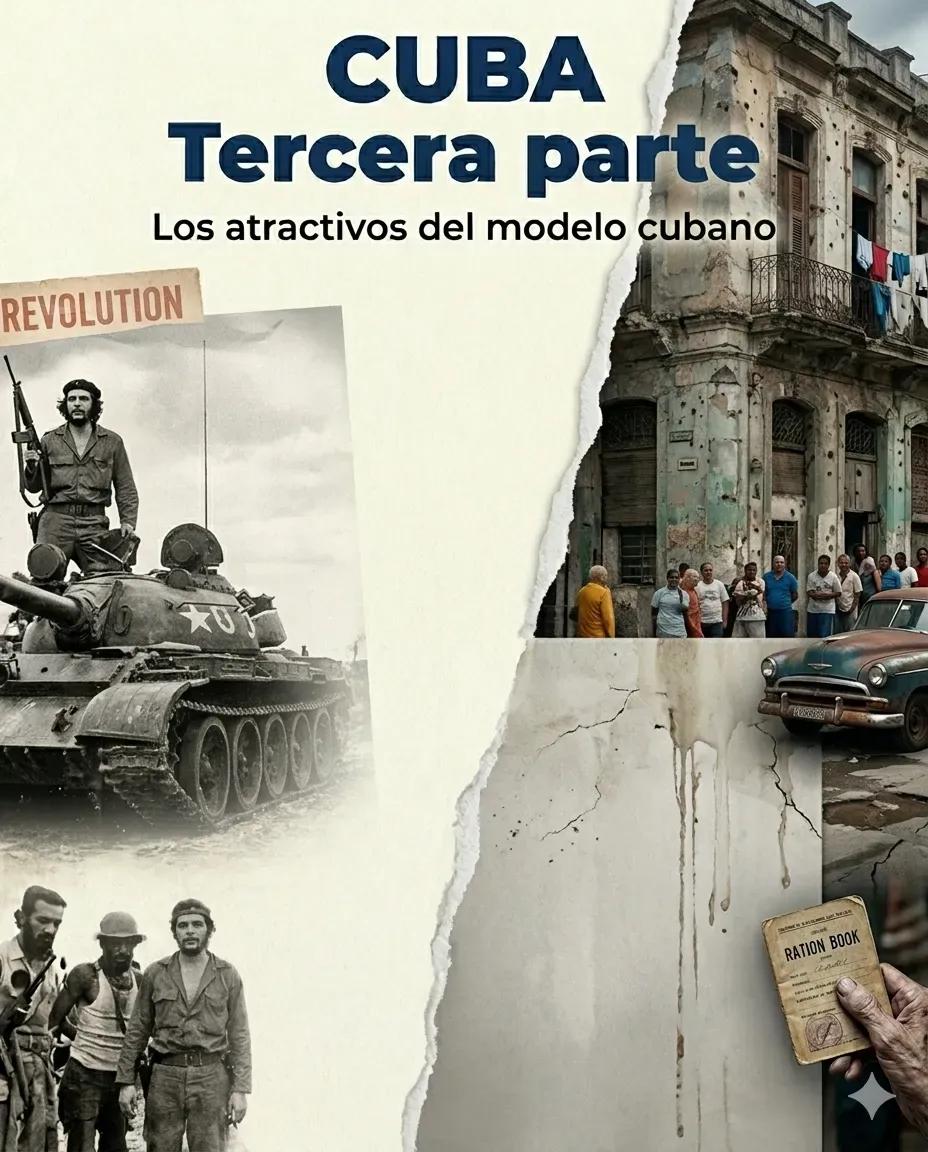
THE THREE ASSETS OF THE CUBAN MODEL
The Cuban regime, since the 1970s, has developed what intelligence analysts call "state narco-facilitation." This is not a traditional cartel. It is something more sophisticated: a sovereign state that makes its territory, military infrastructure, radio frequencies, airspace, and intelligence network available to criminal organizations in exchange for money, weapons, political influence, and the ability to destabilize its adversaries, particularly the United States.
What Cuba has that no cartel can easily buy is sovereignty. When a plane loaded with cocaine lands on Cuban territory, there is no possibility of a raid. When a fugitive accused of multimillion-dollar fraud in Miami crosses the Florida Strait, extradition becomes virtually impossible. When tens of millions of dollars in laundered money end up in Cuban bank accounts, no judge in Florida has jurisdiction to recover them.
The central analytical distinction is this: there is a fundamental difference between a state that tolerates drug trafficking — passive corruption — and a state that instrumentalizes it as active policy. The available evidence clearly places Cuba in the second category.
The model rests on three structural advantages that no cartel can replicate on its own. The first is sovereign territory: its cays, coasts, and airspace are beyond the reach of the DEA and the Coast Guard, offering safe corridors to Florida and Europe. The second is intelligence and counterintelligence capability: the Cuban Intelligence Directorate, heir to the G-2, protects its criminal partners against infiltrations, assigns special radio frequencies, and ensures active operational coverage. The third, and perhaps the most valuable, is permanent legal impunity: without an extradition treaty and without political will for surrender, Cuba offers a sanctuary where arrest ceases to be inevitable.
EL MARIEL: WHEN THE REGIME EXPORTED ITS PROBLEM (1980)
Between April and October 1980, the Cuban regime organized the Mariel exodus, in which approximately 125,000 people arrived in the United States. What many do not know is that the regime did not simply open a valve: it actively controlled who boarded the boats, including common prisoners, psychiatric patients, and people categorized as "antisocial," as a deliberate political operation.
U.S. diplomats present during the exodus, recorded in the archives of the Association for Diplomatic Studies and Training (ADST), describe how Cuban authorities classified inmates into categories and dosed how many criminals and mentally ill individuals they would include in each shipment ("A Flood of Cuban Migrants — The Mariel Boatlift, April-October 1980," ADST, April 25, 2015). It was not a leak. It was a directed shipment. As one of those diplomats documented: "The regime did not simply let people go. It chose exactly whom to send."
Subsequent federal figures reveal the real size of what Cuba programmed: of the 125,000 arrivals, between 16,000 and 20,000 had criminal records according to estimates from the Sun Sentinel from 1985, collected in the Wikipedia entry on the Mariel boatlift. About 1,869 ended up detained in the federal penitentiary in Atlanta, according to the Atlanta History Center. A bilateral agreement signed on December 14, 1984, identified 2,746 people to be returned to Cuba, according to the White House statement on the same day (Reagan Presidential Library, "Statement by Principal Deputy Press Secretary Speakes on an Agreement With Cuba Concerning Immigration and Refugee Matters") and confirmed by the New York Times on December 15, 1984.
For the communities that lived through that period, Mariel was not a migratory crisis: it was the forced transfer of a prison problem from one state to another, at the cost borne by civilians who had no voice or vote in the decision. Behind each of those 125,000 arrivals is a human story that statistics do not fully capture: families in Miami who welcomed people into their homes who never asked to come, communities that absorbed a crisis they did not create.
About the Author
William L. Acosta is a graduate of PWU and Alliance University. He is a retired police officer from the New York police, a former military personnel of the United States Army, and founder and CEO of Equalizer Private Investigations & Security Services Inc., a licensed agency in New York and Florida, with international projection. Since 1999, he has led investigations in narcotics cases, homicides, and missing persons, and has participated in criminal defense at both the state and federal levels. A specialist in international and multi-jurisdictional cases, he has coordinated operations in North America, Europe, and Latin America.

Comments