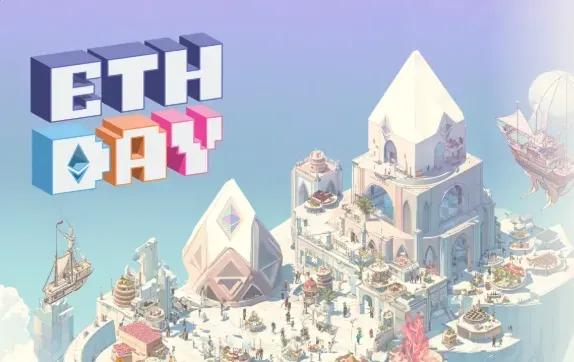
An event that functions as a parallel city
Devconnect unfolded as an ecosystem: hundreds of talks, side-events, hackathons, thematic hubs, workshops, and self-managed meetings by global communities. There was no center or authority: decentralization was also in the form of the event.
The spirit was clear: the infrastructure of the future will not come from above, but from distributed networks of people building without asking for permission.
There was talk of scalability, ZK proofs, chain modularity, new digital identity standards, DAO governance models, sustainable tokenomics, and restructuring the traditional financial system. But beneath the technical aspects was another layer: the question of power.
Blockchain as an ideological territory
Unlike other tech industries that were born under corporate structures — Web2 dominated by Silicon Valley, social media giants, and venture capital — Web3 was permeated by philosophical currents, political tensions, and ethical disputes.
Technological anarcho-capitalism
A significant part of the ecosystem is guided by one premise:
“The State is an unnecessary intermediary; technology must replace it.”
It is an ideology that sees blockchain as a weapon against bureaucracy and state monopolies. They are the ones who embrace radicalism: money without banks, contracts without judges, coordination without politicians. They are not concerned about chaos: they see it as the price of freedom.
Crypto-realism or “pragmatic libertarianism”
Another group understands that technology can transform, but not abolish, the existing order. They seek bridges between Web3 and the State, between regulators and builders. They see blockchain as trust infrastructure, not as a tool for insurgency. They are the ones who talk about compliance, institutionalization, and mass adoption.
The community current
There is also a movement that views Web3 as a way to correct the mistakes of digital capitalism:
collective ownership of platforms,
equitable distribution of value,
participatory governance,
measured environmental impact,
digital identity as a human right.
This current seeks for technology to not only decentralize but also democratize.
The techno-optimists of the 4th Industrial Revolution.
Many attendees came with a broader framework: blockchain as part of a technological tsunami that includes AI, IoT, robotics, biotech, machine economies, and total automation.
From this perspective, what is at stake is a civilizational shift, where socioeconomic systems must adapt or collapse under the speed of progress.
What Devconnect showed in the background
Beyond the enthusiasm and innovation, Devconnect left three fundamental conclusions:
Web3 is not politically neutral
Every protocol, every decision about governance, every economic model carries an implicit philosophy about how society should be organized. The idea that “technology is just code” can no longer hold: technology and its effects generate distinct political currents.
The 4th industrial revolution is also a revolution of power
If Web3 scales, not only will finance change: it will change the way people vote, organize, work, produce, and identify themselves. It will change who holds authority and who does not.
Communities are writing the future that States do not yet understand
While governments regulate looking at the past, these communities are building the future in real time. And what they build does not conform to borders, old parties, or inherited bureaucracies.
A world that still does not know how it will be
Devconnect showed that blockchain is no longer just technology: it is a territory of cultural dispute. Each chain, DAO, protocol, or workshop is actually a rehearsal of how society could be organized in the next 10, 20, or 50 years.
The 4th industrial revolution is advancing, and with it emerge new forms of power, new tensions, and new imaginaries.
What model will prevail? The radical libertarian, the institutional hybrid, the community-driven, or one we have yet to see?
The only clear thing is that this ecosystem is not waiting for permission to invent it.

Comments