By:
William Acosta, NYPD (Ret)
Jesús Daniel Romero, USN (Ret)
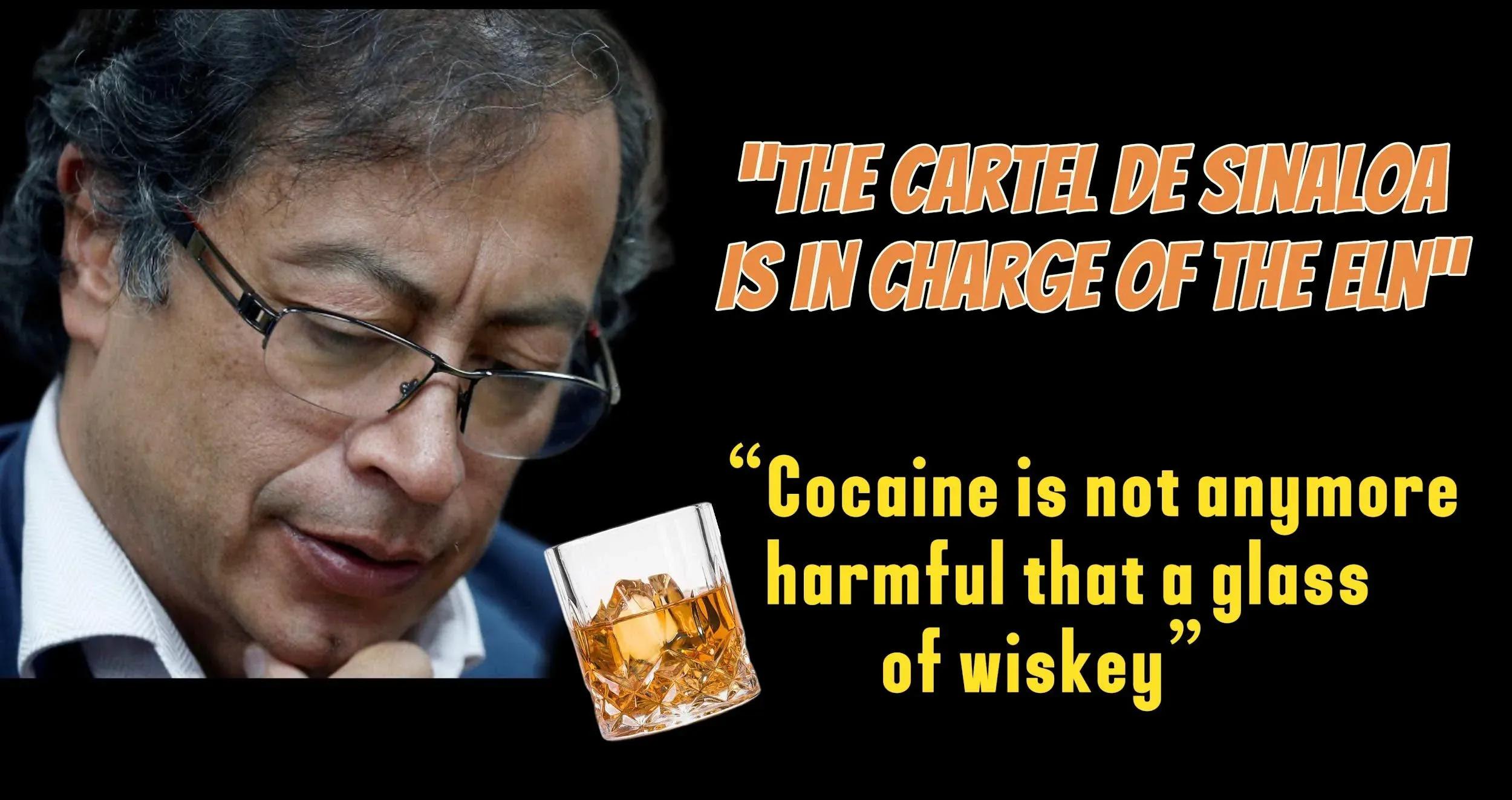
This report analyzes recent comments made by Colombian President Gustavo Petro regarding the relationship between the Sinaloa Cartel and the National Liberation Army (ELN). It evaluates the implications of these statements on the operational dynamics of drug trafficking in Colombia, the autonomy of local armed groups, and the challenges faced by foreign cartels, particularly those from Mexico. The findings suggest that, while alliances exist, Colombian organizations maintain significant autonomy, complicating the narrative of subordination put forth by President Petro. Additionally, there are concerns that President Petro's claims may serve as a strategy to deflect blame from the shortcomings of his "Total Peace" policy, which has faced significant criticism.
Introduction
In early February, President Gustavo Petro made serious allegations against the ELN, suggesting that this guerrilla group operates under the orders of the Sinaloa Cartel and supplies it with cocaine. In a speech at the Industrial University of Santander (UIS) in Bucaramanga, Petro stated that the Sinaloa Cartel is the "current boss" of the ELN, implying a deep connection between guerrilla activities and drug trafficking. This claim arises amidst an escalation of violence in regions such as Catatumbo, where the ELN has intensified its offensive against FARC dissidents. This report seeks to critically assess these claims and the realities of the drug trafficking landscape in Colombia.
Key Findings
The comments made by President Gustavo Petro indicate a possible misunderstanding of the operational dynamics between the Sinaloa Cartel and the ELN. The assertion lacks substantial evidence and overlooks the historical context of the ELN's autonomy. According to President Petro, the ELN operates under the control of the Sinaloa Cartel, suggesting that its leaders are now Mexican drug traffickers who buy cocaine produced in Colombia. Petro indicated that the cartel funds and coordinates ELN activities, establishing a link that implies an exchange of cocaine for specialized weaponry.
Petro emphasized the need for education as a means to prevent youth from engaging in violent and criminal activities influenced by foreign cartels. This approach could serve as a long-term strategy to undermine the recruitment efforts of armed groups in regions like Catatumbo. The recent surge in violence resulting from the ELN's offensive has displaced more than 54,000 people, highlighting the urgent need for effective conflict resolution and humanitarian assistance in the region. Reports indicate that ELN actions have resulted in the deaths of dozens of civilians, exacerbating the humanitarian crisis.
In addition to the Sinaloa Cartel, the Jalisco New Generation Cartel (CJNG) is also present in Colombia, further complicating the security situation. Both cartels collaborate with Organized Armed Groups (GAO) in the production and distribution of cocaine. An intelligence report from the National Army revealed that at least 80 ELN guerrillas, including minors, have crossed into Venezuela to bolster their operations in Catatumbo. This movement indicates an intensification of guerrilla activity in the border area, which has become a hotspot of instability.
Geographic and sociopolitical factors hinder Mexican cartels from establishing permanent bases in Colombia, requiring partnerships with local groups to operate effectively. Colombian criminal organizations have successfully collaborated with Mexican cartels while maintaining territorial control. This dynamic suggests a balanced partnership rather than a subordinate relationship. Partnerships with local armed actors, including the ELN, AGC, and FARC dissidents, allow Mexican cartels to secure cocaine trafficking routes to Caribbean ports, facilitating exports to North America and Europe.
As Mexican cartels gain access to cocaine production, Colombian groups maintain territorial control, operating according to their interests and preserving their autonomy. Despite the financial power of Mexican cartels, their ability to operate independently in Colombia is significantly limited by the hostile environment. Petro stressed the importance of education in preventing the recruitment of youth by illegal armed groups. He noted that these groups are increasingly recruiting young people to carry out violent acts, presenting a significant threat to the future of the country.
Structure and Operations of the ELN
The ELN operates primarily in Catatumbo (Norte de Santander), Arauca, southern Bolívar, Antioquia (Bajo Cauca region), Cauca, Chocó, and Nariño, with occasional presence in Boyacá, Casanare, and southern Cesar. The group also has a presence in Colombia's six largest cities: Bogotá, Medellín, Cali, Barranquilla, Bucaramanga, and Cúcuta.
The Central Command (COCE) consists of five commanders responsible for directing the ELN, political work, military area, national staff leadership, representation and international issues, as well as financial matters and links with military fronts. Manuel Pérez Martínez, alias "El Cura Pérez", led COCE from 1973 until his death in 1998. Nicolás Rodríguez Bautista, alias "Gabino", took over after Pérez and restructured the Central Command. The current composition of COCE includes Eliécer Chamorro Acosta, alias "Antonio García", as Chief Commander; Israel Ramírez Pineda, alias "Pablo Beltrán", as Political Leader; Rafael Sierra Granados, alias "Ramiro Vargas", responsible for international relations; Gustavo Aníbal Giraldo Quinchía, alias "Pablito", managing communications and drug trafficking along the border with Venezuela; and Jaime Galvis Rivera, alias "Ariel" or "Lorenzo Alcantuz".
Former COCE members include Nicolás Rodríguez Bautista, alias "Gabino", who resigned in 2021 due to health issues; Pedro Cañas Serrano, alias "Óscar Santos", who is deceased; Carlos Arturo Velandia, alias "Felipe Torres", who was captured in 1994; and Gerardo Bermúdez, alias "Francisco Galán", also captured in 1994. The National Directorate (DINAL) was established in 1982 with three members from existing fronts and expanded to nine members in 1983, including war fronts, the National Finance Commission, the National General Staff, and the National Logistics Commission. Its leader, alias "Gallero", was killed by authorities in 2020.
The ELN has seven military fronts and a National Urban Front, subdivided into 29 rural fronts and 22 mobile companies. The rural fronts are organized into columns, companies, detachments, squads, and triads. The popular militias operate in a decentralized manner, carrying out logistical tasks. The Colombian government has reported the presence of the ELN in Venezuela, supported by investigations that indicate links and operations in that country.
Underlying Factors Influencing Dynamics
The legacy of violence and armed conflict in Colombia has entrenched illicit activities in society. The dissolution of the FARC in 2016 created a power vacuum that was filled by groups like the ELN. The lucrative cocaine trade incentivizes both local and foreign actors, while high levels of poverty and unemployment facilitate recruitment for armed groups. Cocaine production and coca have a direct correlation with death, further complicating the socioeconomic landscape.
U.S. anti-drug policies aimed at eradication often lead to an increase in violence and displacement, affecting the operational landscape for both Colombian and Mexican groups. Armed groups may receive support from local communities, complicating efforts to combat their influence. Economic incentives drive recruitment of youth into these organizations. Corruption and weak governance hinder effective law enforcement, allowing criminal organizations to thrive. Limitations within the judicial system also affect prosecution efforts.
The global demand for cocaine fuels Colombia's critical role in the drug trade, requiring collaboration across borders to tackle organized crime. Colombian government counterinsurgency strategies may lead to an escalation of violence, further entrenching armed groups in local communities.
Involvement of the Cartel of the Suns and Nicolás Maduro's Regime with the ELN
The involvement of the Cartel of the Suns and Nicolás Maduro's regime with the National Liberation Army (ELN) represents a significant aspect of the current geopolitical and security dynamics in Colombia and Venezuela. This collaboration highlights the interconnections between state power, organized crime, and guerrilla warfare in the region.
The Cartel of the Suns refers to a group of high-ranking Venezuelan military officials and government leaders allegedly involved in drug trafficking. This group has established a strategic alliance with the ELN and Mexican cartels. This partnership has evolved over the years and is characterized by mutual benefits that facilitate global operations.
Reports indicate that the Cartel of the Suns collaborates with the ELN to control drug trafficking routes, particularly in border regions with Colombia. This partnership allows the ELN to access resources and protection while enabling Venezuelan officials to benefit from the lucrative cocaine trade. Nicolás Maduro's regime has provided the ELN with political and military support, viewing the group as a useful ally to maintain control over areas that could otherwise be influenced by Colombian state forces. This support includes facilitating the ELN's operations in Venezuela and shielding its members from extradition to Colombia.
Both the ELN and Maduro's regime share common objectives in terms of resisting U.S. influence in the region. They have positioned themselves as opponents to U.S. policies, which they view as imperialistic, thus fostering a sense of solidarity in their struggle against perceived external threats. The ELN has established a significant operational presence in Venezuela, where it has been able to recruit fighters, train members, and coordinate drug trafficking activities with the Cartel of the Suns. This operational base has allowed the group to expand its influence beyond Colombian borders.
The collaboration between the ELN and Maduro's regime has exacerbated the humanitarian crisis in the region. Increased violence, displacement, and criminal activities have affected local populations, particularly in border areas where both entities operate. The relationship between the Cartel of the Suns, the ELN, and Maduro's regime has raised concerns among international observers about the stability of the region. The involvement of state actors in drug trafficking and guerrilla warfare complicates efforts to address these issues through traditional diplomatic and military means.
Changing the Narrative: Why President Petro Wants to Redirect Attention
The ELN is expanding under his watch. Since Petro took office, the ELN has gained strength, taking control of strategic territories in Colombia, Venezuela, and Ecuador. His government's peace talks with the ELN have led to truces that effectively allow the group to regroup and expand. The Sinaloa Cartel is a convenient scapegoat. This cartel operates internationally and is already a significant national security concern for the U.S. By highlighting the Sinaloa Cartel, Petro can align himself with U.S. anti-drug efforts while avoiding scrutiny over the ELN's growth. However, the cultivation of coca and the production of cocaine remain a significant concern for Petro's political existence and Colombia's role in disruption.
The ELN has political and ideological ties to Petro's base. The group has historical links with Marxist-Leninist movements and shares ideological similarities with Petro's leftist policies. Suppressing the ELN would alienate factions within his political base and disrupt his peace negotiation agenda. Venezuela's role in protecting the ELN is significant. Maduro's regime in Venezuela actively supports and harbors the ELN, allowing it to operate freely across the border. Petro maintains diplomatic ties with Maduro, meaning he has little incentive to confront cross-border ELN operations.
Reality Check: The ELN Is a Major Threat in the Region
The ELN now controls entire networks of cocaine production and trafficking, working with Mexican cartels rather than just taxing them. The group is also growing in Ecuador, VeVenezuela and Central America, becoming an increasing transnational threat. While the Sinaloa Cartel focuses on drug trafficking, the ELN also engages in terrorism, extortion, and political insurgency, making it an even greater long-term threat to Colombia's stability.
Conclusion
The situation involving Colombian armed groups and Mexican cartels is multifaceted, driven by a combination of historical grievances, economic incentives, social conditions, and geopolitical realities. The collaboration between the Cartel of Suns and Nicolás Maduro's regime with the ELN underscores the complex interplay of organized crime, state power, and guerrilla warfare in Colombia and Venezuela. This alliance enhances the ELN's operational capabilities and poses significant challenges to regional stability and security, contributing to humanitarian crises in the affected areas. Addressing these intertwined issues requires coordinated efforts from both national and international actors to dismantle these networks and mitigate their impact on local communities. Understanding these dynamics is crucial for developing effective strategies to combat organized crime and improve regional security, thus promoting sustainable peace in Colombia. The challenges posed by violence, recruitment, and governance require comprehensive policies that address both immediate humanitarian needs and long-term structural issues.
References
Smith, J. (2023). Cocaine production and the Colombian conflict. Oxford University Press.
López, M. (2023). The impact of armed groups on drug trafficking in Colombia. Journal of Latin American Studies, 54(1), 123-145.
Rodríguez, A. (2023, February 10). The rise of the ELN: new challenges for Colombia. Colombian News Today.
National Army of Colombia. (2022). Annual report on security and armed groups.
Torres, L. (2020). The drug trade and its impact on Colombian society (Publication number 123456) [Master's thesis, University of Bogotá]. ProQuest Dissertations & Theses Global.
United Nations Office on Drugs and Crime. (2022). World drug report 2022.
García, F. (2023). The influence of the Sinaloa Cartel on Colombian armed groups. In Proceedings of the International Conference on Drug Trafficking (pp. 45-58). University of Medellín.
:
William L. Acosta: Magna Cum Laude graduate from PWU and Alianza University. He is a retired police officer from New York and founder and CEO of Equalizer Private Investigations & Security Services Inc., a licensed agency in New York and Florida with global reach. Since 1999, he has conducted investigations into narcotics, homicides, and missing persons, also participating in state and federal criminal defense. An expert in international and multijurisdictional cases, he has coordinated operations in North America, Europe, and Latin America.
Jesús D. Romero: Magna Cum Laude graduate from Norfolk State University. He is a retired officer from the United States Navy intelligence and Army Intelligence Operations with 37 years of combined service. He worked in the defense industry with British Aerospace Systems and Booz Allen Hamilton. He participated in missions in Bosnia, Iraq, and Sudan. He commanded a Defense Intelligence Agency unit in Panama and oversaw operations in the Caribbean, Central America, and South America. He is a bestselling author on Amazon and a news commentator in various media: radio, television, YouTube, and print.

Comments