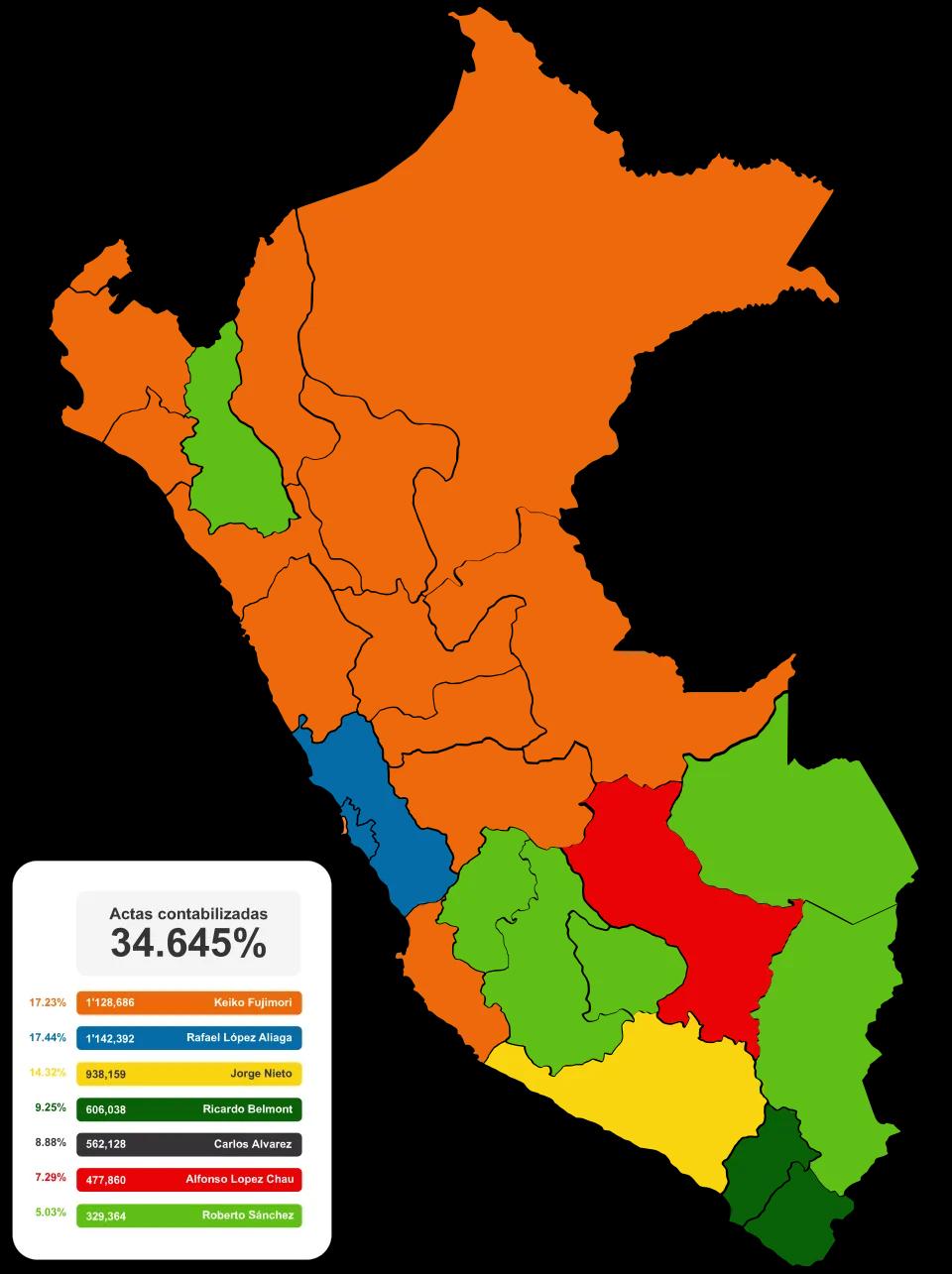
The general elections in Peru, scheduled for April 12, 2026, have begun to generate a deep debate about their potential impact on the governance of the country. In a context marked by political and economic instability, the question arises: what implications will these elections have for Peru's future? This analysis seeks to explore not only the current context but also the causes that have led to this point and how it compares to other electoral processes in the region.
📊 Current situation and context
According to the National Jury of Elections (JNE), the 2026 general elections are crucial for defining the political course of the country after several years of institutional crisis. Since 2018, Peru has seen the departure of three presidents in less than five years, which has generated deep distrust among citizens. According to recent surveys, more than 70% of the population believes the country is poorly directed. Furthermore, inflation has reached an annual 8%, according to the Central Reserve Bank of Peru (BCRP), which adds pressure on candidates to present viable solutions.
🔍 Analysis of causes and factors
The causes behind political instability in Peru are multifaceted. Firstly, there is a structural weakness in democratic institutions. Corruption has permeated the political system, with scandals involving multiple political leaders. For example, the Odebrecht case has left an indelible mark on public trust towards institutions. Additionally, economic factors such as youth unemployment—which exceeds 20%—exacerbate social and political tensions. Historically, this lack of trust has led to repeated cycles of instability.
🌍 International comparison and global impact
When comparing the situation in Peru with other Latin American countries, similar patterns can be observed. In Brazil, for example, the presidential elections of 2018 were marked by a polarized political climate and similar economic crises. However, Brazil managed to establish a more stable government under Jair Bolsonaro after years of political turbulence. In contrast, Peru still struggles to find a clear course after each failed election. This highlights how strong institutions can be a determining factor in avoiding destructive cycles: "Without strong institutions, there is no trust."
⚖️ Implications and consequences
The 2026 elections will not only influence the immediate political landscape; they will also have profound economic implications. The current uncertainty may discourage both foreign and national investment. According to data from the Ministry of Economy and Finance (MEF), private investment fell by 15% in 2023 due to the lack of political clarity. This directly affects Peruvian citizens: less investment means less job creation and greater economic difficulties. On the other hand, if a stable government is established after these elections, it could open doors to new economic opportunities.
🔮 Strategic perspective and future outlook
Looking ahead, it is essential that political parties present clear and sustainable proposals to attract voters weary of empty promises. The risks are high: if the elections result in another period of political instability or if the results are disputed again, there could be massive protests that further exacerbate the country's economic situation. Opportunities lie in greater civic participation and an effective restructuring of the electoral system that ensures transparency and trust.
In conclusion, the general elections of 2026 are a critical point for Peru; their impact will not only affect the political sphere but also the long-term economic development of the country. It is imperative that both citizens and political leaders understand this complex context and work towards a more stable and prosperous future for all Peruvians.
Comments