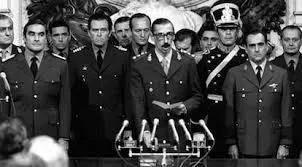
Fifty years after the 1976 coup in Argentina, the country reflects on one of the deepest wounds in its history. In a context marked by intense political debates, recurring crises, and disputes over the meaning of the past, the memory of those years emerges forcefully: not as a distant recollection, but as an uncomfortable question that continues to confront the present. Half a century ago, the Armed Forces interrupted democratic order and established the National Reorganization Process, initiating a systematic plan of repression that included kidnappings, torture, disappearances, baby theft, and deep economic and social deterioration. How does this break fit into a history marked by other coups? What conditions made it possible, and why does its imprint remain so persistent?
From the overthrow of Hipólito Yrigoyen in 1930 to the institutional disruptions of 1955 and 1966, Argentina built a political instability that found its most extreme and brutal expression in 1976. That dictatorship sought not only to discipline society through State Terrorism but also to reconfigure its economic and cultural foundations. For many, it was the darkest chapter of modern Argentine history. Today, half a century later, the question is not only what happened, but what do we do with that past: is it a closed chapter or an active memory that demands to be revisited, transmitted, and defended against oblivion?
The Beginning of Darkness
The dawn of March 24, 1976, was neither an isolated nor improvised event, but the precise execution of a plan that had been brewing for months. In a country marked by political crisis, violence, and the wear of Isabel Perón's government, the Armed Forces advanced in a coordinated manner to take control of the State. Latin America was undergoing the “Condor Plan.” This device articulated the dictatorships of the Southern Cone with the aim of pursuing, kidnapping, and eliminating political opponents beyond their own territories. Its strength was highlighted in the logistical support and shared intelligence between Latin American countries, backed by the United States government.
In the early hours of the day, the Military Junta, composed of Jorge Rafael Videla, Emilio Eduardo Massera, and Orlando Ramón Agosti, announced the seizure of power through an official statement broadcast nationwide. It informed of the dismissal of the government, the suspension of political activity, the dissolution of Congress, the intervention of the provinces, and the prohibition of all forms of union participation. The country awoke under military control, with constitutional guarantees annulled and public life completely reorganized under the logic of the Armed Forces. Military personnel occupied strategic points throughout the country: radio broadcasters, television channels, public buildings, and access points to major cities.
From that very day, the repressive apparatus that would characterize the self-styled “National Reorganization Process” began to unfold. Although illegal repression (notably the Argentine Anti-communist Alliance) had already had precedents in the previous months, March 24 marked the beginning of its large-scale institutionalization. Nighttime kidnappings, operations without judicial orders, and the establishment of clandestine detention centers became systematic practices. Society was plunged into a climate of uncertainty and fear, where silence began to be a form of survival. That day, not only did a government fall: a regime was inaugurated that would profoundly transform Argentina's political, social, and cultural life.
The Other Indisputable Numbers
In parallel with the repressive deployment, the dictatorship advanced on the economic structure with a depth seldom seen. Under the leadership of José Alfredo Martínez de Hoz, the country experienced a drastic turn: between 1976 and 1981, external debt rose from approximately 7 billion dollars to over 40 billion, marking a cycle of accelerated indebtedness. The national industry, which had been one of the engines of development in previous decades, began to retract in the face of indiscriminate import openings. Entire sectors could not compete and closed, causing a sustained drop in industrial employment and an increase in unemployment and labor precariousness.
One of the most representative mechanisms of this model was the so-called “financial bicycle,” enabled by the 1977 financial system reform. High interest rates in pesos, combined with a relatively stable exchange rate, encouraged speculation: capital entering the country sought quick profits without going through production. This scheme generated an artificially profitable economy for the financial sector but deeply regressive for society as a whole. The share of wages in national income fell significantly (it is estimated that it went from about 50% to less than 30%), evidencing a transfer of resources from workers to concentrated sectors.
The turning point came towards the end of the dictatorship when the fragility of the model was exposed. In 1982, under Domingo Cavallo's management at the Central Bank, the nationalization of private debt was implemented: the State assumed external commitments of large companies, transferring the burden to society. This process consolidated a critical economic legacy that would condition subsequent democratic governments. Thus, the economic project of the National Reorganization Process not only transformed the present of that time but left structural marks that still today are part of the Argentine economic debate.
Never Again
Fifty years after those events, the discussion is no longer solely about reconstructing what happened but about actively maintaining its memory in the present. In a context where discourses emerge that relativize or directly deny state terrorism (driven from sectors of government), the risk is not only symbolic: it implies eroding democratic consensus built over decades of struggle.
Under a discourse backed by the “Theory of the Two Demons” demanding a “true history,” there lies a justification for the military, claiming their actions were warranted as “Argentina was in a war,” equating state power with that of guerrilla forces. One cannot demand a “complete history” as denialism asks, since the genocides (some are still at large) established a pact of silence to not disclose where the bodies of the disappeared were thrown into rivers during the Death Flights or where the children of mothers who gave birth in secrecy are, among various crimes against humanity committed during the last military dictatorship.
In that path, the Trial of the Juntas marked an unprecedented milestone worldwide: for the first time, a democracy judged its own dictators in civilian courts. Driven during Raúl Alfonsín's government, this process not only established criminal responsibilities but also laid the foundations for a human rights policy that would consolidate over time. The “Never Again” report from CONADEP documented the horror and provided an institutional framework for the testimonies of victims, transforming pain into evidence and collective memory.
Remembering is not a nostalgic exercise nor an empty slogan; it is a political and social practice that seeks to prevent repetition. Memory, Truth, and Justice function as tools of resistance against denialism and as an ethical anchor in the face of the fluctuations of the present. Today, organizations such as the Mothers of Plaza de Mayo and the Grandmothers of Plaza de Mayo continue to remember that the struggle is not over, that memory is not a closed archive but a process in constant construction. The slogan “Never Again” not only refers to the past but challenges the present and projects a responsibility toward the future. Because if recent Argentine history has made one thing clear, it is that oblivion is not neutral: it is the ground where the conditions that made the horror possible can sprout anew.

Comments