Facts
This morning, around 3 am, attacks were reported on strategic points within Caracas, the capital of Venezuela, by the United States. It was confirmed that the main targets were Fuerte Tiuna, La Carlota Air Base, the Officers' School of La Guaira, the Higuerote air terminal, and the Mausoleum of Hugo Chávez where his remains are believed to be. Some points are very close to the civilian population as seen in the videos recorded by Venezuelans themselves. It is also recognized that the operation used the MH-60M DAP model. In addition to this, the attacks are said to have been of a surgical nature and of short duration, aimed at neutralizing command, control, and mobility centers of the high political-military command, with no reports of massive bombings or saturation weaponry at this time. Military analysts point out that this operational pattern is consistent with “decapitation strikes” doctrines, aimed at quickly dismantling the command chain of a specific regime. The MH-60M DAP (Direct Action Penetrator), used in the operation, is a highly specialized variant of the Black Hawk, employed by U.S. special operations forces. It is equipped for nighttime insertions, low flight, urban warfare, and precision support fire, which reinforces the hypothesis of a planned operation with prior intelligence and internal support.
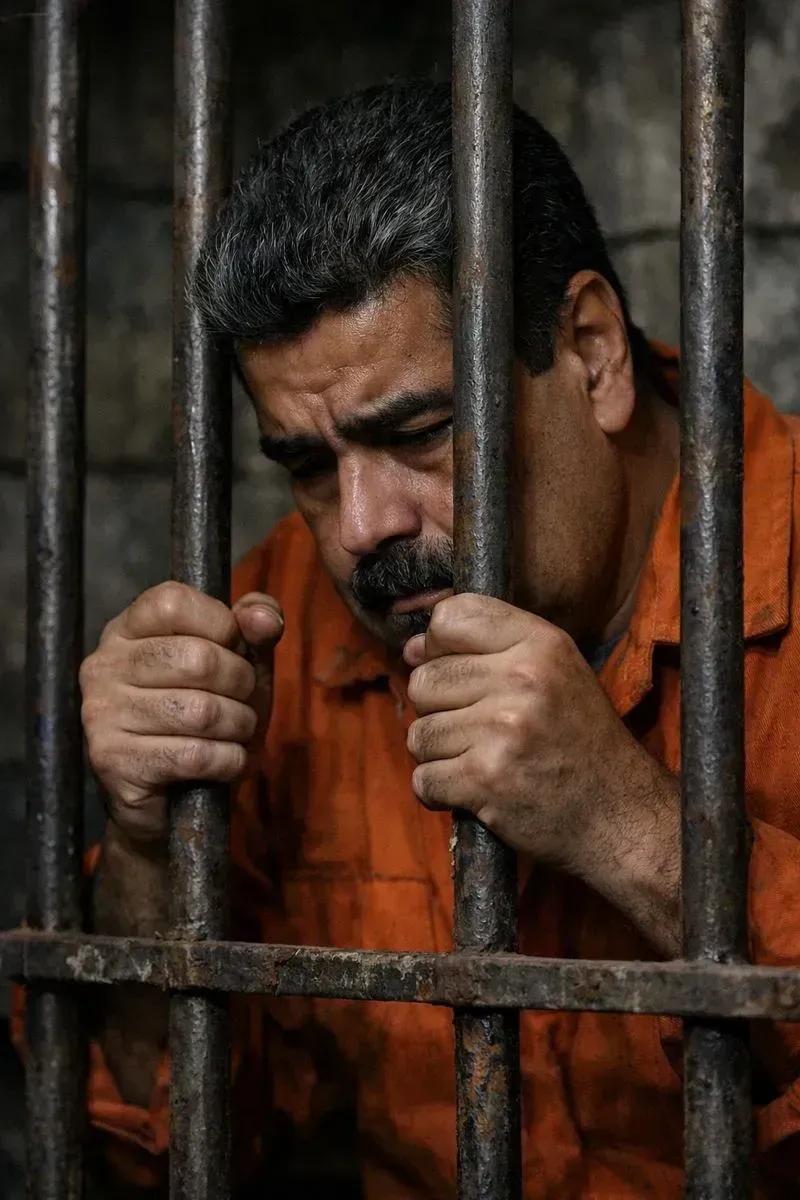
The President of the United States, Donald Trump, confirmed the news of the capture and military operation through his social media at 4:21 am, Eastern Time in the U.S., confirming the operation's effectiveness. Currently, the leader of the regime, along with his wife, is on a ship heading to the U.S. From Washington, Pentagon sources indicated that the operation was “limited in scope, precise in targets, and concluded once the mission was accomplished”, emphasizing that there is not, at least in this phase, a sustained military deployment in Venezuelan territory.
Possible Trial for the U.S.
It is more than clear that Maduro will be prosecuted for human rights violations within Venezuela and unconstitutional acts subsequently constitutionalized to try to legalize the dictatorial regime. However, due to the denunciations from several countries and what a military operation of this scale represents, it is possible that this situation ends up in the international court. In legal terms, the capture of a head of state through a foreign military operation raises complex questions about the legality of the use of force, state sovereignty, and international criminal jurisdiction. Although Maduro does not enjoy unanimous recognition as a legitimate president, his de facto authority introduces tensions between classical international law and contemporary human rights protection doctrines.
The Chinese foreign ministry issued an official statement where it expressed shock and condemned the operation. “These hegemonic acts by the United States seriously violate international law and Venezuela's sovereignty, threatening peace and security in Latin America and the Caribbean.” “We call on the United States to respect international law and the purposes and principles of the United Nations Charter, and to cease violating the sovereignty and security of other countries.” Those were the exact statements. Russia, Iran, and several ALBA countries also expressed their preliminary rejection, while some Latin American governments remained silent or called for “independent verification of the facts,” reflecting the deep regional fragmentation regarding the Venezuelan case.
Trump could defend himself based on the argument that his action did not respond to an expansion of power logic, but to the management of an extreme governance crisis with direct externalities on regional security. In this framework, the operation would be presented as an expanded form of self-defense, to the extent that the intervened regime functioned as a destabilizing actor, producing cross-border violence and persistent threats. This would also include characterizing the target government as a perpetrator state, responsible for massive and systematic human rights violations, which would activate the principle of Responsibility to Protect (R2P) in the face of the collapse of multilateral mechanisms. If this really goes to an international court, confessions that the already captured dictator might provide could also come into play.
It is important to note that the R2P doctrine, approved at the UN in 2005, does not automatically legitimize unilateral actions, but has been used as a political and legal argument when paralysis of the Security Council and an imminent risk to civilian populations are alleged.
What Will Happen Now
Article 233 of the Venezuelan constitution states that in the absence of the president, the vice president will assume power and is required to hold elections within 30 days. By this same principle, the current successor of Maduro is Delcy Rodríguez.
This scenario opens a highly unstable transition period, as formal constitutional legitimacy comes into tension with the previous international rejection towards the central figures of Chavismo.
The current successor has been accused by:
European Union (EU): Undermining democracy and human rights violations.
United States: Alleged involvement in drug trafficking, narco-terrorism, and corruption (link to the so-called “Cartel of the Suns”).
Amnesty International (AI): Alleged responsibility for crimes against humanity, including repression policy, arbitrary detentions, torture, forced disappearances, and excessive use of force.
International Criminal Court (ICC): Investigation for alleged crimes against humanity (preliminary examination of the situation in Venezuela).
These backgrounds make it unlikely that a potential government led by Rodríguez will gain broad international recognition, which could accelerate diplomatic pressures for the establishment of a transition government, supervised or supported by external actors.
It is pertinent to note that the operation would have been impossible without internal support, so we can theorize that there was a betrayal by members of the regime who facilitated the entry of the United States and the transfer of Maduro. This hypothesis is reinforced by the speed of execution, the absence of significant resistance, and logistical precision, elements that could hardly be achieved without collaboration from within the Armed Forces or the state security apparatus. What may confirm this is the speed and operational effectiveness, since intentions to intervene militarily in Venezuela had been declared months ago. For these reasons, what will follow is that Venezuela will reclaim the democracy that seemed impossible for so many years.
However, experts warn that the transition will not be automatic: territorial control, military fragmentation, humanitarian crisis, and institutional reconstruction will be central challenges in the short and medium term, conditioning the real possibility of a sustainable democratic exit.

Comments