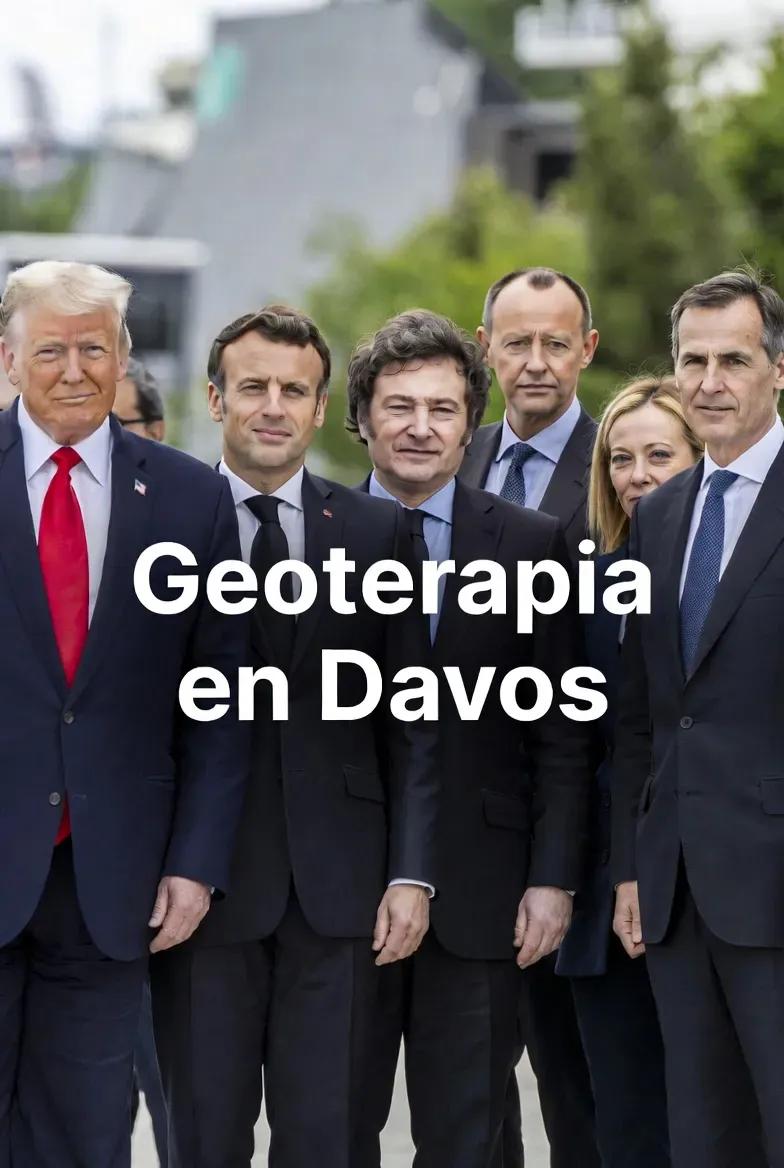
If there was a predominant theme at the 56th World Economic Forum in Davos (January 19-23), that theme was geopolitics. Geopolitics was at the center of the main speeches and conversations.
Just as almost 40 years ago, the central issue in Davos and other global meetings was geoeconomics, meaning the almost unchangeable trajectory of the world towards an order based on geocommercial blocks and virtual states that would anchor international politics to cooperation guidelines, the logic in the magnificent Swiss city has been contrary and disruptive, and the one who undoubtedly best interpreted this was Mark Carney, the Canadian Prime Minister, who not only delivered a fairly realistic diagnosis but also proposed solutions that would not stray from pragmatic realism.
Yes, "nostalgia is not a strategy," as the Canadian warned; relevant is the proposal presented by Columbia University professor Adam Tooze, who at the Berlin Summit last June argued that "more than a world order, a world arrangement is necessary. Because it is very unlikely that a Bretton Woods or a Hamiltonian moment will occur. We need to move to a lesser, but practical situation."
Returning to the comparison between yesterday and today, it is not whimsical, as it places us before the relativity of evolution or the "corsi e ricorsi" of history (the cycles referred to by Vico). Back then, globalization eclipsed geopolitics, which seemed to be forever banished from international politics; today, geopolitics conditions globalization, which could even succumb to it, thus extinguishing the only substitute for order that we still have.
Therefore, if supply chains and connectivity networks were to collapse due to geopolitical issues or other causes, the world would face a "perfect storm," meaning a greater disruptive simultaneity (geopolitics + geoeconomics). A situation that, although it is not considered likely to happen for now, would leave international politics with very little margin for escape.
Raymond Aron (an "outdated" author) argues in "War and Peace Among Nations" (a "superseded" work) that all international orders are territorial orders. Considering the current world, could we say that all international disorders stem from territorial disorders?
Alberto Hutschenreuter is PhD in International Relations. Postgraduate in Control and Management of Public Policies. Former Professor of Geopolitics (ESGA). Former professor at UBA and ISEN. Contributor to national and international specialized magazines and websites. Author of the book "Russian Foreign Policy After the Cold War: Humiliation and Redress."

Comments