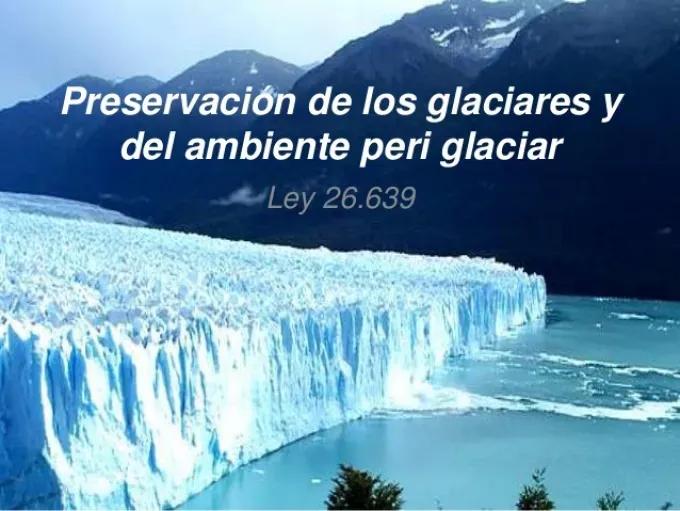
The National Glacier Law in Argentina is an issue of growing relevance in the current context, especially in light of the climate crisis facing the planet. This legislation, which seeks to protect glaciers and the periglacial environment, is at the center of the debate on how to balance economic development with environmental conservation. The central question that arises is: what implications does this law have for the management of water resources in a country with an economy dependent on agriculture and mining? The importance of this analysis lies in its capacity to influence public policies and future environmental sustainability.
🌍 Current Overview
Currently, the Glacier Law faces significant challenges. According to data from the National Institute of Statistics and Census (INDEC), Argentina has approximately 13,000 glaciers covering around 4,500 km², representing a crucial source of fresh water. However, the modifications proposed by the Senate, which include the elimination of restrictions for mining activities in periglacial areas, have generated controversy. In this context, environmental organizations have warned about the risk this poses to the country’s water resources, especially considering that 70% of the fresh water comes from these sources. The situation is alarming: recent studies indicate that Argentine glaciers are melting at an approximate rate of 1% per year, jeopardizing not only biodiversity but also economic activities dependent on water.
🔍 International Comparison
International experience provides valuable lessons on how to address glacier protection. For instance, Chile has implemented more restrictive policies regarding mining in glacial areas since 2012, which has allowed for adequate conservation of its water reserves. According to a report from the Chilean Ministry of the Environment, these measures have resulted in a 10% increase in the availability of fresh water in certain regions. In contrast, Canada has also developed strong environmental regulations that protect its glaciers and has established programs to monitor their long-term health. These examples demonstrate that proactive management can be beneficial for both the environment and local economies.
⚖️ Implications
The implications of modifying the Glacier Law are profound and multifaceted. From an economic perspective, allowing mining activities could temporarily increase tax revenues; however, in the long term, it could seriously compromise the availability of fresh water, which is essential for sectors such as agriculture and human consumption. A study conducted by the National University of Cuyo reveals that 80% of agricultural irrigation directly depends on glacial waters. This suggests that any damage to these ecosystems would have devastating consequences for the country’s food and economic security. Furthermore, local communities could be affected by drastic changes in their access to drinking water.
📈 Strategic Perspective and Future Outlook
Looking ahead, it is crucial to adopt a balanced approach that considers both economic development and environmental conservation. Policies should be directed towards a sustainable model that prioritizes the responsible use of water and protects glacial ecosystems. It is recommended to strengthen institutions responsible for regulating these activities and to foster dialogues between economic sectors and environmentalists to find consensus solutions. In this sense, Argentina has the opportunity to become a regional reference in sustainable management if it manages to implement robust legislation based on scientific evidence.
In conclusion, the debate over the National Glacier Law not only reflects tensions between economic development and environmental conservation; it is also a call to rethink how we interact with our natural resources. Without strong institutions or a clear legal framework, Argentina's water future faces significant risks.
Comments