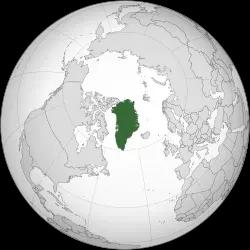
Greenland, the largest island in the world, has gained relevance on the international stage, especially following the ambitions expressed by several powers regarding its territory and natural resources. The central question is: why has Greenland become a focal point of geopolitical interest? This analysis seeks to unravel the political, economic, and social dynamics surrounding this region, as well as its implications for the current global order.
🌍 Current panorama
In recent years, Greenland has seen a significant increase in international attention. According to data from the Greenland government, tourism rose by 40% between 2019 and 2022, driven by the search for unique experiences and interest in climate change. Moreover, the accelerated melting in the region has opened new shipping routes and access to mineral resources, attracting the interest of powers such as the United States, China, and Russia. In 2019, then U.S. President Donald Trump expressed interest in purchasing the island, underscoring its strategic importance. Additionally, the population of Greenland is approximately 56,000 inhabitants, raising questions about governance and indigenous rights in the face of external interests.
🔍 Analysis of causes and factors
The growing interest in Greenland can be attributed to several interrelated factors. First, climate change is transforming its geographical landscape; according to a report from the Intergovernmental Panel on Climate Change (IPCC), temperatures in the region have risen by almost 2 degrees Celsius since 1971, leading to the melting of glaciers and the release of previously inaccessible resources. Second, mineral resources like lithium and rare earths are becoming increasingly valued in a world seeking sustainable technologies. Third, geopolitical tensions between the United States and China have led to increased competition for influence in strategic regions. Historically, Greenland has been part of Danish dominion since the 18th century; however, its autonomy has grown since 2009 with the implementation of more robust self-government.
🌐 International comparison and global impact
The situation in Greenland resembles that of other resource-rich regions that have been the subject of geopolitical disputes. For example, the case of the Falkland Islands is relevant: Argentina and the United Kingdom have maintained a long-standing dispute over its sovereignty due to its rich fishing resources and potential hydrocarbons. In northern Canada, indigenous territories also face external pressures over their natural resources. According to data from the Arctic Council, Arctic countries are seeing a 30% increase in maritime commercial activities due to polar melting. These precedents demonstrate how economic interests can trigger territorial conflicts and diplomatic tensions.
⚖️ Implications and consequences
The implications of the growing interest in Greenland are profound for both its inhabitants and the international community. For Greenlanders, there is a legitimate concern about how their territorial rights will be protected in the face of external interests; according to a survey conducted by Greenlandic Broadcasting Corporation (KNR), more than 70% of the population fears that their resources will be exploited without clear benefits for them. On a global level, this interest could intensify tensions between powers; Russian military movements near the Arctic have already been observed, which could be interpreted as a threat to Western interests. Furthermore, any irresponsible exploitation could have severe environmental consequences not only for Greenland but also for the rest of the planet.
🚀 Strategic perspective and future outlook
Looking to the future, Greenland faces both significant risks and opportunities. With climate change projected to continue affecting its ecosystem, it is crucial to establish sustainable strategies that involve local communities in decision-making about their natural resources. The development of appropriate infrastructure to manage both tourism and mineral exploitation must be carried out with transparency and respect for local traditions. Internationally, it will be vital to foster multilateral dialogues that include not only interested states but also indigenous and environmental organizations to ensure equitable management of Greenlandic resources.
In conclusion, Greenland is not merely a remote island; it is a microcosm where global economic interests and local human rights converge. How this situation is managed will set important precedents for other strategic territories around the world.
Comments