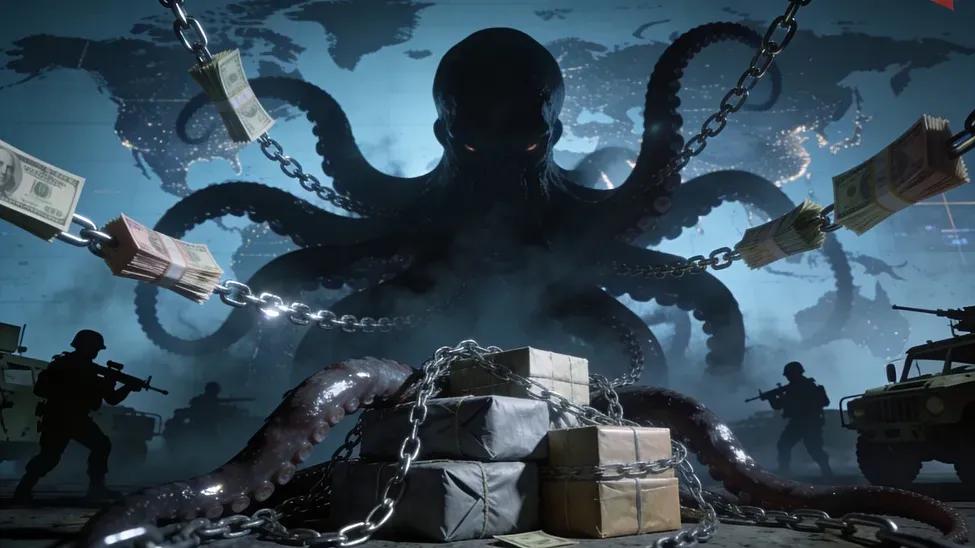
Since 1979, the Islamic Republic of Iran has built a power strategy that goes far beyond traditional diplomacy. It is not limited to embassies and formal agreements but combines these tools with a network of militias, terrorist organizations, and criminal structures that act as arms of the state beyond its borders (American University). The Islamic Revolutionary Guard Corps (IRGC) and its external branch, the Quds Force, coordinate the training, financing, and arming of allies such as Hezbollah in Lebanon, Hamas and the Palestinian Islamic Jihad in Gaza, the Houthis in Yemen, and Shia militias in Iraq and Syria (American University; Wilson Center). By operating through these intermediaries, Tehran projects power, intimidates its adversaries, and maintains a plausible denial margin, reducing the political cost of direct confrontation (American University).
For years, this network was perceived in Latin America as a distant problem, confined to the wars and crises of the Middle East. However, the same networks that finance attacks and train fighters have woven their presence in the Western Hemisphere, relying on weak states, corruption, informal economies, and vulnerable migrant communities (Levitt). The result is an infrastructure of illicit financing, logistics, and political cover that connects cocaine, gold, and smuggling markets with Tehran's security agenda (Irregular Warfare Center). Containing the Iranian regime and its proxies ceases to be an abstract matter of geopolitics and becomes a direct defense of everyday life, the rule of law, and liberties in the region.
Revolutionary Guard, Quds Force, and the "Axis of Resistance"
The IRGC has consolidated itself as the backbone of the Iranian regime, with a role that transcends the military to encompass economic control and internal ideological surveillance (Wilson Center). Its mission is to protect the political system and, at the same time, expand the revolutionary project beyond the borders. The Quds Force, its external arm, specializes in overseas operations: it sets up training camps, supplies weapons and resources, coordinates clandestine networks, and uses diplomatic, religious, and commercial covers to operate under the radar (American University; Wilson Center).
Hezbollah is the most complete model of an Iranian proxy. Born in Lebanon in the 1980s with direct support from the IRGC, it has transformed into a hybrid actor that combines political party, militia, intelligence apparatus, and economic conglomerate, and is designated as a terrorist organization by the United States, the European Union, and several Latin American governments (Levitt). Its history includes attacks such as the bombings against the Israeli embassy and the AMIA in Buenos Aires, as well as a central role in the wars in Syria and Iraq, where it has served as a combat school for other pro-Iranian militias (Levitt; Irregular Warfare Center). At the same time, Tehran backs Hamas and the Palestinian Islamic Jihad, which have systematically resorted to suicide bombings, infiltrations, and rocket campaigns against Israel, and supports the Houthis in Yemen, responsible for attacks against Saudi Arabia, the United Arab Emirates, and trade routes in the Red Sea (American University; Wilson Center).
All these organizations are integrated into what Iran and its allies describe as the "Axis of Resistance": a network designed to counter U.S. and Israeli influence from the Mediterranean to the Gulf and the Red Sea (Wilson Center). In that framework, the export of the revolution is articulated not only through speeches but through armed and criminal structures capable of operating in multiple scenarios at once.
The Muslim Brotherhood and Hamas: affinities that add capacity
The Muslim Brotherhood is not an organic part of the Iranian apparatus, but it has maintained a relationship of tactical convergence with Tehran. For many of its members, the Islamic revolution of 1979 demonstrated that an Islamist project could overthrow a "secular" regime and assume power, despite the doctrinal gap between Sunnis and Shia (Wilson Center). This mix of admiration and suspicion translates into an ambivalent relationship: they clash in scenarios like Syria but coincide when the goal is to weaken Israel, the United States, or Arab governments deemed traitors to the Islamist cause.
Hamas, the Palestinian branch of the Brotherhood, is the most visible bridge. It receives money, weapons, and training from Iran while relying on charity networks, religious cover, and fundraising campaigns linked to its Islamist environment (American University; Levitt). Even when the Brotherhood criticizes Tehran for its support of Bashar al-Assad, it keeps open channels because it recognizes in the Iran–Turkey–Qatar axis a source of refuge, funding, and media support for its structures pursued in Egypt, the Gulf, or the Maghreb (Wilson Center). The ideological affinity and shared enemy make possible a cooperation that strengthens the regional pressure capacity of the Iranian project.
The Triple Frontier and the Latin American map
In Latin America, one of the epicenters of Iran and Hezbollah's projection is the Triple Frontier between Argentina, Brazil, and Paraguay. There, smuggling, money laundering, informal trade, and communities of Lebanese and Syrian origin converge in an environment where state oversight is limited (Levitt). Judicial and academic investigations describe the area as a center for fundraising and laundering services linked to Hezbollah, with front companies, exchange houses, and commercial chains that channel resources towards the Middle East (Irregular Warfare Center).
From that base, the model has replicated itself in major Brazilian cities, smuggling corridors in the Southern Cone, Andean coca-growing regions, and gray areas in countries like Bolivia, Mexico, or Venezuela. In these territories, where illicit economies, corruption, and institutional weakness intersect, the interests of drug cartels, smuggling networks, and structures associated with Iran and Hezbollah tend to overlap (Irregular Warfare Center). The result is a narco-terrorist ecosystem that operates in the shadows of the regional political agenda, eroding the sovereignty and security of states (Irregular Warfare Center; Levitt).
Argentina, AMIA, and the Nisman case
The history of Iranian infiltration in the Southern Cone cannot be understood without Buenos Aires or the name Alberto Nisman. For more than a decade, this prosecutor carried the burden of the AMIA case, the attack in 1994 against the Jewish mutual that left 85 dead and hundreds injured in the center of the Argentine capital (Levitt). For Nisman, the trail clearly led to Iranian leaders and Hezbollah's operational machinery; that conviction drove him to push for arrest warrants and to obtain INTERPOL red notices against high-ranking former Iranian officials, including figures linked to the Revolutionary Guard (Levitt; Irregular Warfare Center).
Far from limiting the problem to the past, Nisman maintained that the Iranian regime continued to operate in the shadows in Argentina, supported by local political and economic networks. In January 2015, he presented a complaint of nearly 300 pages against President Cristina Fernández de Kirchner, Foreign Minister Héctor Timerman, and other officials, whom he accused of covering up Iran's responsibility in AMIA through the Memorandum of Understanding signed with Tehran in 2013 (Humire; Levitt). According to his interpretation, that agreement sought not truth or justice but to deactivate INTERPOL alerts and open a channel for exchange—Argentine grains for Iranian oil—at the expense of the victims of the attack (Humire).
On January 18, 2015, the plot took a brutal turn. Hours before appearing before Congress to explain his accusation, Nisman was found dead in the bathroom of his apartment in Puerto Madero, with a gunshot wound to the head (BBC). The government at the time tried to impose from the outset the version of a suicide, but doubts multiplied: contradictions at the scene, conflicting expert opinions, pressures on the investigative team, and a society divided between those who saw Nisman as a brave prosecutor and those who painted him as a piece of a conspiracy (BBC; IranWire).
As years went by, the official narrative lost weight. In 2017, a federal judge concluded that Nisman had been murdered and ordered the file to be treated as a homicide related to his work in the UFI-AMIA (BBC). In 2025, a prosecution ruling ratified that line: the prosecutor did not take his own life but was eliminated in the context of his complaint about the Memorandum with Iran and the alleged cover-up of those responsible for the attack (IranWire; Buenos Aires Times).
The case remains open, but investigators agree that it is a political crime whose intellectual authorship has not yet been fully clarified.
Beyond the procedural details, the Nisman case has become a symbol of what it means to confront the Iranian octopus when its interests intertwine with local elites. It is not just about car bombs and attacks like the AMIA, but also about the real possibility that prosecutors, judges, journalists, or witnesses may pay with their lives for attempting to dismantle the web that connects Tehran, Hezbollah, and political and economic actors in Latin America (Levitt; Irregular Warfare Center).
For any state contemplating a thorough investigation of these connections, the Argentine lesson is as clear as it is uncomfortable: the struggle for truth and justice is waged not only in courtrooms but also against structures that do not hesitate to erase from the map anyone who crosses their path.
Venezuela: from Chávez's experiment to Maduro's lifeline
Venezuela is the most representative case of a structural alliance with Tehran in the Western Hemisphere. Under Hugo Chávez, the country shifted from being a traditional oil partner of the United States to becoming a spearhead of a political axis that included Iran, Russia, Cuba, and other actors willing to challenge the order led by Washington (Humire).
In the name of "21st-century socialism" and anti-imperialism, Caracas signed dozens of agreements with Tehran concerning oil, industry, banking, agriculture, housing, security, and defense, many of them with little transparency and limited parliamentary oversight (Humire). For Iran, this shift held incalculable value: privileged access to infrastructure, joint ventures, binational banks, and a permanent diplomatic megaphone within Latin America (Humire).
Behind the speeches and the chains of radio and television, a much denser relationship began to form. Iranian technicians arrived in Venezuela for industrial projects, Revolutionary Guard officials moved under civilian covers, little-scrutinized air and trade routes opened, and companies with discreet names but close ties to Tehran emerged (Humire).
The oil nation gradually became a laboratory for asymmetric cooperation: Iran provided expertise in sanction evasion, setting up industries under international pressure, and building internal security apparatuses; Venezuela offered natural resources, strategic geographic positioning, and a political elite willing to pay the price of that alliance (Atlantic Council).
With Nicolás Maduro, the relationship took a turn of necessity. The fall in oil production, hyperinflation, the collapse of public services, and international sanctions left Caracas without funds or credit, yet with the same will to remain in power (Humire). In this context, Iran shifted from being an ideological ally to becoming an economic and logistical lifeline: it sent gasoline when the country with the largest oil reserves ran out of fuel; it provided spare parts, technicians, and ships to rescue paralyzed refineries; it facilitated barter schemes involving oil, gold, and other goods in exchange for foreign currency or critical supplies (Al Jazeera; Reuters).
The visible turning point was the twenty-year cooperation agreement signed in Tehran in 2022, during a visit by Maduro to the Iranian capital (Al Jazeera; Reuters). The document, presented as a plan for "strategic brotherhood," includes chapters on oil, petrochemicals, refinery repairs, energy, agriculture, tourism, culture, and defense, consolidating Venezuela as one of Iran's main projection platforms outside of the Middle East (Al Jazeera; Humire).
Various security analyses argue that from that moment, the presence of Iranian equipment, advisors, and technology—particularly drones and associated systems—on Venezuelan soil became more consistent, including training for armed forces and the possibility of operating asymmetric warfare capabilities from the Caribbean (Humire).
Post-Maduro Venezuela: controlled transition and latent risks
The capture of Nicolás Maduro did not in itself signify the end of the system he built for over a decade. His departure opened a political parenthesis, but those who hold real power in Venezuela—high military commanders, old PSUV figures, economic operators, and intelligence services—are still there, reorganizing around a new figure: Delsy Rodríguez (NPR; BBC). Yesterday's vice president is today the interim president, but the framework surrounding her looks too much like that which protected the dictator: the same generals, the same governors, the same police chiefs, and many of the same businessmen who made their fortunes in the shadow of the regime (NPR; RUSI).
From abroad, especially from Washington and Brussels, there is talk of "transition" and "historic opportunity," but on the ground, changes are more modest (CSIS; Le Monde). Rodríguez has announced a broad amnesty law for acts of political violence since 1999 and the closure of El Helicoide as a prison, and has ordered the release of hundreds of prisoners considered political, measures that organizations like Foro Penal greet with caution because they might, at the same time,
"open the door to the impunity of those responsible for torture and persecution (Al Jazeera).These are gestures that alleviate the immediate suffering of many Venezuelans, but they can also serve as a kind of clean slate for those who participated in the repression and the construction of the narco-state (NPR; RUSI). Deep down, the current head of state knows she does not govern alone. She needs the high military command that controls ports, airports, mines, and borders, and the regional leaders who dominate the smuggling circuits of fuel and food (RUSI; NPR).
She continues to depend on many of the same figures who made opaque agreements with Iran, Russia, China, and Turkey possible during the hardest years of sanctions (Atlantic Council). Without this framework, her government could crumble in days (RUSI). For this reason, more than a break, what is taking shape is a managed transition: some pressure is released, some valves are opened, the tone of the discourse changes, but the heart of the system keeps beating (CSIS; RUSI).
For the United States, the immediate priority is not to rebuild Venezuelan democracy from scratch, but to prevent a power vacuum that exacerbates the migratory crisis, sparks an internal war, or opens even more space for Russia, China, and Iran (RUSI; CSIS).
CSIS analyses emphasize that the Trump administration has focused on “stability” as its number one objective, even above concrete deadlines for elections, and that it is willing to work with figures that, in other contexts, would be unacceptable as long as they guarantee order and territorial control (CSIS). Meanwhile, Washington's new interlocutor in Caracas meets with U.S. envoy Laura Dogu, discusses a “stabilization, economic recovery, reconciliation, and transition” roadmap, and talks about restoring ambassadors and full diplomatic relations (Reuters; Le Monde). The risk is evident: once again, stability risks becoming synonymous with impunity (RUSI).
In this scenario, the Iranian octopus has room to adapt. It is possible that some visible figures may disappear from the scene and that certain agreements may be reviewed or camouflaged, but the golden routes, the infrastructure set up in the Arco Minero, the contacts in PDVSA, and the relationships with companies and banks in third countries will not vanish overnight (Atlantic Council; Humire).
If the new government decides that what matters is to “look forward” without thoroughly reviewing the recent past, many of the connections built under Maduro will continue to operate, simply more discreetly (RUSI; CSIS). For the region, this means that the change of face in Miraflores does not guarantee, by itself, that Venezuela will stop being a platform for criminal networks and actors allied with Iran: everything will depend on how willing those who have always called the shots behind the scenes are to concede (Irregular Warfare Center; Humire).
Passports and identities: the infiltration factory
In the shadows of the alliance between Caracas and Tehran, a silent but decisive tool has developed: the manipulation of the passport and identity system. A CNN investigation documents the issuance of Venezuelan passports and documents to citizens from the Middle East, some with alleged links to extremist organizations, through consulates such as the one in Damascus (CNN).
These passports function as “keys” that allow entry without a visa to dozens of countries and move with a much lower level of suspicion than they would face with documents from their home states (CNN; Humire).
The combination of irregularly issued identities, illicit economies, and political cover suggests the existence of a criminal-terrorist pipeline based in Caracas, designed to serve Iran and Hezbollah allies. This scheme increases the risk of infiltration and, at the same time, erodes international confidence in the identification and border control systems of the involved countries (Irregular Warfare Center; Humire). In a region with porous borders and fragile institutions, a Venezuelan passport granted to the wrong person can mean the difference between a timely-detected operation and a successful attack in any city on the continent.
Narcotrafficking organizations allied with the Tehran octopus
The convergence between networks linked to Iran and Hezbollah and Latin American drug trafficking is not a theoretical exercise, but an established fact in judicial files and security operations. One of the clearest cases is that of Lebanese Ayman Saied Joumaa, accused in the Eastern District of Virginia of conspiring to send “tens of thousands of kilos” of cocaine from Colombia and other countries to the Mexican cartel Los Zetas and laundering hundreds of millions of dollars in drug profits (U.S. Attorney’s Office EDVA). According to the charges, Joumaa used banks and front companies to recycle the funds, and part of these operations was linked to networks associated with Hezbollah (U.S. Attorney’s Office EDVA; Levitt).
In this plot, Mexico occupies a central place. Judicial documents and subsequent coverage describe how Joumaa coordinated the shipment of cocaine loads to Los Zetas, who controlled the routes to the U.S. market, while networks close to Hezbollah provided international laundering channels and contacts within the global financial system (U.S. Attorney’s Office EDVA; ProPublica). This model allowed the Lebanese organization to indirectly benefit from the cocaine market in North America, reinforcing its finances and operational capacity (Levitt; Irregular Warfare Center).
In Colombia, several investigations have shown how networks linked to Hezbollah have inserted themselves into the cocaine business and money laundering. One of the most important was Operation Titan, a joint investigation by Colombian and U.S. authorities that dismantled a network of more than 130 people dedicated to trafficking cocaine and laundering money for Colombian cartels and, according to investigators, channeling part of the profits to Hezbollah (Reuters; Los Angeles Times).
Among those detained was Lebanese Chekry Harb, alias “Taliban,” identified as a key player in an “unusual and concerning” alliance between South American drug traffickers and militants from the Middle East, using routes through Panama, Venezuela, Guatemala, the Middle East, and Europe, and paying a percentage of the profits to the Lebanese organization (Los Angeles Times; Seattle Times).
Another relevant case is that of Lebanese Mohammad Ahmad Ammar, a resident of Medellín, accused of laundering cocaine money from Colombian cartels through banks in Miami and the United Arab Emirates while bragging about his links to Hezbollah (Levitt). The investigation, linked to the DEA’s efforts in counter-financial operations against Hezbollah's network, documented how Ammar moved hundreds of thousands of dollars on behalf of supposed Colombian drug traffickers, in reality federal informants, using front companies and financial systems in Dubai, and claimed to work with the Office of Envigado, the successor of the Medellín cartel (Levitt; Irregular Warfare Center).
Although these are scattered cases and do not always crystallize into major macro-trials, together they outline a pattern: cells and facilitators associated with Hezbollah that plug into existing Colombian structures to offer global laundering services and, in return, channel a portion of the profits to the organization (Irregular Warfare Center; Levitt).
The magnitude of these activities was such that Joumaa even sued the Treasury Department in the civil case Joumaa v. Mnuchin, attempting to overturn his designation under the Kingpin Act (U.S. Attorney’s Office EDVA). Meanwhile, the Treasury identified the Lebanese Canadian Bank as a “primary money laundering concern” for facilitating the laundering of hundreds of millions of dollars for drug trafficking networks linked to Joumaa and Hezbollah (U.S. Department of the Treasury; U.S. Attorney’s Office EDVA).
In the Venezuelan sphere, the intersection between Chavismo, the so-called Cartel de los Soles, and pro-Iran networks is reflected in processes such as United States v. Adel El Zabayar, in the Southern District of New York. The indictment presents the former Venezuelan deputy of Syrian origin as part of a narcoterrorism conspiracy that included dissidents of the FARC, Mexican cartels, Iran, Hezbollah, and Hamas, with the objective of “flooding” the U.S. market with cocaine (Humire). The file describes negotiations for “arms for cocaine” and efforts to recruit Hezbollah and Hamas militants for possible attacks against U.S. interests (Humire; Levitt).
Another emblematic case is United States v. Hugo Armando Carvajal-Barrios, the former head of Venezuelan military intelligence known as “El Pollo Carvajal.” The indictment presents him as a member of the Cartel de los Soles and asserts that high-ranking Venezuelan military officials coordinated shipments of thousands of kilos of cocaine to Mexico and other destinations, in alliance with the FARC and Mexican criminal organizations (Humire). Although the file does not limit itself to the Iranian dimension, it fits into a pattern where Venezuelan state structures facilitate the use of territory and key infrastructure by criminal networks and, indirectly, by actors linked to Iran and Hezbollah (Humire; Levitt).
These cases illustrate why the alliance between the Tehran octopus and Latin American drug trafficking cannot be addressed as two separate problems. The cartels provide routes, hitmen, armed protection, and large flows of money; the networks associated with Iran and Hezbollah offer global laundering channels, access to banks and companies on several continents, and, at times, political cover provided by allied regimes like the Venezuelan (Irregular Warfare Center; Levitt). In practice, drug trafficking has become one of the main sources of financing for Iranian operations in the Western Hemisphere and reinforces the need to confront terrorism and organized crime as two sides of the same threat (Irregular Warfare Center; Atlantic Council).
The Trump Administration's Strategy: From First to Second Term
In his first term, President Donald Trump broke with the limited containment approach and opted for a “maximum pressure” strategy aimed at suffocating the Iranian regime economically, diplomatically, and militarily. The withdrawal from the nuclear agreement (JCPOA) in 2018 and the re-establishment of broad sanctions on the oil, banking, and shipping sectors sought to cut off the sources of foreign currency that fed the IRGC and its proxies (Council on Foreign Relations). From there, Washington designated the Revolutionary Guard as a foreign terrorist organization, tightened sanctions against banks and front companies operating with Hezbollah, and pressured allies to reduce their ties with Tehran (Council on Foreign Relations; Atlantic Council).
The operation that ended with the life of Qassem Soleimani in January 2020, through a drone strike in Baghdad, was a signal that the architects of the proxy network could become direct targets if they continued planning attacks against U.S. forces or allies (Atlantic Council). At the same time, efforts were revived to strike at the global financing networks of Hezbollah, including the drug trafficking and laundering schemes that cross Latin America (Levitt; Irregular Warfare Center).
In the region, the Trump administration promoted countries like Argentina, Paraguay, and Colombia to designate Hezbollah as a terrorist organization and reinforced pressure on Venezuela as a sanctuary for networks associated with the IRGC, the Cartel de los Soles, and Hezbollah, through sanctions against figures of the regime and state-owned companies involved in gold and oil schemes (Atlantic Council; Humire).
In his second term, which began in 2025, President Trump has explicitly resumed the flag of “maximum pressure” and linked it to a hemispheric security agenda focused on cartels and transnational networks. The White House has announced the formal restoration of that policy with the declared goal of “strangling” the funding sources of the Iranian regime and curbing its nuclear and missile programs (Council on Foreign Relations). The decision came alongside new sanctions against entities linked to the IRGC and Hezbollah, including currency exchanges, banks, and front companies in various regions of the world (Atlantic Council).
Meanwhile, the government has promoted a narrative that places Latin American cartels and transnational terrorist organizations in the same frame, and has pushed for the creation of regional coalitions to “eradicate” the cartels. This line tightens the pressure on the criminal structures that serve as economic support for the Iranian octopus, but also opens debates about the risk of further militarizing the fight against organized crime and generating tensions with governments reluctant to unilateral operations on their territory (Irregular Warfare Center; Atlantic Council).
The new open war against Iran
The current phase of the conflict between the United States, Israel, and the Islamic Republic of Iran marks a qualitative leap compared to the shadow war of previous decades. Since late February 2026, a campaign of combined attacks has massively struck Iranian territory for the first time, reaching IRGC command centers, military facilities, air defense nodes, and targets linked to the missile program. Preliminary figures report over a thousand dead and thousands injured within days, with waves of displaced individuals fleeing key cities under fire (Al Jazeera; Reuters).
One of the most symbolic blows has been the death of supreme leader Ali Khamenei, confirmed by Iranian official sources and reported by international media. Alongside him, high-ranking members of the Revolutionary Guard and key figures in the regime's security architecture have reportedly fallen, shattering the image of invulnerability that Tehran."For decades, the operation seeks to dismantle the Iranian security apparatus and degrade its ability to project force through missiles and proxies, including the network of militias and terrorist organizations operating in the region (Al Jazeera; BBC). From the perspective of Washington and Jerusalem, Iran has responded with massive launches of missiles and drones against Israel, U.S. bases in the Gulf, and targets in neighboring countries, raising the risk of even greater regional escalation. Although many of these threats have been intercepted by air defense systems, some projectiles have hit military and civilian infrastructures, leaving casualties on both sides and collateral damage in third countries (Al Jazeera; Reuters). The confrontation is no longer limited to selective attacks or covert sabotage, but is being waged on a large scale, with a theater of operations that encompasses nuclear facilities, air bases, ports, and entire cities.
On the political front, President Trump has hardened his rhetoric, demanding the surrender of the Iranian regime and presenting the campaign as a necessary step to prevent Tehran from consolidating nuclear capabilities and long-range missile systems (Council on Foreign Relations). The official narrative insists that allowing Iran to acquire the bomb would be intolerable for international security and that striking the regime now is the way to avoid an even more devastating future war.
For the Iranian octopus in Latin America, this war has a dual effect. On the one hand, the death of key figures and the damage to command infrastructure force Tehran to reorder priorities and concentrate resources on the defense of territory and internal stability. On the other hand, military and economic pressure increases its dependence on support and funding networks in areas where U.S. presence is less direct, such as Latin America.
The more the spaces in its immediate environment close, the more valuable the flows of cocaine, gold, fuels, cash, and documents that move through countries like Venezuela and Mexico become for the regime (Irregular Warfare Center; Humire).
Minimum measures to curb the Tehran octopus require more than statements and symbolic gestures. At a minimum, it is necessary to designate Hezbollah as a terrorist organization as a whole and update national and regional lists to include structures linked to the IRGC; reinforce financial intelligence units and systematically share information on shell companies, currency exchange houses, and suspicious foundations; audit passport systems and civil registries to detect networks issuing documents irregularly; and cooperate with allied countries to identify infiltration routes (Irregular Warfare Center; Atlantic Council; CNN).
Without effective cooperation, the tentacles of the Iranian octopus will continue to move from one country to another, exploiting every legal, political, and economic fissure (Irregular Warfare Center; Levitt).
Conclusion: Who really writes the law in Latin America
At this point, the question is no longer whether Iran and its proxies are present in Latin America but who really writes the law in vast areas of the continent. Every cooperation agreement signed between Caracas and Tehran, every gram of gold extracted from the Mining Arc, every irregularly issued passport, and every ship that turns off its transponder to violate sanctions are chapters of the same script: the consolidation of a parallel order where illicit money, delegated violence, and guaranteed impunity dictate terms (Humire; CNN).
The attacks in Buenos Aires, covert operations in the Middle East, drug trafficking networks that mix Latin American cocaine with financial channels associated with Hezbollah, and the criminal exploitation of Venezuelan gold and oil are not separate stories but links in a single chain (Levitt; Humire).
This chain now passes through the Triple Frontier, the Caribbean ports, the mining jungles of Guyana, the cocaine corridors that cross Mexico, and the offices where agreements are signed that will never see the light of day in official journals (Irregular Warfare Center; Atlantic Council).
If the democratic states in the region do not respond with coordination, shared intelligence, and institutional strengthening, others will continue to fill the void: generals of the Revolutionary Guard, cartel leaders, transnational financial operators, and politicians willing to sell their sovereignty for protection and permanence in power (Atlantic Council; Humire).
In that scenario, the law ceases to be an expression of citizen will to become a weapon at the service of those who control the tentacles of the Iranian octopus and its local partners (Irregular Warfare Center).
Defending the rule of law, territorial integrity, and the everyday security of citizens requires understanding that Iranian-sponsored terrorism, Latin American drug trafficking, and the illicit economy of gold and oil are part of the same strategic threat (Humire; Irregular Warfare Center).
Either the governments of the region acknowledge this reality and act accordingly by designating the involved actors, closing routes, cleaning institutions, protecting judges and prosecutors, or it will be Tehran's allies, from Caracas to the Triple Frontier, who will continue to dictate who prospers, who remains silent, and who dies in our Americas (Atlantic Council; Levitt)."About the Author: William L. Acosta is a graduate of PWU and Alliance University. He is a retired police officer from the New York Police Department, a former military member of the United States Army as well as the founder and CEO of Equalizer Private Investigations & Security Services Inc., a licensed agency in New York and Florida, with international reach. Since 1999, he has led investigations in cases of narcotics, homicides, and missing persons, in addition to participating in criminal defense both at the state and federal levels. A specialist in international and multijurisdictional cases, he has coordinated operations in North America, Europe, and America."
Comments