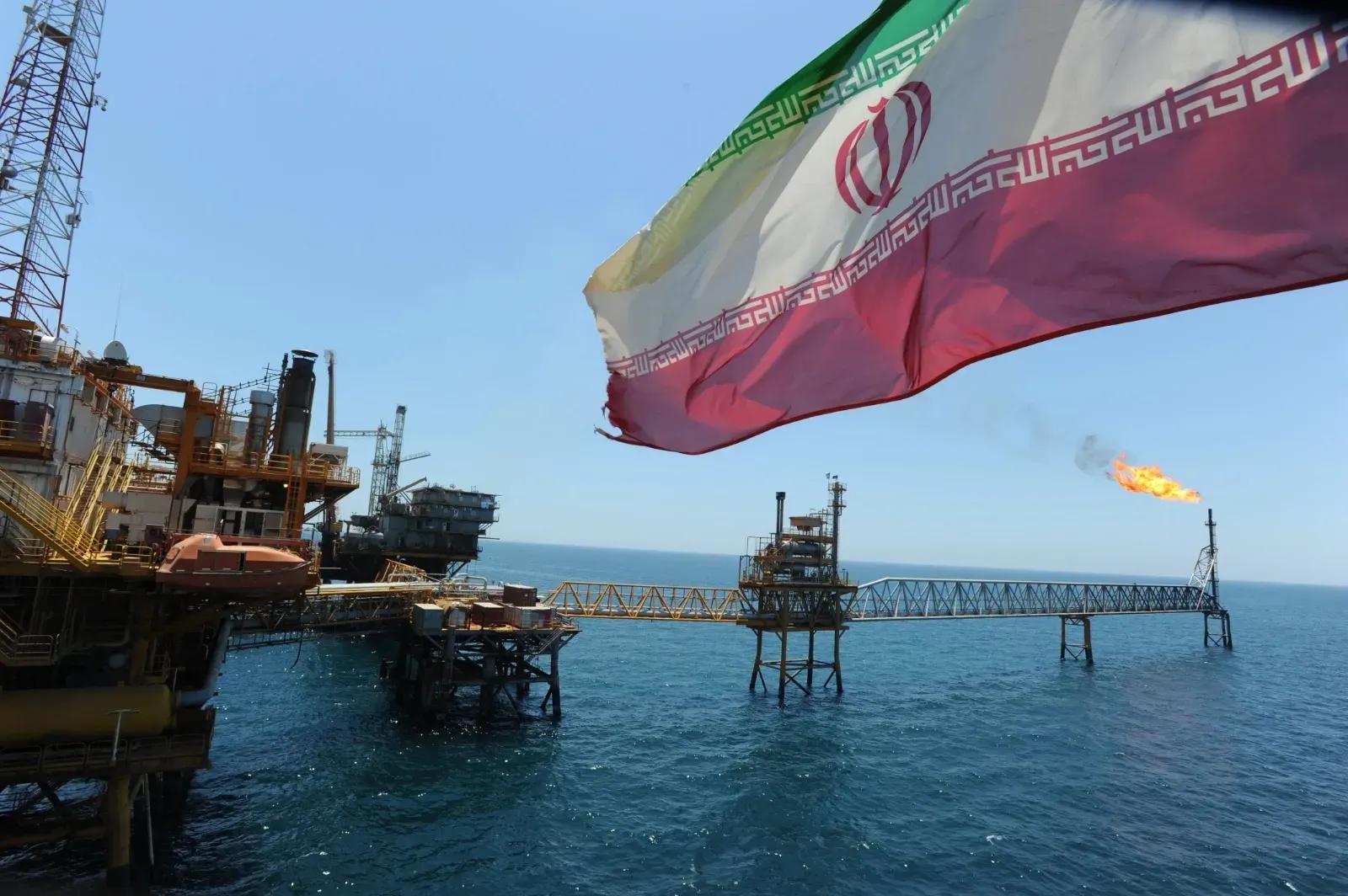
At the heart of contemporary geopolitics, where the energy transition coexists with persistent dependence on crude oil, Iranian oil occupies a unique place. The Islamic Republic has the third-largest proven reserves in the world, with approximately 208 billion barrels, only behind Venezuela and Saudi Arabia, according to the latest energy data.
However, this formidable underground wealth does not translate into an equivalent presence in global trade. Iran does not feature among the ten largest crude exporters on the planet, an anomaly explained less by technical limitations than by political decisions and international sanctions.
The economic restrictions imposed by the United States and supported by its Western allies since 2018, following Washington's withdrawal from the nuclear agreement, have limited Tehran's ability to sell its oil in open markets and finance its economy without hindrance. The contentious issue surrounding the Iranian nuclear program—and Tehran's refusal to accept certain oversight conditions—has turned the energy sector into the main area of pressure. The result is a paradox: one of the largest crude deposits in the world operates on the margins of the international financial system.
Still, Iran has managed to maintain a significant flow of exports. Between 2024 and 2025, external sales of crude and condensates stood between 1.2 and 1.7 million barrels per day, remarkable figures considering the existing restrictions.
This volume places it below major super-exporters—such as Saudi Arabia or Russia—but still within a range comparable to that of relevant medium-sized producers.
The majority of this oil has a clear destination: China. Between 80% and 90% of Iranian exports end up in Chinese ports, often through indirect trade circuits or significant discounts. Maritime tracking data indicate that in 2025, Iranian crude represented between 13% and 14% of total Chinese maritime imports. In other words, approximately one in eight barrels imported by the world's second-largest economy comes from Iran.
For Beijing, this is an attractive supply due to its price and the diversification it offers compared to other suppliers from the Middle East or Russia. For Washington, however, it serves as a reminder of the limits of the sanctions regime and the growing energy interdependence between China and Iran. In a scenario of strategic competition between the two largest global powers, energy once again acquires structural weight.
From the U.S. perspective, decisively influencing Iranian oil is not just an economic issue. Above all, it represents a geopolitical variable. Former Secretary of State Henry Kissinger used to caution that “whoever controls energy can influence entire continents.” This phrase, often repeated in strategic circles, sums up a shared conviction in Washington: oil remains an instrument of power.
The United States is already one of the largest producers and exporters in the world, but its strength does not solely rely on its internal capacity. It is also supported by a network of alliances with major producers in the Gulf, including Saudi Arabia and the United Arab Emirates, central players in the global energy architecture. If this influence were combined with a scenario in which Iran was fully integrated into the market under parameters favorable to the West, the global energy map could undergo a substantial transformation.
The strategic calculation becomes even clearer when considering the Venezuelan case. Venezuela, with proven reserves exceeding 300 billion barrels, leads the world rankings.
For years, sanctions and productive collapse reduced its real weight in the market. However, any political reconfiguration that allows for a sustained increase in its production, combined with a possible normalization of the Iranian sector, would grant Washington indirect influence over an extraordinary portion of global reserves.
A scenario in which the United States maintains strong relations with Saudi Arabia, preserves its influence over other Gulf producers, and simultaneously manages or integrates the crude flows from Iran and Venezuela would place it in a position of structural advantage over China. Beijing relies on over 70% of imports to meet its oil consumption, and any significant alteration in availability or prices directly impacts its economic growth.
However, that hypothetical control or influence is far from straightforward. It involves resolving a protracted nuclear conflict, managing the regional rivalry between Iran and Israel, and balancing relationships with Arab Gulf partners, who view any excessive rapprochement between Washington and Tehran with suspicion. Furthermore, the oil market itself has evolved towards greater flexibility, with new actors and technologies—from U.S. fracking to Brazil's increasing participation—that dilute the power monopoly once held by a few producers.
The International Energy Agency has insisted that the energy transition will progressively reduce the centrality of crude oil in the coming decades, but even its most ambitious scenarios foresee that oil will continue to play a relevant role well into 2040. In that horizon, control of large reserves remains synonymous with strategic maneuvering room.
Iran, with its combination of vast resources, political isolation, and growing ties with China, has become a key piece of this puzzle. For the United States, influencing its oil would mean not only reorganizing a market but also altering the balance of power among the main powers of the 21st century. In an international landscape marked by systemic competition, Iranian crude is much more than a commodity: it is a lever of power.
Adalberto Agozino holds a PhD in Political Science, is an International Analyst, and is a Lecturer at the University of Buenos Aires, Argentina.

Comments