A complicated geography
Japan has a geography that is at least unique. The particular configuration of its territory makes it the paradigmatic example of an archipelagic state. Most of its 124 million inhabitants reside on the four large islands located to the east of the Sea of Japan, while a minority is spread across part of the 6,848 islets that make up the archipelago.
The largest of the main islands is Honshu, which concentrates nearly 60% of the national territory and houses Tokyo, the largest megacity in the world, with around 37 million inhabitants in its metropolitan area. This island also contains the most important arable land in the country, which is why the main urban centers historically emerged there, consolidating the political and economic heart of the state.
The shortest distance between the Japanese archipelago and the Eurasian continental mass is around 200 kilometers. This natural barrier partly explains why Japan was never successfully invaded in the pre-modern era and why it has maintained a remarkable ethnic homogeneity for centuries. For more than two millennia, there has been no significant influx of foreign population that has substantially altered its demographic composition.
The Japanese territory is more extensive than the Korean Peninsula, slightly less than Norway, and somewhat greater than Germany. However, three-quarters of the country is not suitable for intensive human settlement, especially due to the presence of mountainous regions, and only about 13% of the land is appropriate for intensive agriculture. This limitation has concentrated the population in narrow coastal strips and small inland areas, where rice must be cultivated on terraces built on the slopes.
The mountains provide abundant water, but the lack of wide plains turns Japanese rivers into short and less navigable courses, which historically hindered their use as internal trade routes. The low confluence among them exacerbates this structural limitation.
In light of this environment, the Japanese people projected themselves towards the sea. They wove trade networks across their thousands of islands, made incursions into the Korean Peninsula, and, after centuries of isolation, modernized rapidly to expand and dominate large areas of East Asia. Insularity, far from enclosing Japan, ultimately propelled it toward a maritime and strategic vocation.
Furthermore, Japan lacks sufficient natural resources to sustain an advanced industrial economy on its own. It has low-quality coal deposits, scarce oil, limited natural gas reserves, and insufficient quantities of many essential raw materials. It is the world's largest importer of natural gas and one of the major oil importers, a dependency that has historically conditioned its foreign policy and its need to ensure safe maritime routes.
Post-war Japan
After its defeat in World War II, Japan designed a foreign policy centered on containing its military capabilities and on economic development. The belligerent militarism of the early 20th century was buried under the rubble of Hiroshima and Nagasaki.
The so-called Yoshida Doctrine, inspired by Prime Minister Shigeru Yoshida, oriented national strategy from the post-war period until the end of the 20th century: prioritizing economic reconstruction and delegating strategic security to the alliance with the United States, limiting domestic military spending, and favoring economic diplomacy.
The Treaty of Mutual Cooperation and Security with Washington, in effect since 1960, cemented that architecture: U.S. bases on Japanese territory in exchange for strategic protection. This formula facilitated the so-called "Japanese economic miracle," but also largely subordinated defense policy to decisions made in Washington.
For decades, the official rhetoric supported the Fukuda Doctrine (1977), which explicitly rejected Japan becoming a conventional military power and promoted a peaceful cooperative relationship with Southeast Asia and ASEAN. Japan projected power through trade, investment, and development aid, not through military deployments.
When pacifism ceases to be an alternative
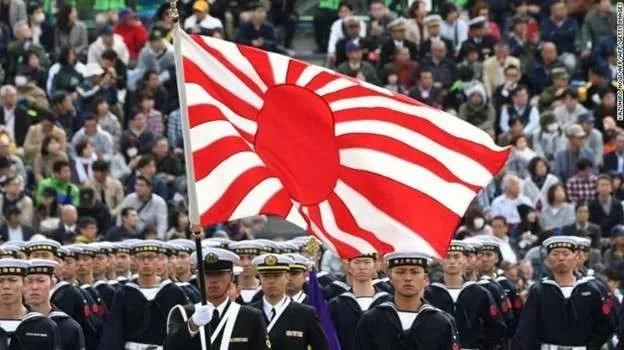
This historical consensus is no longer immutable. The debate over the so-called "proactive pacifism" has ceased to be marginal. The government has advocated for the relaxation of constitutional restrictions that limited the export of military equipment, opening the global arms market to companies like Mitsubishi Heavy Industries.
This measure is linked to the perception of a "Chinese military expansion" and to the territorial dispute over the Senkaku/Diaoyu Islands in the East China Sea. The modernization of the People’s Liberation Army and increasing pressure on Taiwan have reinforced the idea in Tokyo that mere defensive containment is no longer sufficient.
Additionally, Japan has relaxed rules to cooperate in the development of armament with allies beyond the traditional link with the United States. The Global Combat Air Programme, aimed at creating a new generation of fighters alongside European partners, illustrates this phase of expanded technological and military cooperation.
The process includes an increase in defense spending with the goal of approaching 2% of GDP by 2027, endowing the Self-Defense Forces with more robust deterrent capabilities, including longer-range missile systems and enhanced interoperability with regional allies.
Asia and the Indo-Pacific chessboard
Geopolitically, the focus of the Japanese elites has evolved from diplomacy centered on economic recovery to a strategy that integrates security, defense, and trade under the umbrella of a "free and open Indo-Pacific." This concept, promoted by Tokyo and Washington, aims to counteract Chinese influence through alliances with India, Australia, ASEAN countries, and even European partners.
The rise of China—visible in its territorial claims and sustained military modernization—is cited by Japanese experts as the main reason for this strategic shift. Tensions in the Taiwan Strait, the Korean Peninsula, and the East and South China Seas configure an arc of instability that drives Tokyo to strengthen its defensive capabilities.
In search of a new prominence
Japan has also developed a policy of "economic security" aimed at protecting critical supply chains, securing leadership in strategic sectors—such as semiconductors and quantum computing—and articulating an economic diplomacy complementary to its defense policy. Resilience against external pressures has become a central objective.
The result is a more assertive Japan. While it maintains its alliance with the United States as the cornerstone of its security, it has begun to diversify ties and promote mechanisms for cooperation among middle powers to manage shared risks. Collaboration with the Philippines, South Korea, India, or European actors in security and development is part of this emerging architecture.
This dynamism generates internal tensions. The debate over how far Japan should distance itself from its pacifist legacy is profound, especially on sensitive issues such as nuclear policy, which has been taboo for decades and is now reopened in light of strategic pressures from Beijing.
Building regional leadership in a more conflictual world
In the complex chessboard of the 21st century, Japan acts as a strategic pivot between great powers and emerging middle states. Its defense policy—marked by gradual but determined rearmament—its consolidated economic power, and its active diplomacy have transformed its role: from a subordinate partner in the regional security architecture to a central actor in the Indo-Pacific.
The pacifist past continues to influence its political culture, but the vision of a more influential Japan seems to overshadow the caution of the post-war era. It does not seek explicit territorial hegemony, but rather regional leadership based on effective military capabilities, strong alliances, and robust economic projection.
In an environment where rivalry between great powers redefines alliances and balances, Japan's redefinition of its role appears to be one of the most determining factors in global geopolitics in the coming decades.
Adalberto Agozino holds a PhD in Political Science, is an International Analyst, and teaches at the University of Buenos Aires, Argentina.

Comments