
Lebanon suffers not only from a severe economic crisis; it endures a sectarian, ideological, and military religious occupation. What the world is witnessing today is not the collapse of a financial system, but the suffocation of a nation at the hands of an occupying entity that serves the interests of a foreign power that seeks to islamize it under Persian Shiism.
Hezbollah, the occupying army and executive arm of Iran in the Mediterranean, has ceased to be a “political actor” to become the anchor dragging Lebanon into an abyss of isolation, sectarian confrontation, poverty, and misery.
In this scenario, for the country to regain its place in the concert of civilized and pro-Western nations, there must be a total break with the paradigm of jihadist terrorism represented by Hezbollah. The Lebanese sovereignty is incompatible with the existence of a parallel army that answers to the interests of a violent and external theocracy. A definitive peace with Israel is no longer just another diplomatic option; it is the only key to national survival. If President Aoun cannot fulfill this, he must step aside and resign in the face of what the Lebanese are already seeing as an absolute failure of his management.
A journey through the millennia of ancient Lebanon's Phoenician presence shows that the country has been a bridge between East and West, and concerning modern Lebanon, it was conceived as a refuge of pluralism and economic freedom where, in the 1970s, the Lebanese banking system channeled the wealth and surplus of regional oil resources. All of that was shattered by the civil war imposed by the Arab League and Yasser Arafat's PLO in April 1975.
Currently, Hezbollah seeks to destroy all vestiges of Phoenician identity and has struggled -without success- to do the same with the Christian, Druze, and Sunni way of life in the country. However, the Shiite organization has managed to subordinate the country's decisions on war and peace to Tehran's agenda, thus nullifying the Lebanese social contract whose origin took place with the National Pact of 1943, which established the bases for peaceful coexistence and parliamentary distribution of religious political representation. Hezbollah has trampled over all of that by temporarily using those corrupt leaders from each of the constituent sects of the social and political fabric; Christians, Druze, and Sunnis fell into the trap of the organization.
However, sovereignty is not an element that can be shared. As long as Hezbollah maintains its military capabilities and an arsenal that surpasses that of many regional armies, the Lebanese State is a fiction without free institutions. Consequently, the international community, led by Washington, Paris, and Brussels, must stop financing façade humanitarian organizations that end up being infiltrated by Hezbollah's intelligence structure. “Support must be binary: either it strengthens exclusively the State and the Lebanese Armed Forces (LAF) to regain total control of their borders, or accepts that Lebanon remains an international pariah, managed by a criminal-global corporation and by its networks in Europe, Africa, Latin America, and even the US and Canada.”
Many argue that one of the pillars of Hezbollah's strength is faith, but the truth is that it is not faith what sustains the organization is dirty money. The organization has mutated into a transnational criminal corporation that uses the Bekaa Valley as the epicenter for the production of Captagon, flooding the region and destroying the social fabric of neighboring Arab countries. Its money laundering and drug trafficking networks extend from the Tri-Border Area in South America to the ports of West Africa.
In these times of criminal convergence, for the West, the fight against Hezbollah is a fight against organized crime and narcoterrorism. If there ever was, today there is no real distinction between its political wing, its social services, and its armed wing; both feed off the same “black box” financed by smuggling and the export of the Iranian revolution. Dismantling its financial networks is the first step toward its internal collapse. A Lebanon aligned with the West must adopt banking transparency standards that definitively expel terrorist capital.
The state of perpetual conflict with Israel is Hezbollah's raison d'être. Without the narrative of “resistance,” Hezbollah loses the excuse to maintain its weapons. However, for the average Lebanese citizen, that conflict has only brought destruction and the loss of historical opportunities that have plunged him into postponement, deprivation, and lack of basic services for a normal life. Hence the importance of peace with Israel, peace with Israel will be the engine of Lebanese reconstruction in every order and constitutes the only path to modernity and the progress of its citizens. This is the strategic imperative of the 21st century for Lebanon. Who, without their ideological myopia and fanaticism, can deny that the Abraham Accords have unlocked billions of dollars in investments and cooperation in education, technology, agriculture, and several other disciplines in the Gulf States? Meanwhile, Lebanon remains captive to a rhetoric from the 1970s that has only generated poverty, postponement, and frustration among its people.
Peace would allow for a joint exploitation of the gas fields in the Levant, turning Lebanon into an energy hub for Europe. It would also restore Lebanon's tourism industry that existed before the Palestinian invasion of 1975. Once again, it would be the tourist investment pole of the major hotel chains. Border stability would once again attract Western capital and luxury tourism that once made Beirut the envy of the world, calling it the Paris of the Mediterranean and Lebanon the Switzerland of the Middle East.
In terms of technology, no one can doubt that Lebanon could benefit from the Israeli innovation ecosystem, creating a unique technological hub in the Eastern Mediterranean. Israel has stated multiple times that its conflict is not with the Lebanese people but with the Iranian missile base installed in its territory.
In conclusion, definitive peace would allow the “Blue Line” to become a border of exchange and progress and not of blood. Washington must cease to be a passive spectator. A “Maximum Pressure” approach is necessary that targets not only Tehran but directly Hezbollah's facilitators within the Lebanese political system. Any political leader who protects the militia's arsenal must be sanctioned and excluded from the global financial system. The implementation of the UN Resolution 1701 must be aggressive. UNIFIL can no longer remain a passive observation force; it needs a robust mandate to ensure that southern Lebanon is free of illegal arms. The disarmament of Hezbollah is the prerequisite for any aid and rescue plan from the IMF or World Bank.
In other words, Lebanon is facing its last opportunity. It can choose to be the last link in an “Axis of Evil” that offers only oppression and stagnation, or it can claim its destiny as a democracy looking to the West, modern and sovereign. There is nothing real to resist; the farce is over. Today, the only true resistance is the one the Lebanese demand: “A normal country, where laws are made in Parliament and not in another country or in the bunkers of the ruins left from the suburb of Dahieh.”
Peace with Israel and the disarmament of Hezbollah are not gestures of surrender; they are the greatest acts of courage that Lebanon can take to ensure the future of its children. It is time to expel the mercenaries of faith and embrace freedom to build a prosperous destiny. The country and all its people of all religions have already suffered too much from absurd slogans that have only brought misery and destruction. It is time to end all of this and walk united in peace towards a better future.
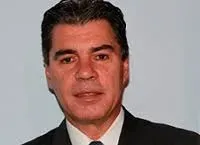
*Professor George Chaya is a Senior Advisor on Middle Eastern affairs in National Security and expert in Open Source Intelligence (OSINT) based in Washington DC, USA

Comments