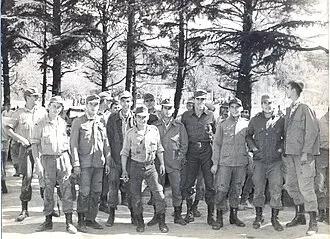
The compulsory military service has been a recurring topic in the Argentine public debate, especially in a context where security and national defense are becoming increasingly relevant. The central question posed is: is it necessary to reinstate compulsory military service in Argentina? This analysis seeks to delve into the reasons behind this discussion, the current context surrounding it, and the political and social implications it could entail.
📊 Current Overview
According to data from the Ministry of Defense of Argentina, compulsory military service was abolished in 1994, marking a shift towards a professional army. However, in recent years, insecurity and the perception of external threats have led political sectors to propose its reinstatement. In this sense, recent reports indicate that 65% of the population supports a military service model that includes both men and women. Furthermore, according to a survey conducted by the National University of La Plata, 70% of 17-year-olds are completely unaware of their rights and obligations regarding military service. This context highlights a lack of civic education that could be addressed through a reform of the system.
🔍 Analysis of Causes and Factors
The discussion about compulsory military service is not new; it has deep roots in Argentine history. From the military dictatorship to recent economic crises, the topic has been tied to national identity and defense needs. The growing urban insecurity and boundary conflicts with neighboring countries have reignited the debate on whether a stronger army can contribute to the country's stability. Additionally, factors such as the increase in drug trafficking and geopolitical tensions have led some analysts to argue that a recruitment system could serve as a tool to promote civic values and discipline among the youth.
🌍 International Comparison and Global Impact
Internationally, several countries have opted for models similar to compulsory military service. For example, Switzerland maintains a system where all men must complete basic military service before entering civilian life; this has been fundamental for maintaining an active defense culture. In contrast, in countries like Germany, this model has been abolished due to sociopolitical changes and a diminished perception of external threat. According to data from the Stockholm International Peace Research Institute (SIPRI), countries with mixed models tend to have a more educated population on defense and security issues. This highlights that it is not only about recruiting soldiers but also about educating informed citizens.
⚖️ Implications and Consequences
The reinstatement of compulsory military service would have multiple implications for Argentina. From an economic point of view, the cost of recruitment and maintenance of military personnel could divert critical resources that could be allocated to education or public health. Socially, there is a risk of creating divisions between those who fulfill this obligation and those who do not; additionally, it could exacerbate issues related to human rights if not implemented transparently. However, some argue that it could strengthen the social fabric by promoting values such as solidarity and civic responsibility among the youth.
🔮 Strategic Perspective and Future Outlook
Looking to the future, it is crucial to consider how any changes related to compulsory military service would be implemented. Strategic recommendations include establishing educational programs prior to recruitment to adequately inform young people about their rights and duties. Likewise, it would be advisable to observe successful models in other countries to avoid common historical mistakes related to human rights and discrimination. In conclusion, although there are valid arguments both for and against compulsory military service in Argentina, it is evident that this issue deserves a deep and informed analysis to make strategic decisions that benefit the country as a whole.
Comments