The cooperation between Morocco and the United States on security matters has ceased to be a discreet relationship between intelligence services and has solidified into a true strategic alliance in the fight against transnational threats. The recent dismantling of a vast drug trafficking and arms trafficking network, with ramifications in the Middle East, Africa, and Latin America, not only highlights the growing sophistication of these criminal organizations but also the effectiveness of a collaboration model that has placed Morocco at the core of international security arrangements.
The case, brought before a federal court in the Eastern District of Virginia, featured Antoine Kassis, a Lebanese-Syrian citizen convicted of narco-terrorism conspiracy, cocaine trafficking, and supplying arms to organizations considered terrorist by Washington. However, beyond the profile of the accused, what emerges clearly is the existence of a global criminal structure capable of articulating logistical, financial, and operational circuits that connected conflict zones with illicit markets across different continents.
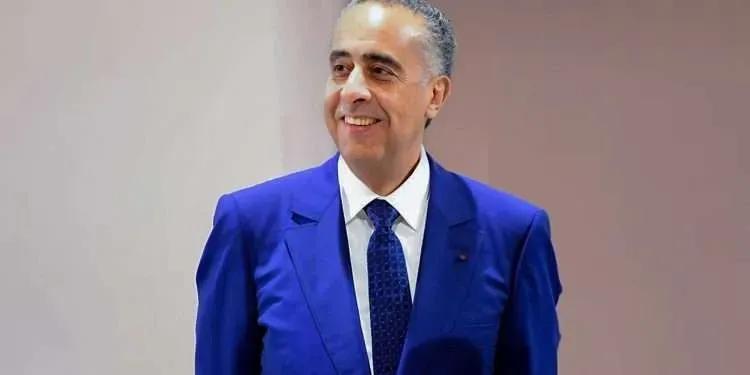
Within this framework, the intervention of Moroccan services proved decisive. The General Directorate of National Security and the General Directorate of Territorial Surveillance played a central role in gathering intelligence, tracking those involved, and coordinating actions that allowed for the dismantling of the network. The U.S. Prosecutor's Office did not hesitate to describe this contribution as "decisive assistance", emphasizing the determining role of Moroccan cooperation in the success of the investigation.
The operation reveals a phenomenon that increasingly concerns security agencies: the convergence between drug trafficking, arms trafficking, and terrorism. According to the evidence presented at trial, Kassis allegedly leveraged his ties to sectors of the Syrian security apparatus to facilitate access to military arsenals, which were subsequently used as currency in agreements with insurgent organizations. Among them is the National Liberation Army in Colombia, which reportedly received arms in exchange for shipments of cocaine, in a dynamic that illustrates the fusion between illicit economies and armed conflicts.
This system included mechanisms of notable logistical complexity. Investigations revealed the use of camouflaged shipping containers, transit routes through Africa, and a network of intermediaries responsible for money laundering. In less than two years, the organization would have mobilized nearly 100 million dollars, benefiting criminal actors and armed groups in various parts of the world. The financial dimension of the case highlights the capacity of these networks to integrate into the global economy, exploiting its fissures and regulatory gaps.
The cooperation between Morocco and the United States was not limited to this case. In a second equally significant case, Moroccan authorities played a direct operational role by arresting Elisha Odhiambo Asumo, a Kenyan citizen accused of participating in an international arms trafficking network in Casablanca. His extradition to the United States allowed progress in a judicial process involving the supply of heavy weapons to Mexican cartels, particularly the Jalisco New Generation Cartel, one of the most violent criminal organizations in the western hemisphere.
This second case reinforces the idea that Morocco does not act solely as an intelligence provider but also as an actor capable of directly intervening in high-risk operations on its territory, in close coordination with international agencies. The seizure of military-grade weapons—including rocket launchers, anti-aircraft systems, and night vision equipment—reveals the level of sophistication of the dismantled networks and the severity of the threat they pose.
The U.S. recognition of this cooperation has been explicit and significant. Judicial authorities have highlighted the "high level of coordination" and the "quality of the information" provided by Moroccan services, in language that reflects not only institutional gratitude but also strategic trust. Such statements, rare in judicial processes of this nature, underline the value that Washington places on its partnership with Rabat in an international context marked by the proliferation of hybrid threats.
This episode is part of a broader dynamic that confirms the growing role of Morocco in the global security architecture. Its geographical position, at the intersection of Europe, Africa, and the Atlantic, makes it a key point for controlling illicit routes. Additionally, a sustained policy of modernizing its intelligence services and an explicit willingness for international cooperation has resulted in an active presence in joint operations and the systematic exchange of information.
Internally, Moroccan efforts against drug trafficking have also been intense. The seizures of large volumes of drugs, along with the dismantling of logistical networks, reflect a comprehensive strategy that combines police action, intelligence, and judicial cooperation. These operations not only have a local impact but also contribute to weakening global circuits that feed both organized crime and armed conflicts.
The geopolitical dimension of this cooperation is undeniable. In an international scenario characterized by fragmentation and the multiplication of non-state actors, the capacity of states to articulate coordinated responses becomes a decisive factor. The alliance between Morocco and the United States illustrates how the convergence of interests can translate into concrete results, even in the face of diffuse and changing threats.
The operation that led to Kassis's conviction and the dismantling of his network constitutes, ultimately, a paradigmatic example of this new security logic. A logic where the borders between crime and politics become blurred, and international cooperation ceases to be an option and becomes a necessity. In this scenario, Morocco has managed to position itself as an indispensable partner, whose operational capacity and institutional reliability are today recognized at the highest level by the United States.
Adalberto Agozino is a Doctor in Political Science, International Analyst, and Lecturer at the University of Buenos Aires.

Comments