The Colombian Frustration and the Rise of De la Espriella
The victory of Abelardo de la Espriella in the first round of Colombia's presidential elections held on June 7, still contested between conservative candidate Keiko Fujimori and leftist Roberto Sánchez, reflects two deeply divided countries and a broader polarization in the hemisphere. This polarization must be understood and addressed in the interest of democratic stability and the economic health of the region, which more directly affects the security and prosperity of the United States.
In the first round of the Colombian elections on May 31, 2026, De La Espriella obtained 44% of the votes, significantly surpassing the polls and staying ahead of Iván Cepeda from President Gustavo Petro's "Historic Pact" party, which received 41% of the votes. The center-right candidate Paloma Valencia, who had spent most of the last few months in a tight race for second place with De la Espriella, ended up in a distant third place with only 7% of the votes.
For a slight plurality of Colombians, De La Espriella's victory reflects the resonance of his articulation of a compelling message on how to confront crime and insecurity, in the context of widespread frustration among Colombians over the deteriorating security conditions and the sense of unease that has accompanied Gustavo Petro's disastrous policies. The failed attempts of this last to negotiate peace agreements with a number of criminal and terrorist groups, and his indulgence towards coca cultivation led to a surge in cocaine production, crime, violence, and economic fragility, in a country that not long ago was on a promising path towards security and development.
This disillusionment among Colombians is possibly deepened by ongoing scandals related to political donations to Petro and others from drug traffickers, signs of drug and alcohol abuse by the president, and negative interactions with the United States perceived as humiliations for both Colombia and President Petro himself. In summary, Petro's presidency has focused and magnified Colombians' frustration with the long-standing corruption and dysfunction of their political system, which seems to have reached new heights under his presidency.
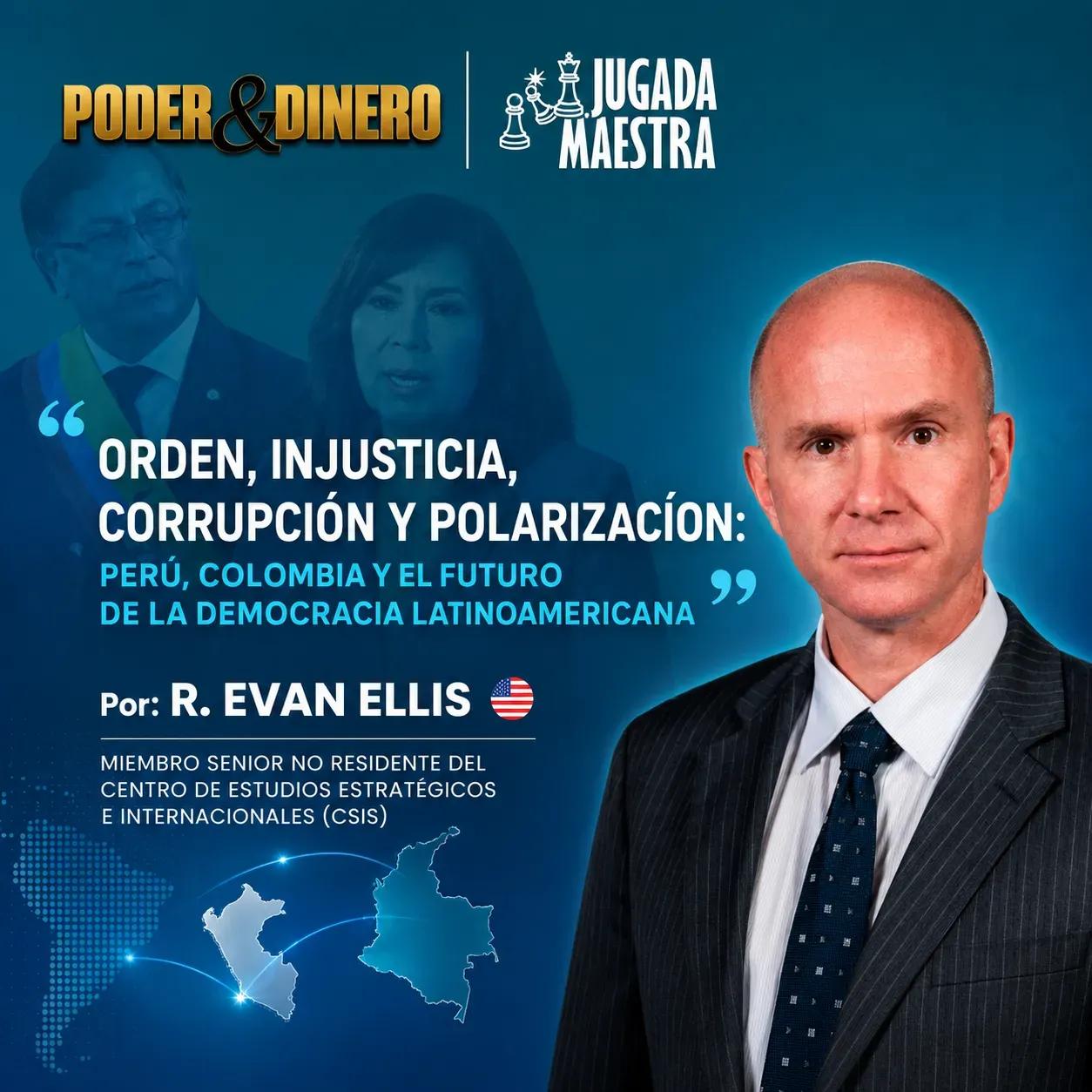
“Polarization has become one of the greatest challenges for the democratic stability of Latin America.”
The Appeal of Disruptive Alternatives
As has happened in transitions towards populist leaders on both the left and right in many other countries, this accumulated frustration positioned a critical mass of Colombians to be receptive to the candidate who projects the most force and change. This stance helps explain the fading of the more moderate right candidate Paloma Valencia, whom many viewed as lacking a clear plan beyond invoking the successes of iconic former Colombian president Álvaro Uribe, with her announced intention to use vinegar to eradicate coca plants, generating laughter and memes on the internet. The frustration of Colombians similarly explains the failure to gain traction from several highly qualified, but more moderate and traditional candidates, such as former Medellín mayor and Antioquia governor, Sergio Fajardo, and former Bogotá mayor Claudia López.
Peru: Insecurity, Corruption, and Political Memory
In Peru, the votes received by Keiko Fujimori in the second round of the presidential elections on June 7 reflect similar dynamics to those in Colombia. The nation has been plagued by an epidemic of crime in its major urban areas, including brutal murders and extortion, reflecting the interaction of a large population of economically marginalized Venezuelan immigrants, exploited by criminal groups like the Tren de Aragua, and a flood of money from illicit activities in the Peruvian countryside, especially cocaine production and smuggling, and illegal mining.
Like in Colombia, Peruvian voters have been frustrated by a wave of corruption scandals that have led to the impeachment of presidents and stained other leaders from both the left and right. Just as Colombians are deeply frustrated with President Petro in Colombia, for Peruvians of center and right, deeply proud of their culture, the behavior of recent leftist presidents provoked reactions of shame and fear of leftist subversion. Examples include Peruvian President Pedro Castillo, impeached and imprisoned following an attempt to dissolve the national Congress, and José María Balcázar, who publicly defended sexual relations between teachers and minor students . In this environment, many Peruvians embraced Keiko Fujimori, who channeled her father's legacy, who is credited with defeating the guerrilla movement Sendero Luminoso in the 90s, although that legacy was stained by undemocratic actions, corruption, and human rights violations. As a result, many conservative Peruvians feared that Fujimori's opponent, leftist psychologist Roberto Sánchez, would revive the subversive influence of the left, including shadow figures like Vladimir Cerrón, trained in Cuba, although in Peru this was not enough to produce a clear outcome.
A Broader Regional Trend
Beyond Colombia and Peru, the victories of right-wing oriented candidates in the recent elections in Ecuador and Chile reflect similar frustrations among voters over insecurity and corruption, as well as a push to block power from the radical left.
Although the left narrative is compelling, the virtual link in Peru between Keiko Fujimori and leftist Roberto Sánchez serves as a reminder that there is another part of the population that weighs other narratives more heavily. In Peru, about half of voters, from marginalized neighborhoods to the Andean highlands, and including the "pituka" elite of Lima's "caviar" left, saw Sánchez as their champion and regarded Fujimori as part of the problem.
The Challenge of Governing Divided Societies
In Colombia, a substantial part of the population felt less threatened by Cuban narcoterrorist subversion than by a candidate with a discourse that seemed hateful and divisive, or who seemed to represent the continuation of a system in which they perceive the "families" and wealthy elites of the "sixth stratum" have rigged the system against them.
Whoever wins in Peru, or in the second round of the Colombian elections on June 21, 2026, both Colombia and Peru will enter a new phase, in which the success of the new governments will depend on two different yet equally challenging imperatives: mobilizing state resources to tackle the challenges of organized crime, insecurity, and corruption, while winning the trust of the "almost half" of each electorate that did not vote for the elected candidate to govern. In each country, decisive leadership does not have to prevent decency and inclusion, and in the long term, the stability of each new government and the success of its program will likely depend on it.

Comments