The Pope's visit to Argentina: religion, power, and economics on the geopolitical board
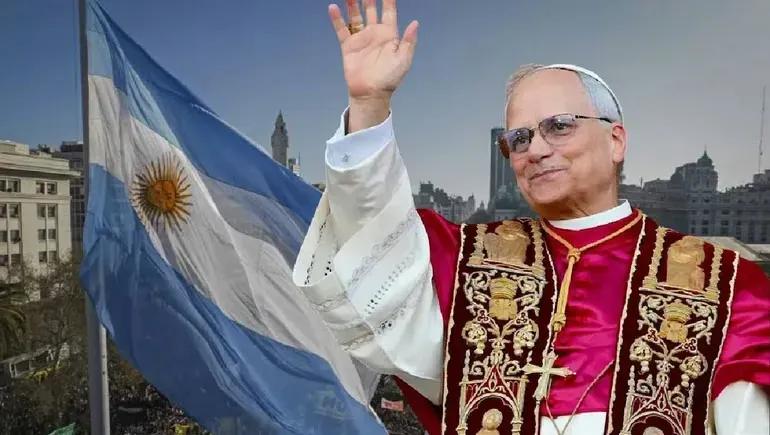
The arrival of Pope Leo XIV in Argentina, from November 8 to 11, 2026, represents much more than a religious event. After nearly four decades without a papal visit to the country —the last was that of John Paul II in 1987— the return of a pontiff puts Argentina back at the center of an agenda that combines diplomacy, politics, cultural influence, and economic activity. However, behind the large masses, institutional meetings, and the mobilization of millions of people, there is a dimension that deserves special attention: the power the Catholic Church retains as an international actor and its ability to influence societies and political decisions without resorting to traditional mechanisms of coercion.
Contemporary geopolitics can no longer be explained exclusively through the military, territorial, or economic capabilities of states. Globalization and the multiplication of international actors have changed the ways in which power is exercised and leadership is constructed. In this context, cultural, religious, and ideological influence acquires increasing relevance. It is here that the concept of soft power, developed by Joseph Nye, helps to understand the scope of a visit like that of Leo XIV.
The Vatican: an international actor beyond religion
The Holy See constitutes a subject of international law with the capacity to establish diplomatic relations, enter into agreements, participate in international organizations, and maintain institutional links with governments around the world. It is not merely a religious authority representing millions of believers, but an actor with its own diplomatic structure and a historical presence in key international debates.
Unlike traditional states, whose power is often measured through economic, military, and territorial variables, the Holy See has a different strategic resource: its moral legitimacy, its ability to convene, and its influence over communities that transcend national borders. The Pope does not need to exercise direct political authority over territory to intervene in public debate. His capacity for influence is built through discourse, diplomacy, institutional tradition, and the identification of millions of people with his values.
The visit of Leo XIV to Argentina serves to observe this characteristic precisely. For four days, the Pontiff carried out an agenda that included meetings with President Javier Milei, representatives of the diplomatic corps, political authorities, businesspeople, union leaders, social movements, religious leaders, and young people. The itinerary also included activities in Buenos Aires, Claypole, Córdoba, and Luján, with a pastoral and social dimension that far exceeds institutional protocol.
In his first official speech at the Palacio Libertad, Leo XIV referred to Argentine history, the diversity of its origins, and the responsibility of present generations for the country's future. He also highlighted the dignity of people, concord, and the common good as principles that should guide public life. It was not a message directed exclusively at Catholic believers, but an intervention before authorities, civil society, and the diplomatic corps. Once again, the Church used its capacity to convene to install a values agenda in the public space.
The diplomacy of symbols: who was present
One of the most interesting aspects of the visit was the political and institutional gathering that took place at the Palacio Libertad. The meeting brought together about 1,500 leaders and representatives from various sectors, including President Javier Milei, Vice President Victoria Villarroel, former President Mauricio Macri, governors, legislators, members of the judiciary, and representatives of the diplomatic corps.
Business sector leaders were also present, including Marcos Galperin from Mercado Libre; Eduardo Eurnekian from Corporación América; Alejandro Bulgheroni from Pan American Energy; Marcelo Mindlin from Pampa Energía; Eduardo Elsztain from IRSA; Alberto Roemmers from the eponymous laboratory; Daniel Hadad from Infobae; Francisco de Narváez and Daniel Vila, among others.
The composition of the guests is not a minor detail. The simultaneous presence of representatives from the political, economic, judicial, and religious spheres demonstrates the Church's ability to function as a meeting space between actors who, under ordinary circumstances, may hold conflicting interests. In a context of political fragmentation and institutional tensions, the figure of the Pope acquires a symbolic articulation capacity that governments may not necessarily possess.
However, the political dimension of the visit did not end with the ceremonial meeting. At the Catholic University of Argentina, Leo XIV gathered representatives from the labor world, businesspeople, union leaders, and social movements. There, the message took on a more explicit tone regarding the country's economic and social conditions. The Pontiff championed social justice, warned about the plight of unemployment, and recuperated the historical demand for "land, roof, and work," also linked to Francisco's legacy.
Among those present were representatives from the CGT, including Jorge Sola, Cristian Jerónimo, and Octavio Argüello; leaders from the Union of Workers and Workers of the Popular Economy (UTEP), such as Alejandro Gramajo; businesspeople and national officials, including Sandra Pettovello and Juan Bautista Mahiques.
This meeting exposed one of the main tensions of the Argentine context: the relationship between the economic model promoted by Javier Milei's government and the Catholic Church's social doctrine. While the Executive promotes a reduction of the state and a transformation of its economic functions, the pontifical discourse places the dignity of work, the protection of vulnerable sectors, social justice, and the need to build consensus at its center.
This does not mean that the Vatican intends to intervene directly in Argentine internal politics or that the Pope represents a party or ideological space. Nevertheless, his moral authority allows him to introduce debates that transcend partisan positions and compel different actors to position themselves in relation to them.
The economic power of a religious visit: millions in motion
Beyond its political and diplomatic dimension, the visit also has a considerable economic impact. Major international events generate positive externalities on various productive activities, especially when involving mass movements of people, demand for accommodation, transportation, gastronomy, and retail trade.
According to preliminary estimates from the Argentine Tourism Observatory of the Argentine Chamber of Tourism, the visit could mobilize up to 7 million pilgrims and more than 3 million national and international visitors. Among the main destinations are Buenos Aires, Luján, and Córdoba, with a significant participation of tourists from Chile, Peru, and Brazil.
In the City of Buenos Aires, the influx of more than 1.2 million visitors was projected, with an average hotel occupancy close to 75% during the long weekend. In Luján, accommodation searches increased more than 1,800%, while full occupancy was expected along with the arrival of around 2 million people. Córdoba, for its part, projected to receive up to 1.5 million visitors.
But the most striking figure corresponds to the potential economic movement. The Argentine Confederation of Medium Enterprises (CAME) estimated that visitor spending could generate around US$270 million, using the average tourist spending and a consumption day per visitor as a reference. This figure mainly considers activities related to tourism, commerce, transportation, and gastronomy.
The estimated economic movement represents the potential spending associated with visitors, but not all of it necessarily constitutes additional consumption: part of that money could have been allocated to other activities or locations in the absence of the event.
Who pays for the visit? The cost of organizing an international event
The mobilization of millions of people also requires infrastructure, logistics, production, and security. At this point, organizing the visit involved resources from different levels of the state, the Catholic Church, and private companies.
According to information gathered by Chequeado, the national government allocated approximately $8.690 billion to the producer DF Entertainment for the comprehensive organization of the mass at the Monument to the Spaniards. For its part, the government of the province of Buenos Aires reported a budget of $3.024 billion for the production and technical services of the celebration in Luján.
The Argentine Episcopal Conference communicated that it had raised more than $5.500 billion through collections and business contributions. It was also reported that companies had contributed more than US$3 million in cash, goods, and services.
Therefore, financing does not fall exclusively on the state or exclusively on the Church. It is a mixed scheme in which public resources, private contributions, and contributions from the faithful intervene. The discussion about the cost of the organization should also consider the possible economic benefits for the commercial and tourism sectors, although these do not automatically offset public spending or allow for claiming that the event is self-financing.
The relevant question is how the costs and benefits of these types of events are distributed, which sectors receive the greatest impact, and what capacity local economies have to transform an extraordinary mobilization into a development opportunity.
The human dimension: the limit of economic and political power
Now, beyond the numbers, the present references, and commercial opportunities, there is a dimension that cannot be relegated: the religious and humanitarian message of the visit.
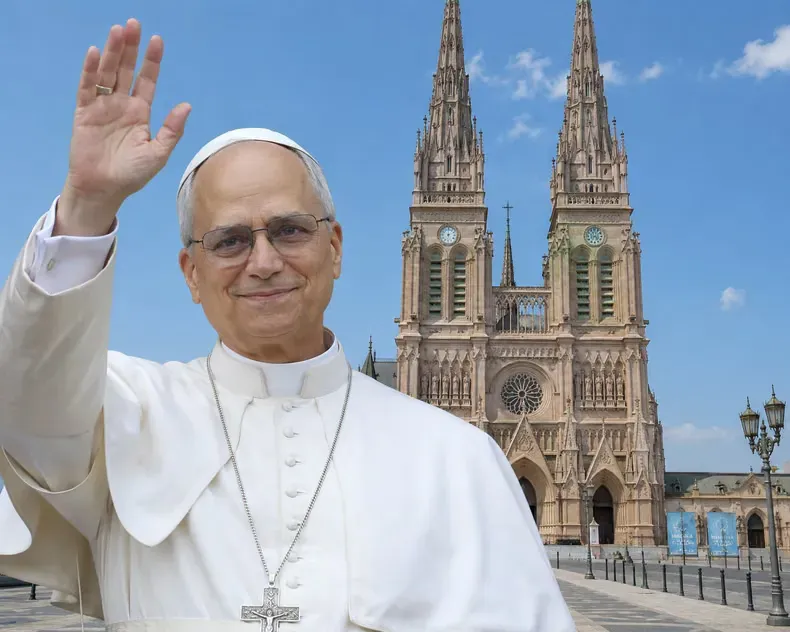
The Catholic Church has historically built part of its international influence based on its ability to intervene in debates on poverty, inequality, migration, armed conflicts, education, and human dignity. Its legitimacy does not depend exclusively on its institutional structure, but also on people's identification with those principles and on the coherence between discourse and actions.
In this sense, Leo XIV's visit raises a reflection that transcends ideological differences. In an international context marked by conflicts, political polarization, economic inequality, and a crisis of representation, the Pope's call once again puts in discussion the place of shared values in building a society.
Power should not be measured solely by the capacity to accumulate resources, impose decisions, or influence other actors but also by the possibility of improving people's living conditions. This is perhaps one of the main tensions left by the visit: the distance that can exist between economic growth and human development, between the efficiency of a model and its ability to include those who are left behind.
Geopolitics often studies how states and other actors compete for influence, resources, and leadership. However, an integral view of international relations should also ask what happens to the people behind those power structures.
The Pope's visit to Argentina demonstrates that religion continues to be a relevant actor on the international stage, that diplomacy is not limited to governments and that symbolic events can produce concrete political and economic effects.
It remains to be seen whether, once the visit is over and the stages, delegations, and millions of visitors have left, the messages of dialogue, solidarity, and human dignity manage to transcend the event and become an action agenda.
Because, ultimately, the true value of a society should not only be measured by how much it produces or consumes but also by the dignity with which the people who are part of it live.

Comments