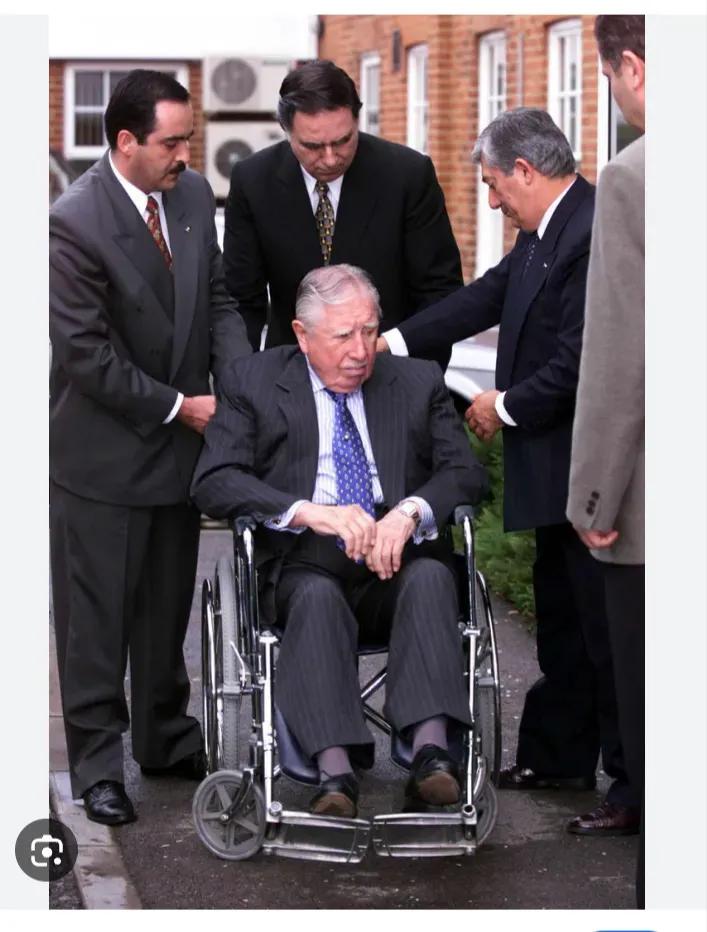
Unlike what happened in the Argentine Republic, the human rights violations committed by the dictatorship of Augusto Pinochet remain unpunished to this day. The Chilean dictator died holding the title of Senator for life and had a state funeral that Michelle Bachelet, then President of Chile, had to attend, who had to go into exile in the German Democratic Republic during the dictatorship.
This impunity, guaranteed by the political and judicial power to both Pinochet and the other participants and executors of the coup and the various human rights violations committed during the dictatorship, allowed the development of a democracy that, although seemingly solid, remains indebted to all the victims of the military regime.
With a duration of almost 20 years, the Chilean dictatorship, unlike the Argentine one, broke the constitutional order in a particularly violent way, bombing the Palacio de la Moneda and murdering several officials of the democratic government of Allende. Salvador Allende, the overthrown president, committed suicide, offering one last act of resistance against the coup plotters.
From 1973 to 1991, Augusto Pinochet established a regime of terror, where political opponents were executed in the National Stadium of Chile, the disappeared numbered in the hundreds, and political rights were completely suppressed.
In addition to his intention to reorganize society under supposed Christian and Western values, Pinochet and a group of economists known as the Chicago Boys sought to restructure the Chilean economy according to the precepts of Nobel Prize-winning economist Milton Friedman.
In 1991, when after a referendum Pinochet agreed to call elections, Chile was a radically different country from that of the 1973 coup. Besides those murdered, the disappeared and exiled, neoliberal measures resulted in an unequal society.
Despite everything, many Chileans continued to support Pinochet. That is why Chilean democracy was born in a sort of limbo, tutored by military power.
Survivors and family members of the victims had to remain silent, without access to justice and without knowing what happened to their loved ones.
Faced with the impotence of impunity, international courts seemed the only way to obtain some reparations. But when Garzón ordered Pinochet's arrest, much of the Chilean public opinion was outraged. They condemned especially the interference of a foreign judge in Chile's internal affairs, but they also sympathized with Pinochet.
The contrast with Argentina was enormous. While in our country Jorge Rafael Videla died in prison, in Chile supporters of Pinochet continue to hold a place in Chilean public opinion. In this sense, Kast's triumph is no surprise.
It seems that a ghost called denialism is sweeping across the region of Latin America. From Mexico to Chile and Argentina, the far-right seeks to establish a place in public discourse. Our young democracies must resist this crisis. But for that, it is essential to seek justice and reparations for the victims of the terror of the past.

Comments