Strategic Context
For much of the 20th century, Venezuela played a central role in the international energy system. Its oil exports contributed to the industrial development of the western hemisphere and helped stabilize global energy markets.
Today, however, the Venezuelan energy crisis is often interpreted incompletely. While political, financial, and regulatory factors have influenced the deterioration of the sector, the reduction of the country's export capacity cannot be explained solely by sanctions or lack of investment.
There is a deeper structural problem.
Over the last two decades, Venezuela's energy logistical infrastructure—the network of maritime corridors, transportation systems, pumping facilities, processing centers, and export terminals that connect oil fields with international markets—has suffered significant deterioration.
The result is an energy paradox.
Venezuela has the largest proven oil reserves on the planet, estimated at over 300 billion barrels, but its logistical system operates well below its actual transportation and export capacity.
Despite this potential, the country's production has drastically fallen over the last decade, dropping from over 3 million barrels per day in previous decades to significantly lower levels in recent years.
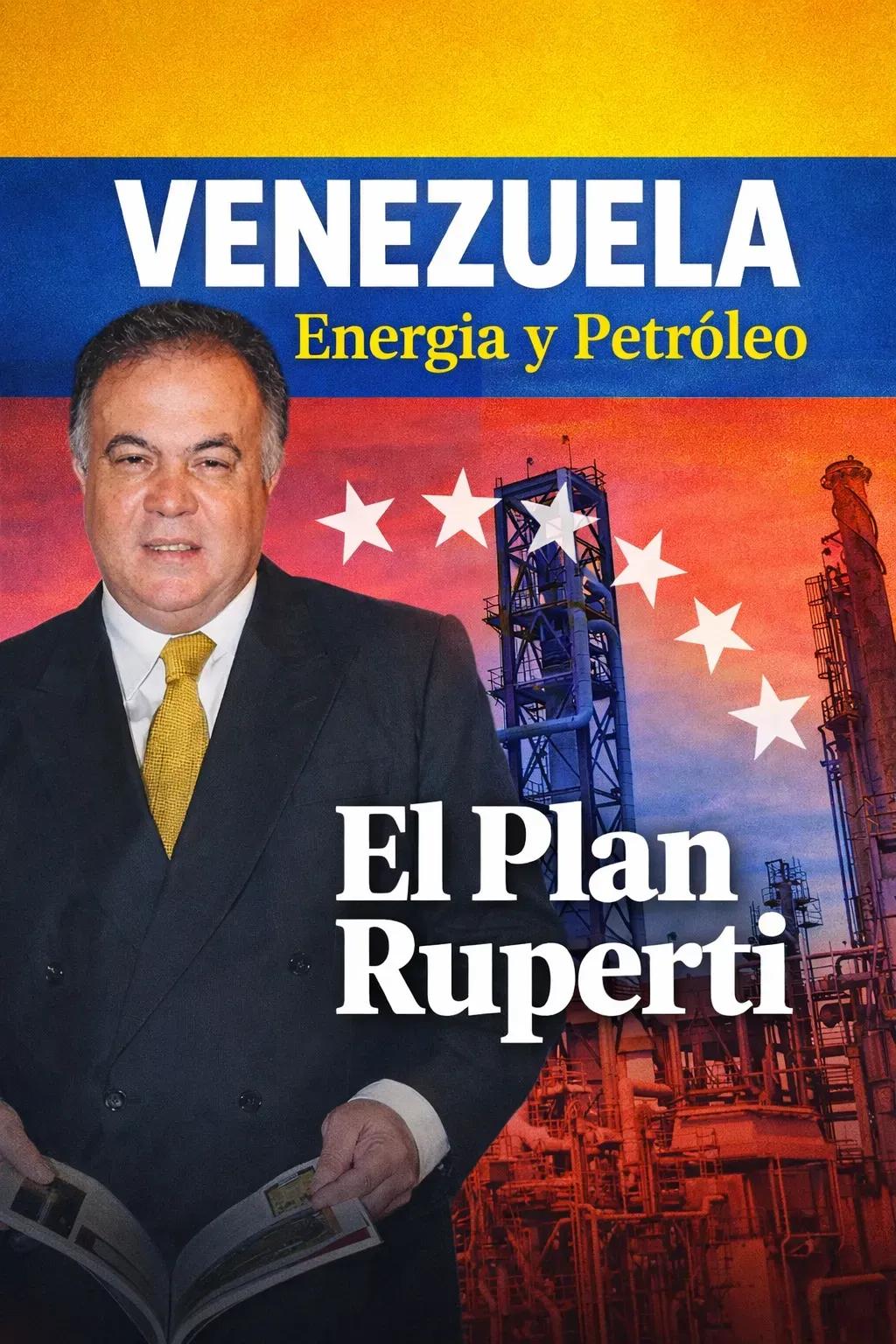
The Ruperti Plan proposes a distinct strategic approach.
Instead of relying exclusively on new massive investments in production, the plan focuses on first restoring the efficiency of the existing energy logistical infrastructure, allowing for a significant recovery of export capacity in a relatively short timeframe.
Beyond national economic recovery, restoring Venezuela's energy logistical capacity could also help strengthen the energy security of the western hemisphere, increasing the resilience of energy supply chains in the Americas.
Strategic Diagnosis
A systemic analysis of Venezuela's energy infrastructure reveals that two logistical networks largely determine the country's export capacity. Historically, these networks have functioned as the main arteries of the Venezuelan oil system.
Western Energy Logistic System – Lake Maracaibo Corridor
For decades, the Lake Maracaibo basin served as the logistical backbone of the Venezuelan oil industry. The infrastructure in this region connected production areas to maritime terminals capable of handling international oil tanker traffic and transporting large volumes of crude to global markets.
Today, however, the operational reliability of this system has been affected by the accumulated deterioration of maritime infrastructure, pumping systems, and energy transportation networks.
The progressive restoration of this logistical corridor would reactivate one of the most important historical channels of oil export for the country. Even relatively moderate logistical improvements could free up hundreds of thousands of additional barrels per day of export capacity, generating billions of dollars in annual economic value.
Eastern Energy Logistic System – Orinoco Belt and José Industrial Complex
The east of Venezuela houses one of the largest concentrations of heavy crude in the world. However, the main challenge in this region is not geological, but logistical and operational.
The capacity to process, blend, and export the crude from the Orinoco Belt depends on the efficiency of the industrial and port complex located in José.
When this system operates efficiently, it can mobilize more than one million barrels per day to international markets. Optimizing its operational performance would allow this complex to become a true accelerator of energy exports for Venezuela.
Strategic Recovery Principles
1. Restore logistics before expanding production
International experience shows that the recovery of complex energy systems begins with the rehabilitation of logistical infrastructure. Transportation networks, pumping systems, processing facilities, and export infrastructure determine the effective capacity of the energy system.
By restoring the efficiency of these logistical components, Venezuela can release significant export capacity without immediately requiring large investments in exploration or the development of new fields.
2. Capture operational value quickly
The plan prioritizes interventions capable of generating operational improvements in relatively short timeframes. By concentrating resources on critical nodes of energy logistical infrastructure, the system can begin to increase export flows while broader modernization processes continue.
This approach enables early results that strengthen the confidence of strategic partners and international investors.
3. Create a transparent investment framework
The restoration of Venezuela's energy infrastructure will require significant international capital and institutional frameworks that guarantee legal stability, transparency, and regulatory compliance.
In this context, a central component of the plan emerges: the Venezuela Energy Logistics Recovery Fund (VELRF).
The VELRF is the financial instrument designed to channel international capital towards energy logistical infrastructure rehabilitation projects. It is a financially smart idea because it allows structuring investments under international standards of governance, regulatory compliance, and legal protection for investors.
This mechanism would allow the mobilization of hundreds of millions of dollars in initial capital, with the potential to scale towards billions of dollars in structured investments aimed at restoring the logistical capacity of the Venezuelan energy system.
Technical Basis and Execution Capacity
The Ruperti Plan is not a conceptual proposal. The plan is based on technical studies, logistical assessments, operational analyses, and modeling of the Venezuelan energy system developed over the past few years regarding the country's main export corridors.
These studies include diagnostics of critical infrastructure, logistical capacity analyses, operational evaluations of energy systems, and intervention proposals for strategic infrastructure nodes.
This public version presents only the strategic framework of the plan. Detailed technical plans, engineering studies, financial assessments, and implementation roadmaps are part of the complete executive plan, designed for progressive execution in coordination with international investors and institutional actors.
Conclusion
Venezuela has the energy resources necessary to once again play a relevant role in international energy markets.
The central challenge is not the availability of oil, but the restoration of the logistical system that enables that oil to reach global consumers.
The Ruperti Plan, backed by technical studies and financial mechanisms such as the Venezuela Energy Logistics Recovery Fund (VELRF), proposes a strategic roadmap based on logistical modernization, operational efficiency, and international investment.
With the appropriate institutional environment, Venezuela can recover a significant part of its energy capacity and contribute once again to the stability and energy security of the western hemisphere.
Wilmer Ruperti
Energy logistics and maritime operations specialist

Comments