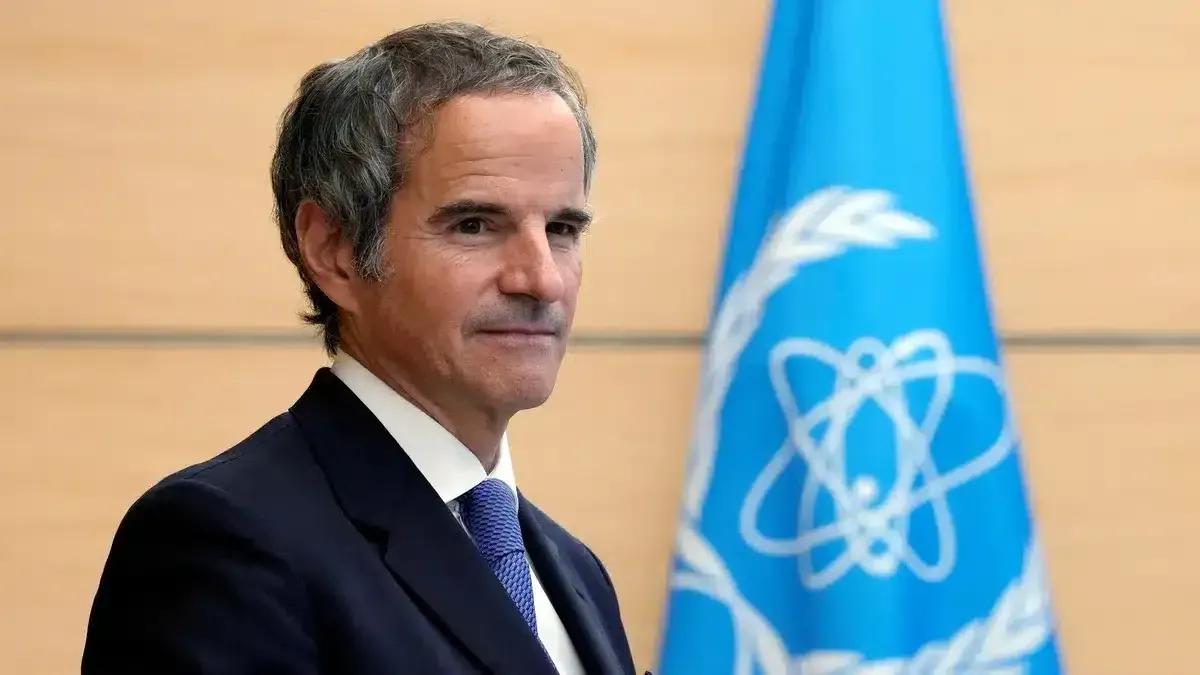
The candidacy of Rafael Mariano Grossi for the Secretary-General of the United Nations is not simply a diplomatic move: it is a political gesture that reveals, in a silent but firm key, how Argentina seeks to reinsert itself into the global arena through a technical profile capable of speaking on equal terms with major powers in the only language that all respect: that of strategic security.
Grossi, a major figure in nuclear multilateralism, emerges as an attractive anomaly in a world plagued by erratic leadership. Unlike the secretaries-general who arrived in New York propelled by regional circumstances or circumstantial diplomatic balances, he represents a different kind of leadership: one forged not in rhetoric, but in expertise. This combination—sobriety, cold intelligence, and a career that literally deals with the possibility of the end of the world—is part of the magnetism that makes him a favorite heading into 2026.
The Argentine candidacy: technical, symbolic, and geopolitical
The official statement presenting his candidacy exhibits a classic narrative of multilateralism: Argentina as a founding country of the UN, committed to peace and dialogue, upholding a recognized diplomatic tradition. But beneath that institutional surface lies another story, less proclaimed and more strategic.
In a world where the multilateral system is agonizing between revisionist pressures, high-intensity wars, and a persistent fracture between the West and the emerging countries, nominating an expert in nuclear security—the field where cooperation is literally existential—is a potent message. Argentina is not satisfied with merely "being": it seeks to "influence".
Grossi embodies a kind of rational counterweight to the growing impulse of global disorder. From the IAEA, he has been seen operating as a sophisticated tightrope walker between Washington, Moscow, Brussels, Tehran, and Pyongyang; a negotiator capable of combining technical skill, patience, and moral authority without falling into empty moralism. It was that ability that projected him as an indispensable actor in moments of maximum tension: from supervising nuclear facilities in conflict zones to his surgical diplomacy in scenarios where a mistake can escalate to irreversible consequences.
The figure of Grossi: a technocrat with political epic
However, there is something almost literary in the idea that one who seeks to prevent the end of the world now aspires to lead the organization created to avoid it. Grossi has built a global leadership that exceeds the category of "expert": he is one of those rare figures who become indispensable due to the combination of expertise, clarity, and a sense of duty.
While others aspire to the UN for a platform, Grossi arrives with a roadmap. His vision of the international system is not romantic: it is surgical. He understands that the global order does not collapse suddenly, but through successive microfractures; that peace is maintained when technique accompanies diplomacy; that the UN, to avoid extinction, needs less solemnity and more results.
In a system where the authority of the Secretary-General depends as much on his legitimacy as on his ability to discomfort the powerful without antagonizing them, Grossi's profile appears as a synthesis difficult to replicate: deep knowledge, transversal influence, and a style that combines prudence with determination without stridency.
A leadership for unpredictable times
His candidacy raises a larger question: what kind of leadership does the 21st century require?
Not moralistic paternalism or superficial activism. But strategic sophistication that can cushion crises that are no longer regional but systemic. From hybrid wars to military artificial intelligence, from nuclear proliferation to climate collapse, the world faces challenges that require more than well-intentioned officials.
Grossi symbolizes a different idea of power: that of the expert who understands complexity but does not hide behind it. If anything has been demonstrated at the helm of the IAEA, it is that neutrality is not indifference but precision. That technique can be more political than any inflamed discourse. And that multilateralism can still deliver results when it stops being a theatrics and becomes a tool.
Why Grossi matters for Argentina?
Because he projects an international identity that the country rarely manages to convert into political capital: that of a nation with excellent diplomats, solid technical institutions, and the capacity to produce global leadership.
An Argentina conditioned by cyclical crises often forgets that its professional diplomacy is one of its most constant strengths. And Grossi is the living proof that influence is not always measured in GDP but in credibility.
His eventual election would not only revalue Argentina's presence in the UN. It would also reposition the country in critical debates, from nuclear governance to global security dilemmas. It would be, in some sense, a symbolic re-entry into the core of multilateralism at a time when most States are competing to show relevance.
The future under the blue light of multilateralism
Grossi's candidacy does not guarantee a revolution in the UN—no Secretary-General has that power—but it does introduce a possibility. The possibility of a more technical leadership, less declamatory and more aware that the world navigates threats that allow no margin for error.
Perhaps the dilemma is not whether Grossi can become Secretary-General, but whether the international system is willing to be led by someone who promises not epic but precision; who does not sell illusions but governance; who does not seek protagonism but results.
And, ultimately, whether we are prepared for an Argentinian to lead the institution charged with preventing the world from disintegrating.
After all, the future is not built with grandiosity: it is built with lucidity. And Grossi, for now, seems to have it in abundance.
Comments