As a young DEA agent, long before being assigned to Guadalajara or Monterrey, I spent many afternoons with my partner and mentor, Mario Alvarez, enjoying cold beers at our favorite spot: the Toucan Lounge. It was the kind of place that didn't try to impress anyone; dim lights, tables marked by the years, and a bar that had heard more confessions than promises. There, time seemed to move slower, especially in the afternoons, when the day seemed willing to stop for one more beer.
Mario was old school. He joined the service in 1971, when the DEA was still known as the BNDD. He had seen it all. He had worked on cases that never made the news, had done undercover work countless times, and had managed to catch men whose names were whispered, not spoken. Heroin. Cocaine. The worst of the worst. He carried those years like only veteran agents do: silently, without fanfare, without complaints.
When we sat at the Toucan, condensation sliding down the bottles, Mario liked to talk about Guadalajara. Not about the violence. Not the danger. But about the city itself, as it was in the mid-seventies. He spoke of its beauty: the light, the culture, the music that came from the cantinas, the food, the weather. He also talked about work, but it was clear that Guadalajara had been more than just an assignment for him. It had been a chapter of his life that he remembered with special affection.
I listened. And without realizing it at the moment, I began to see the city through his memories. Long before I set foot in Guadalajara for the first time, the city had already settled in me.
When I was finally selected for an assignment there, I felt deeply excited. Before leaving, Mario gave me one piece of advice. It wasn't dramatic or grandiose, just something said in passing, the way men like him shared what really matters.
He told me not to let work become so consuming that I would lose the beauty the city had to offer.
Like so many other times, I followed his advice.
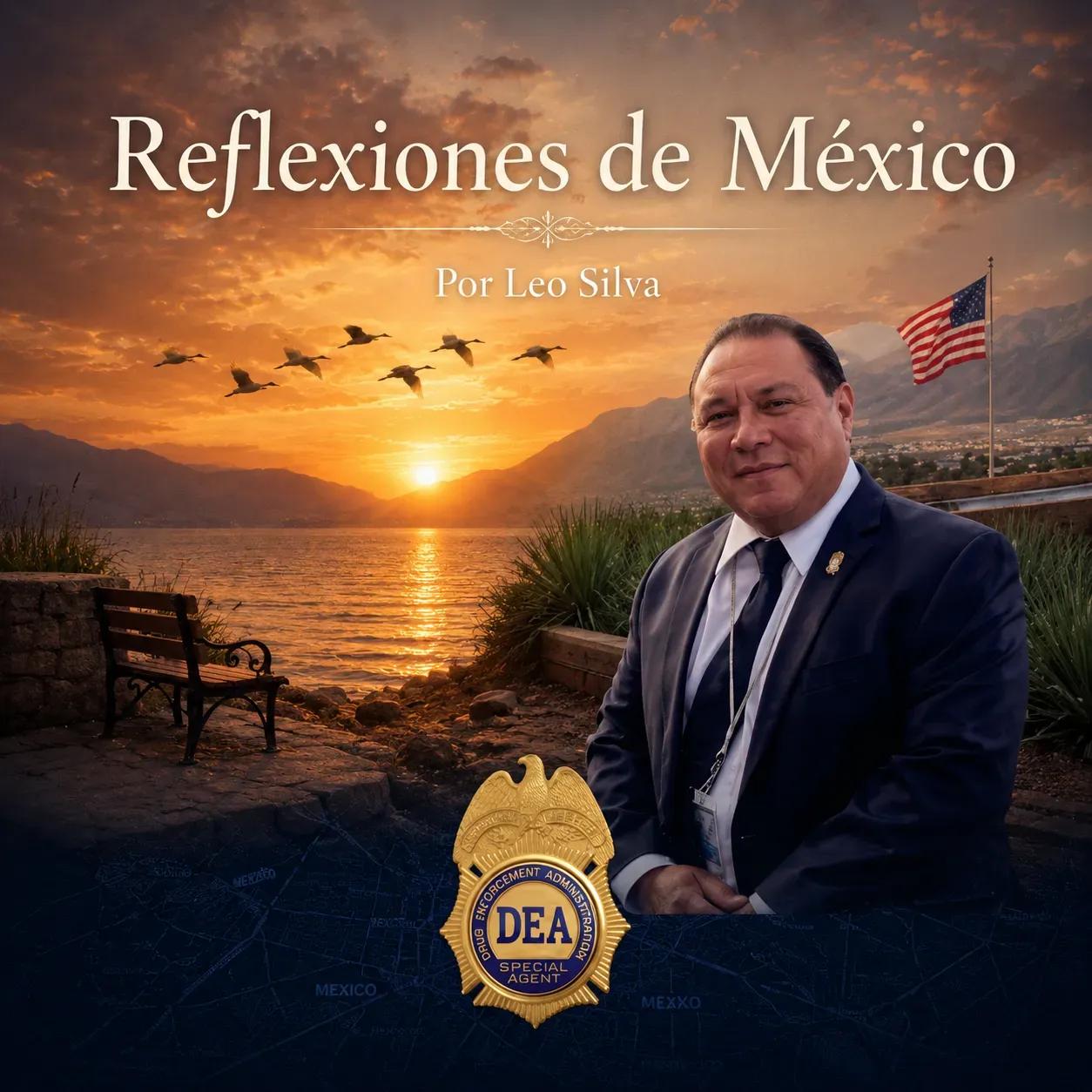
I was amazed by the beauty of Lake Chapala as the sun set behind the mountains and the sky burned softly before surrendering to twilight. Flocks of cranes lazily crossed the horizon towards their nesting areas, oblivious and indifferent to the world stretching beneath them. At some point behind me, the distant sound of mariachi music floated in the afternoon air, trumpets and violins softly rising and falling, as I watched the reflection of the sunset on the water.
I stood in silent admiration before the majestic presence of the Nevado de Colima, with its snow-capped peak rising white and distant, untouched by the passage of time, a reminder that some things endure far beyond us. Such beauty reinforced my belief in the existence of God and made me feel small, in the best sense, a single figure within a vast universe.
Along the coast of Manzanillo, the deep blue waters of the Pacific were equally stunning. The crashing waves against the shore became hypnotic as my partner and I shared cold Pacífico beers, watching children play innocently in the surf.
We awaited the arrival of a container loaded with tons of cocaine.
The children had no idea what was coming ashore that day. They didn't understand the fate of the poison or the silent and irreversible harm it would leave in its wake. They laughed and ran after the water, unaware of the gravity of what was about to arrive, not knowing how profoundly it would affect humanity far beyond that strip of sand.
I remember asking myself then whether our presence really mattered in the greater scheme of things. If we seized that shipment, there would be others behind it, wave after wave. In the end, it didn't seem more permanent than the grains of sand with which the children built their little castles: brief shapes against a tide that never truly stops.
Mario was not a man who showed emotions or pondered life's meaning in a literary way. He was as tough as the best. But, in his subtle way, he was telling me there was more to life than work, that if I wasn’t careful, the work could consume everything. In his way, he was telling me to stop and appreciate the simple things.
I did. And for that, I will always be grateful to him.
Mario passed away many years ago, but his legacy has never faded. Now, as I am older myself, in this stage of my life, I understand his words more clearly than I did then. I carry that lesson with me, honoring his memory not with speeches or sentimentalities, but with remembrance.
From time to time, I return to the Toucan Lounge. I sit in silence and look at the table where we used to spend our afternoons, where Mario reminisced about his time in Mexico and told me his stories. The bar hasn’t changed much. Its murmur continues just like it did then.
As I sit in the dim light, I can almost see him there, with that familiar smile on his face. I honor his memory, lift my glass, and toast to my old friend.
Leo Silva is a former special agent in charge of the DEA (Monterrey Office) and author of Reign of Terror and El Reinado de Terror. With decades of frontline experience in the fight against transnational cartels, Silva offers readers an intimate look at some of the most dangerous operations aimed at high-level leaders and organizations.
Since the publication of his memoirs, Silva has become a recognized voice in the media and on the speaking circuit. His story and analyses have been featured in interviews with Pulitzer Prize-winning journalist Jorge Ramos on Univision (Así veo las cosas), three-time Emmy-winning journalist Paco Cobos (La Entrevista), and Ana Paulina (Voces con Ana Paulina), where his participation generated millions of views. He has also been featured on prominent platforms such as the podcast Cops and Writers with Patrick J. O’Donnell, Game of Crimes with Steve Murphy, and Llamados a Servir with Roberto Hernández.
Through his books, lectures, and media appearances, Silva continues to shed light on the realities of organized crime, the work of law enforcement, and the human cost of the war on drugs, all while sharing lessons of resilience, leadership, and truth.

Comments