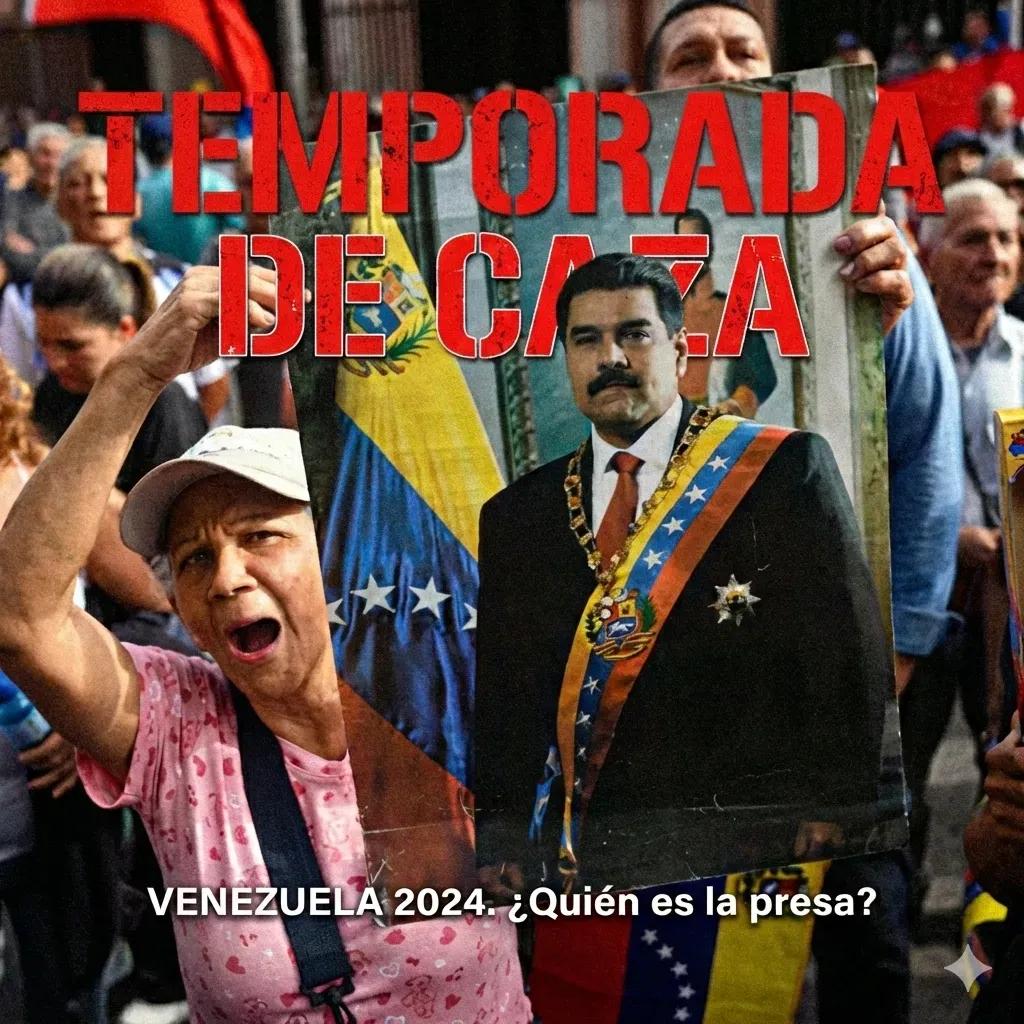
With the capture and extraction of Nicolás Maduro through a rapid operation in Venezuelan territory by special forces from United States, international politics added another event based on the almost absolute primacy of power and national interest.nacional.Si If the Athenian soldier and historian Thucydides were among us today, he would likely say that he is not surprised by what he observes, as “the powerful do what they can and the weak suffer what they must” was a nearly common reality in the world of his time, that is, 2500 years ago. This sentence means that international politics is rapidly adopting a vertical power structure, with strong accumulation of technological-military capabilities and an increasing delimitation of spheres of influence. In this context, the multilateral or interstate cooperation model is falling far behind, with international trade remaining as a substitute for an international order based on economic gains, albeit under the threats of national primacy policies (which is why the growing importance of what is termed SupTech, that is, the use of technology to assess risks). Between early 2022 and the beginning of 2026, there were major events that categorically clarified that international relations are relations of power before they are relations of law. In other words, the so-called “relational model” is ahead of the “institutional model.”
In February 2022, Russia launched a special military operation across almost all of Ukraine. Although Moscow considered it a defensive counter-offensive mission (hence its attempt to sustain it under Article 51 of the UN Charter), it was plain and simple an act of force against the sovereignty of a state. Since then, Russian forces occupy nearly 20 percent of Ukraine, and Moscow has warned that there are no possibilities for an agreement that ignores this situation. On the other hand, after the attack carried out by Islamic terrorist organizations on Israel from Gaza on October 7, 2023, the Israelis launched military actions in that territory that not only resulted in the deaths of tens of thousands of Palestinians, including terrorists, but also the attack served to allow Israel to practically erase all signs of life from the Palestinian Authority and increase its Israeli settlements in West Bank, leading to the near partitioning of Palestinian territory and the physical connection between the settlements and the city of Jerusalem. Furthermore, following the fall of Bashar al-Assad's regime in Syria in December 2024, Israel proceeded to occupy a demilitarized zone in the Golan Heights patrolled by UN personnel since 1974. In June 2025, under the name “Operation Midnight Hammer,” U.S. bombers and submarines carried out precision strikes on strategic sites located in Iran: the Fordow uranium enrichment plant, the Natanz nuclear facility, and the Isfahan Nuclear Research and Technology Center. In this way, the purpose of Tehran to continue the uranium enrichment process to military threshold percentages was curtailed.
On the other hand, China continued projecting power over the South China Sea. Although this is a stealthy fact in international politics, it is a matter of scale, as this projection not only creates potential conflicts with regional and extra-regional actors but may also lead to China making sovereign claims based on initiatives favorable to humanity. For instance, in 2025, Beijing began constructing a submarine station in the South China Sea for scientific research purposes; a smooth way to gain power in the future. Something similar to what the United Kingdom has long been doing under the guise of “environmental defense diplomacy” and ocean care. The movements of powers in the Arctic region are transforming necessary cooperation into an increasing geopolitical competition, as the thawing (it is estimated that by 2040 the Arctic will be ice-free every summer) intensifies the projection of interests and capabilities by Russia, the United States, Canada, and China (which considers itself a “near-Arctic” state) in order to achieve territorial, economic, and military control.
In this context, it is believed that the possibilities for cooperation in the Arctic will become increasingly complex as a result of a more assertive and militaristic approach by Russia in response to Western assistance to Ukraine. To a large extent, Trump's offensive regarding Greenland is related to this and the defense plans that would make U.S. territory invulnerable. Lastly, on January 3 of this year, in response to a judicial accusation from a district in New York, U.S. special forces carried out a rapid intervention in Venezuelan territory to capture, extract, and bring President Nicolás Maduro and his wife to United States to face justice for accusations of drug trafficking and association with Venezuelan cartels.
The “Operation Absolute Determination” refocused issues related to the strategic selective sites of the powers, that is, areas where the rising geopolitical power of the dominant or hegemonic power sidelines large principles of international law, a situation that leads the governments of countries located in red geopolitical zones or “post-patriotic” areas to develop a convenient sense or diplomacy of deference towards thesepowers.Es. It is pertinent to recall that a few years ago Argentine specialists Roberto Russell and Fabián Calle considered, “Since the end of the Cold War, the United States has extended its power in the subregion of Latin America that encompasses Mexico, Central America, the Caribbean, and northern South America, with the exceptions of Cuba and Venezuela.” Undoubtedly, today that “extended northern Latin America includes Venezuela, Colombia, and also Cuba.
There are many other important cases, among them, some geopolitical movements by China and Russia in the Antarctica that could impact the same Antarctic Treaty, but we have considered here the most impactful regarding power primacy, interest, and national capabilities. The German expert George Swarzemberger well argued that, while institutions and laws restrict power within states, in international politics, it is the power of major and intermediate actors that limits institutions and international norms. This has always been the case. Hence, the state of international anarchy, that is, the absence of a world government that centralizes authority and decisions, leads states to compete with each other, distrust intentions, and therefore place their security in self-help. Nevertheless, there are times when international politics becomes or tends to become more horizontal, and this only happens when major powers manage to establish an international order. Order is what brings states closer to peace. More than that: order is peace, as peace is an abstraction, unlike war. It is war that evolves: absolute war, total war, hybrid war, biological war, post-total or nuclear war, Arctic war, next-gen warfare...
Therefore, when there is no international order, that is, a system of inter-state coexistence agreed upon and respected by “the ones that count” based on certain strategic consensuses, states arm themselves and put their interests first. Thomas Hobbes would say they become gladiators in a combat position. In contrast, order entails restrictions of forces, cushioning of conflicts, crisis management, space for international regimes (those “managed orders” referred to by Oran Young), and the affirmation of a “strategic culture” that is crucial for avoiding uncontrolled situations or fissures on supra-strategic issues, for instance, nuclear weapons and also in the face of threats not coming from states or non-states: infectious and biogenic diseases.
As we enter 2026, it has been nearly 20 years without international order. The last thing that led the United States, Russia, and China to cooperate (relatively) was a common enemy: transnational terrorism. But after the financial crisis of 2008 and especially following Russia's annexation of Crimea, international relations began to deteriorate, while China grew stronger (both in hard and soft power) and new issues led to new crises, for example, major technologies applied to strategic-military segments (among numerous texts, the American Chris Miller’s Chip War: The Fight for the World’s Most Critical Technology is pertinent).
The current international disruption has repositioned geopolitics, war, and blunt warnings from the powerful directed at other challenging actors located in compromised zones; and it has done so at an unprecedented level in times of non-generalized warfare, although the current international disorder also suffers from the consequences of strong rivalries and tensions among actors with “order-forging capabilities.” Therefore, power centers are forced to navigate this world with increasingly extended “hunting grounds.” It will be hard to avoid a catastrophe if disruptive disorder continues. The experience is instructive in this regard.
For the less powerful and for those who tend to view the world through the lens of aspirations or to align their national interests with those of others, what happens in international politics should be a call to stimulate geopolitical and strategic reflection, as some seem to ignore that in the world there is no “911” to call for help when threats become reality. These threats do not always involve acts of force, as some issues that have already surfaced in the post-Cold War world, such as the right of multilateral or unilateral intervention to be applied in countries with structural difficulties in managing their resources or strategic assets, their economies, or facing challenges in neutralizing potential threats that could have global impact or affect the security of others.
It is always worth remembering, particularly in these current times, the words of Henry Kissinger: "Sooner or later, history punishes strategic frivolity."
Alberto Hutschenreuter. PhD in International Relations. Postgraduate degree in Control and Management of Public Policies. Former tenured professor of Geopolitics (ESGA). Former teacher at UBA and ISEN. Contributor to national and international specialized journals and websites. Author of the book "Russian Foreign Policy after the Cold War. Humiliation and Repair" and "Geopolitics Never Left. The Major World Events in Political, Territorial and Power Terms."

Comments