Introduction
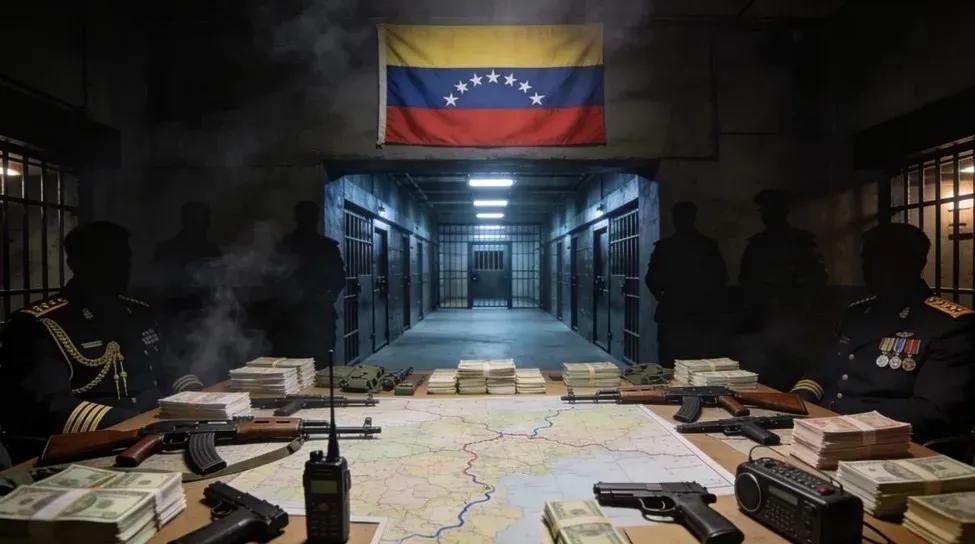
Within hours, the Venezuelan regime has moved two pieces that say more than any speech. Vladimir Padrino López, for years the public face of military power, is pulled from the command center and pushed towards the discreet comfort of a future diplomatic position, while at the front of the Ministry of Defense, Gustavo González López rises, the general associated with the basements of SEBIN and DGCIM, where torture and systematic abuses have been documented. At first glance, it appears to be a simple change of names; in practice, it is a brutal signal of priorities: the system is not willing to correct the excesses of the past, but to shield those who executed them and reinforce, even more, the logic of control and intimidation over military personnel and civilians. This report examines that maneuver for what it is: an attempt to shield the executioners with diplomatic suits and new stars on their uniforms, while international justice, slow but persistent, has already begun to write their names in records, sanction lists, and criminal cases.
From the "Useful Fool" to the Uncomfortable Diplomat?
Everything indicates that the regime's "useful fool" will not be thrown overboard, but rather repositioned in some diplomatic or international representation role that sounds respectable and, above all, promises a legal umbrella (DOJ 2020; U.S. Department of State 2025). The move is clear: to dress him as an ambassador or "special envoy" to try to shield him under the 1961 Vienna Convention on Diplomatic Relations, which grants immunity from the receiving state's criminal jurisdiction while the agent is accredited and in office (Vienna Convention 1961).
This immunity, however, is procedural and territorial: it does not erase the past nor make disappear the accusations already made by U.S. courts, such as in the case United States v. Vladimir Padrino López, No. 1:19‑CR‑176 (D.D.C.), where he is charged with conspiracy to distribute cocaine aboard aircraft registered in the United States, within the package of charges for narco-terrorism announced on March 26, 2020 (DOJ 2020). Additionally, he is included in the list of Specially Designated Nationals (SDN) of the Office of Foreign Assets Control, which freezes any assets under U.S. jurisdiction and prohibits individuals and companies from that country from doing business with him (OFAC 2018; OFAC SDN
The General of the Night and the Silence
The new strongman, Gustavo Enrique González López, operates in a different but equally compromised terrain. He does not stand out as much in drug trafficking records as Padrino, but he is deeply embedded in the sanctions lists for his role in the state's repressive machinery (SanctionsWatch 2021; OpenSanctions 2026).
Sanctions databases identify him as a key figure in SEBIN and military counterintelligence in operations targeting civil and military opponents, with documented arbitrary detentions and patterns of abuse (SanctionsWatch 2021; OpenSanctions 2026). Human rights organizations describe SEBIN and DGCIM as spaces associated with systematic torture: forced disappearances, beatings, suffocation with bags, electric shocks, simulated drownings, stress positions, and sexual violence against political detainees and selective killings inside and outside the country.
(SIC Magazine 2024; Global Venezuela Network 2025; Human Rights Watch 2017). With that record, the general now arriving at the Ministry of Defense drags an international rap sheet that makes it difficult to present him as a respectable interlocutor in any attempt to restore foreign relations (SanctionsWatch 2021; OpenSanctions 2026).
Immunity is not Impunity
An eventual diplomatic appointment for Padrino or González López could offer a limited shield: while a state recognizes them as diplomatic agents, their internal criminal jurisdiction is restricted, even regarding prior acts (Vienna Convention 1961). For the regime, saving its most compromised figures does not depend solely on the classic title of ambassador. Any suit with a diplomatic label suffices: head of mission, "special envoy," or representative to an international organization, as long as it comes accompanied by the accreditation seal that activates privileges and immunities.
The objective is the same in all cases: to transform a potential detainee into an "untouchable" within certain territories, even though neither the Vienna Convention nor treaties on immunities are designed to erase prior criminal charges or compel the United States or other countries to turn a blind eye to cases of torture, drug trafficking, or serious human rights violations. However, that protection only exists where their credentials are accepted and does not obligate the United States to grant them any kind of jurisdiction, much less when there are already criminal accusations and financial sanctions against them (DOJ 2020; OFAC 2018; OFAC SDN 2025; U.S. Department of State 2025).
Moreover, the Convention Against Torture and other international law norms impose duties to investigate and, in many cases, prosecute or extradite suspected torturers, which clashes directly with the use of diplomatic charges as a refuge for high-ranking repressors (Ilabaca Law 2025; Núñez Law Firm 2025; Amnesty International 2021). If any of them step foot on U.S. territory without an immunity status recognized by Washington, or travel to a third country willing to cooperate with arrest or extradition orders, the label of "ambassador" will carry little weight against the already recorded case numbers in federal courts and their status as sanctioned individuals in international lists (DOJ 2020; OFAC SDN 2025; OpenSanctions 2026).
A State that Protects its Perpetrators
At its core, Padrino's departure from the Ministry of Defense and González López's rise do not signify a break with the past, but the continuity of a scheme of impunity that now relies even more on intelligence and counterintelligence apparatuses (Human Rights Watch 2017; SIC Magazine 2024; Global Venezuela Network 2025; OpenSanctions 2026).
The internal message is clear: the system protects those who have been functional to its survival, even if they are surrounded by international records, and guarantees them shelter in military offices, security services, or distant embassies (OFAC 2018; OpenSanctions 2026). For the victims, the message is exactly the opposite: those who directed tortures, brief disappearances, and judicial fabrications are recycled and rewarded, while international justice progresses slowly and conditioned by geopolitical interests (Human Rights Watch 2017; Amnesty International 2021).
In that tension between a state that protects its perpetrators and an international system that tries, with all its limitations, to enforce individual criminal responsibility, much of the immediate future for figures like Padrino and González López is at stake, as well as the credibility of any "transition" that those in power want to present as real change (DOJ 2020; U.S. Department of State 2025).
Conclusion
The operation currently seen in Caracas is not a gesture of openness, but a tightening of ranks. Padrino is offered the cover of a diplomatic passport; González López is handed the keys to the Ministry of Defense after years of leading structures implicated in torture. The political message is brutal in its simplicity: on the regime's board, loyalty weighs more than the law, and experience in repression is worth more than any commitment to truth or reparation.
But the gamble has a limit: the more the executioners are recycled and rewarded, the more evidence, sanctions, and cases accumulate that will sooner or later make it harder to sustain the fiction that nothing happened. No ambassador title, no flashy appointment, will change a fundamental fact: responsibility for serious crimes travels with the person, not with the position, and the attempt to shield them today is, at the same time, a confession of what they fear being held accountable for someday.
References
Amnesty International. “United States acknowledges that the Convention Against Torture applies in Guantanamo.” 22 June 2021.
“Vienna Convention on Diplomatic Relations.” Refworld, UNHCR, 10 June 2024.
https://www.refworld.org/es/leg/trat/un/1961/es/147874.
Human Rights Watch. “Venezuela: Responsibility of senior officers in abuses.” 15 June 2017.
https://www.hrw.org/es/news/2017/06/15/venezuela-responsabilidad-de-los-altos-mandos-en-los-abusos.
Ilabaca Law. “Assistance under the Convention Against Torture (CAT).” 7 Feb. 2025.
https://ilabacalaw.com/es/convencion-contra-la-tortura/.
Núñez Law Firm. “Convention Against Torture (CAT).” 2025.
OpenSanctions. “Vladimir Padrino Lopez.” 14 Jan. 2026.
https://www.opensanctions.org/entities/Q19519696/.
OpenSanctions. “Gustavo Enrique Gonzalez Lopez.” 15 Mar. 2026.
https://www.opensanctions.org/entities/Q19787200/.
Global Venezuela Network. “What is SEBIN? The repressive arm of the Venezuelan government.” 16 Apr. 2025.
https://redglobalvenezuela.org/que-es-el-sebin-el-brazo-represivo-del-gobierno-de-venezuela/.
SIC Magazine. “Human rights in SEBIN and Dgcim.” 5 Feb. 2024.
https://revistasic.org/derechos-humanos-en-el-sebin-y-la-dgcim/
.SanctionsWatch (CIFAR). “Gustavo González López.” 15 Dec. 2021. https://sanctionswatch.cifar.eu/gustavo-gonzalez-lopez.
United States Department of Justice (DOJ). “Nicolás Maduro Moros and 14 Current and Former Venezuelan Officials Charged with Narco‑Terrorism, Corruption, Drug Trafficking and Other Criminal Charges.” Press Release, 26 Mar. 2020.
United States Department of Justice (DOJ). United States v. Vladimir Padrino López, No. 1:19‑CR‑176 (D.D.C.).
Indictment PDF: https://www.justice.gov/opa/page/file/1261721/download.
United States Department of State. “Vladimir Padrino López.” 9 Jan. 2025.
https://www.state.gov/vladimir-padrino-lopez.
United States Department of the Treasury, Office of Foreign Assets Control (OFAC). “Venezuela‑related Designations.” 25 Sept. 2018.
https://ofac.treasury.gov/recent-actions/20180925.
United States Department of the Treasury, OFAC. “Sanctions List Search – Entry: Vladimir Padrino López / Gustavo Enrique González López.” Consulted 2025.
https://sanctionssearch.ofac.treas.gov/Details.aspx?id=25080.
About the Author:
William L. Acosta graduated from PWU and Alliance University. He is a
retired police officer from the New York Police Department, a former member of the U.S. Army as well as founder and CEO of Equalizer Private Investigations &
Security Services Inc., a licensed agency in New York and Florida, with
international outreach. Since 1999, he has led investigations into cases of
narcotics, homicides, and missing persons, in addition to participating in
criminal defense both at the state and federal level. A specialist in c
international and multijurisdictional, has coordinated operations in North America. Europe and America
Comments