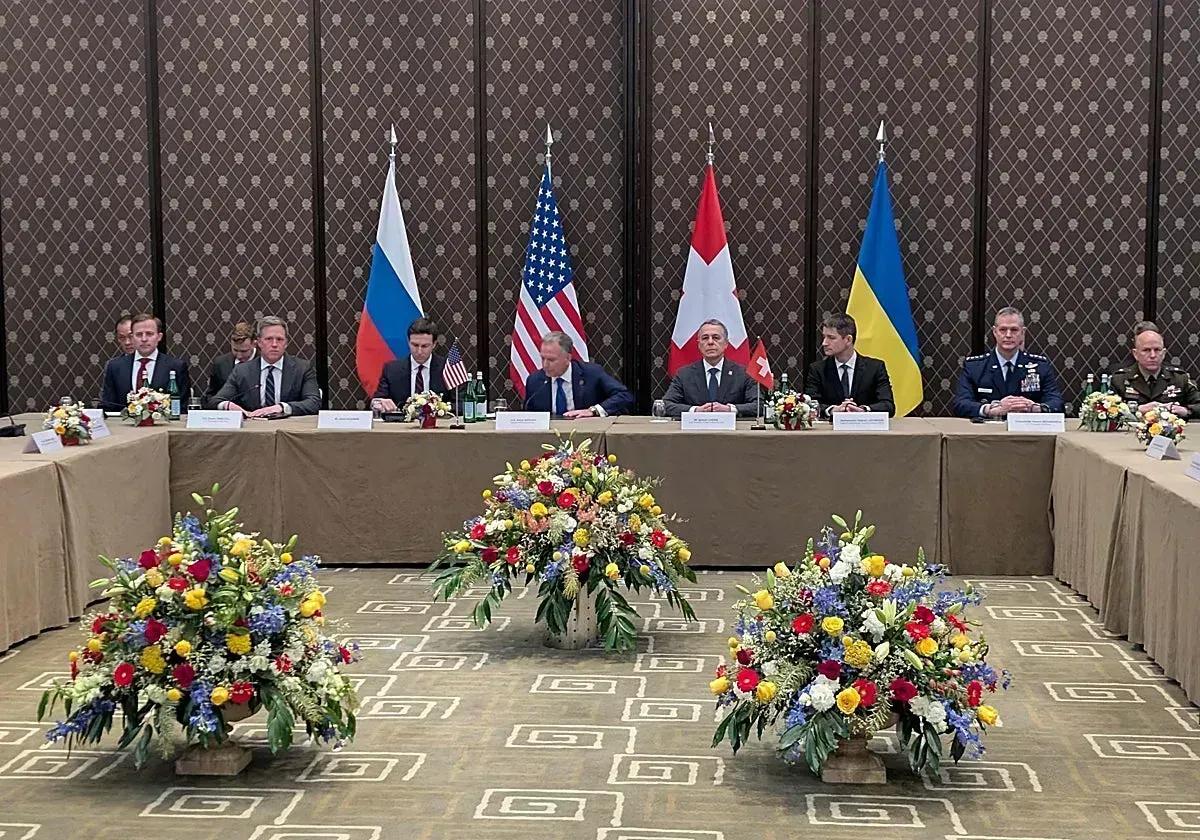
During Tuesday, February 17, and Wednesday, February 18, a series of meetings were held in the city of Geneva between Russian and Ukrainian delegations, with the backing of the United States. These conversations aimed to explore common ground regarding the future of the conflict, although the most critical topics, such as territorial and sovereignty issues, and control of the occupied regions, remain unresolved.
Prelude to high conflict
Despite the expectations held for this meeting and the potential resolutions anticipated toward its conclusion, they were overshadowed by the continuous and intense attacks carried out by the Russian army on Ukrainian territory. Just hours before the delegations sat down to negotiate, Russian forces launched a massive attack on Ukraine's energy infrastructure, impacting the power grid and affecting the heating system in several areas of the country in the midst of winter.
Ukrainian sources describe these attacks as a "deliberate strategy" to weaken the country's capacity for resistance and increase the cost of maintaining the conflict. However, Ukraine continues to conduct counter-offensives through special operations with strategic drones within Russian territory, aiming to damage the military complex, as well as replicating the Russian tactic of undermining energy infrastructure.
Diverse agenda
The agenda for the Geneva summit did not only include addressing territorial issues, but also sought to achieve an energy truce, in addition to a supervised ceasefire and guarantees for a potential final ceasefire.
On Ukraine's side, the government led by Volodomir Zelensky first demands a de-escalation of attacks and compliance with commitments made by both parties; while the Russian delegation has stated it is willing to discuss a "broader range of topics," although emphasizing that this is conditioned upon a series of strict conditions, among which are the return of previously annexed territories and limitations on Ukrainian security policy; conditions that have been rejected multiple times from Kiev.
Despite the limitations of the outcomes from previous meetings, the United States maintains its role as the principal mediator and continues to pressure for a definitive agreement before mid-year. The ongoing intense fighting highlights the enormous difficulty of achieving diplomatic reconciliation, despite attempts from Washington to end a conflict that not only affects Russia and Ukraine but has put all of Europe on alert and led it to carry out unprecedented rearmament, which will only increase in the coming years. The recent statements by German Chancellor Friedrich Merz, in which he declared before the 63rd Munich Security Conference that he seeks to turn the German army into "the most powerful army in Europe," are not coincidental.
We will see what the true results of this new summit are, beyond the statements once it concludes, and whether Washington can get closer to the objective of ensuring that the conflict does not extend beyond mid-2026. Or if, should Russia not yield to its conditions for achieving an agreement, what steps will be taken by both Ukraine and the United States and Europe, since while the administration of Donald Trump has suggested more than once that Ukraine must at some point concede certain issues; the European Commission, through constant statements from its president, Ursula Von der Leyen, has maintained a clear stance in support of Kiev.

Comments