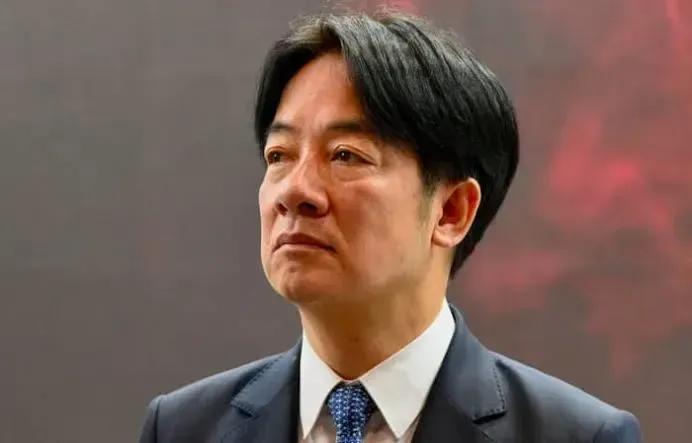
The Taiwanese political landscape is going through one of its most serious institutional crises since democratization. President William Lai Ching-te is facing an impeachment process initiated by the legislative opposition, amidst accusations of constitutional violations and polarization that threatens to paralyze the government amid geopolitical tensions.
The Accusations: Between the Political and the Fiscal
The impeachment procedure, initiated on January 14, 2026, by the Kuomintang (KMT) and the Taiwan People's Party (TPP), is based on four main accusations that the opposition considers blatant constitutional violations.
The central allegation focuses on statements made by Lai during his National Day speech on October 10, 2024, when he claimed that "the Republic of China and the People's Republic of China are not subordinated to each other." For the KMT, this formulation contradicts Article 4 of the Constitution regarding national territory and equates to a covert declaration of independence that violates the delicate balance in the Taiwan Strait.
The opposition also points out that Lai allegedly improperly exercised executive power by failing to consult these statements with his cabinet beforehand, violating Article 58 of the Constitution regarding ministerial responsibility. They also accuse him of acting beyond his powers by making foreign policy claims without the backing of the Executive Yuan.
A third point highlights the alleged abuse of power by refusing to personally attend legislative hearings. For the KMT and TPP, this absence constitutes contempt for parliamentary authority and a violation of the principle of democratic accountability.
Finally, the opposition criticizes fiscal management, noting that public debt reached 6.01 trillion Taiwanese dollars (185 billion US dollars), which is 25.4% of GDP, allegedly violating the limits set by the Public Debt Law. The increase in defense spending proposed by Lai has also been criticized.
The Institutional Pulse: Total Confrontation
The motion was approved in its first reading on January 14 with 56 votes in favor and 51 against, amid high-voltage political scenes with DPP legislators attempting to physically block the process.

In happier times, at the start of his term, alongside his predecessor in the presidency, Tsai Ing-Wen.
Lai has taken a stance of absolute confrontation: he refused to appear at the hearings on January 17, arguing that the summons has no legal basis and that the impeachment "has no constitutional or factual grounds." In his statement, he was categorical: "I will not attend because doing so would mean legitimizing an unconstitutional process. The Legislative Yuan has no authority to summon the president under these circumstances."
Regarding public debt, Lai presented a technical defense: he explained that the 6.01 trillion corresponds to "gross debt," but the correct calculation must consider "net debt," which, after deducting 606.9 billion from the amortization fund, reduces to 5.4 trillion (22.9% of GDP), remaining below the legal limit of 50%.
The Democratic Progressive Party (DPP) described the process as a "legislative coup" and "unprecedented political violence." Vice President Hsiao Bi-khim stated that it constitutes "an assault on Taiwanese democracy" whose real aim is to "overthrow a democratically elected government." The DPP has mobilized massive protests in Taipei over this situation.
The KMT, for its part, denounces Lai's "imperial attitude." Its leader Eric Chu stated: "If a president can ignore parliament and refuse to be accountable, what difference is there with a dictatorship? We defend the rule of law and that no one is above the law."
According to Article 90 of the Constitution, the Legislative Yuan must present the accusation to the Constitutional Court, the only body competent to judge presidential impeachment, with a three-month deadline to resolve.
Attention from Beijing
Although China has not issued direct statements, analysts agree that Beijing is closely monitoring the crisis. A weakened government in Taipei could be seen as an opportunity to increase pressure on the island.
Chinese state media such as the Global Times have published editorials suggesting that the crisis demonstrates the "failure of the Western democratic system" and the "need to return to the fold of the motherland."
Beyond this analysis, the real danger is not so much Lai being ousted—considered remote—but governmental paralysis. An executive consistently questioned will have difficulties making strategic decisions in defense and foreign relations, precisely when Taiwan needs to present a united front against growing external threats.
Three Possible Scenarios
Rejection by the Constitutional Court (most likely)
For the impeachment to prosper, a two-thirds majority of the judges is required. The court only has five magistrates out of the fifteen it should have, due to previous legislative blockades.
If the Court finds that the allegations do not constitute "treason or high treason"—the only constitutional crimes for impeaching a president—it will dismiss the motion. Lai's political statements, although controversial, would hardly constitute crimes of such gravity. Nor would the fiscal discrepancies reach that threshold.
A rejection would politically strengthen Lai, who could present himself as a victim of partisan persecution. However, wear and tear would be inevitable and affect his ability to govern with an opposing parliament.
Acceptance and Removal (highly unlikely)
If the Court were to find the accusations valid, Vice President Hsiao Bi-khim would assume temporarily. But since she is also part of the DPP and has harshly criticized the process, the KMT could question her legitimacy, prolonging instability.
This scenario would have immediate repercussions with China, which could escalate military exercises and economic pressure. Internationally, it would generate uncertainty about the stability of the island, a democratic stronghold in East Asia.
Intermediate or Negotiated Resolution (possible but difficult)
The Court could issue a ruling that does not remove Lai but sets limits on presidential actions, with recommendations on procedures for foreign policy or budget coordination with the legislature.
The Future of Taiwanese Democracy
Beyond the outcome, the crisis exposes deep fractures in the Taiwanese political system. It reveals the fragility of a model where a minority government faces an opposition with a parliamentary majority, but without real capacity to remove it except for grave causes.
The case raises fundamental questions: What are the limits of presidential freedom of expression in Taiwan on sensitive issues like relations with China? How to balance executive independence with accountability? Can an investment agenda in defense and technology be implemented with an opposing legislative majority that questions every item?
The polarization reflects deeper divisions over national identity. While the DPP represents those who identify exclusively as Taiwanese and favor distance from China, the KMT represents sectors with stronger cultural ties to the mainland.
What is at stake transcends Lai: it is about the ability of Taiwanese democracy to process political conflicts without leading to crises exploitable by external actors. A divided and paralyzed Taiwan is exactly what Xi Jinping might hope for to advance his "reunification" objectives.
The real test will not be whether Lai survives politically—something likely—but whether democratic institutions can emerge strengthened, demonstrating that the rule of law and the balance of powers function even amid the most intense polarization.
Marcos Lionel Gonzáles Gava CEO & Co-founder of Reporte Asia
Comments