Author's Note:
This episode is adapted from a brief scene in Chapter 13 of my book, The Reign of Terror, which recounts my years as a DEA agent in Monterrey during one of the city’s most violent periods. Here, I have expanded it in a more reflective and personal way to share the deep meaning that moment had.
Monterrey was slowly waking up that morning, as if it were reluctant to open its eyes to another day of fear. A pale November mist clung to the streets, softening the edges of the buildings and blurring the jagged outline of the Cerro de la Silla. The world felt dim, not in silence, but in a whisper, like a city sounds when its people have learned to walk cautiously through their own neighborhoods.
My partner and I walked through that fog in the gray hangover of a long and frustrating week. The hangover didn't help, but it wasn't the beer that weighed us down. It was failure, that silent and invisible burden that settles on your shoulders after a week chasing a ghost you can't afford to lose.
We moved toward the Consulate like sleepwalkers, two silhouettes in a city trying to remember who it had been.
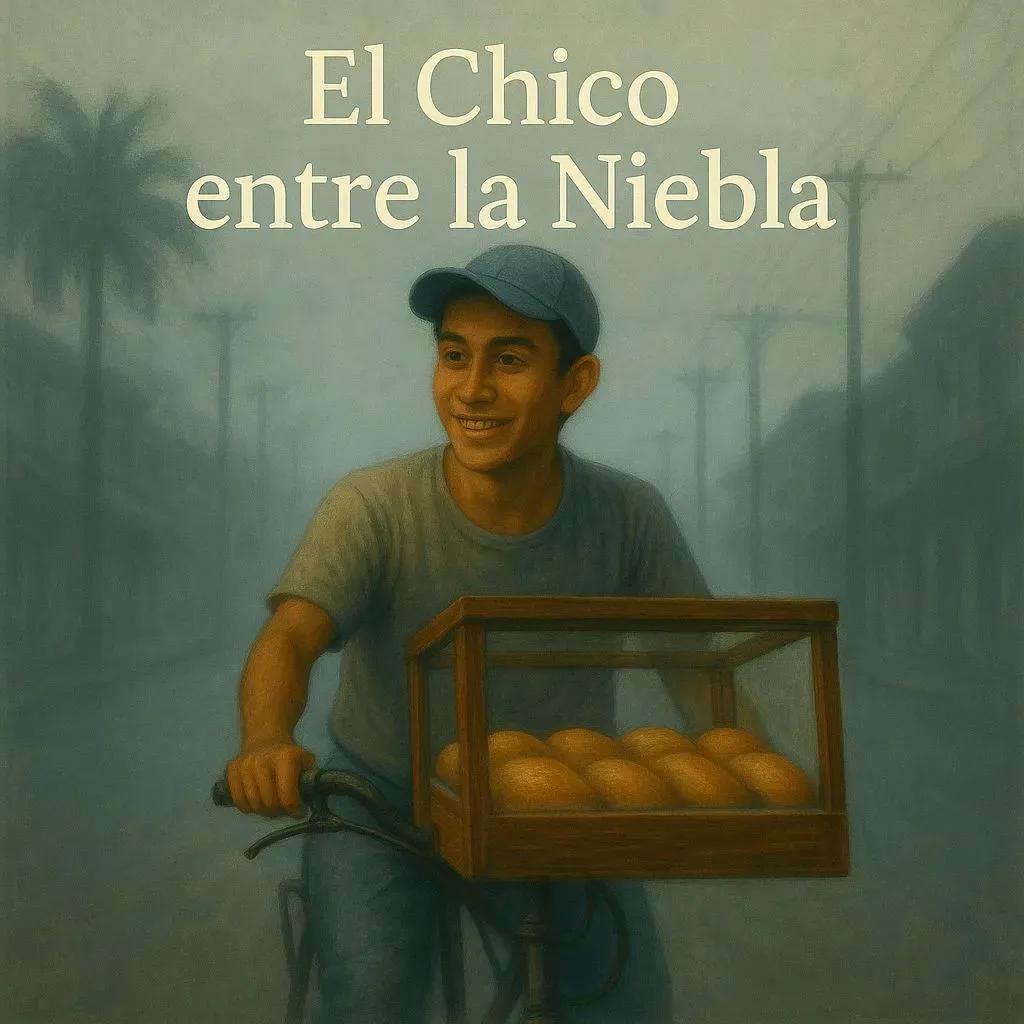
Then, from the mist, came the voice of a young man. “Good morning, bosses. Fresh out of the oven. Try them.” He emerged from the fog like a small defiant miracle: a thin boy on a battered bicycle with an improvised pastry display. Sugar-dusted empanadas and fruit-filled pastries were lined up like small treasures, their warmth fogging the glass. He couldn’t have been more than twenty years old, yet he moved with the bright bearing of a boy who still believed the world could lean towards good through honest work.
There was nothing extraordinary about him, except everything.
He greeted us with a smile too wide for the weather, a smile that belonged to gentler times, to kinder cities. A smile that should have been in a square on a Sunday morning, not on the edge of a war zone disguised as a metropolis.
We bought a couple of empanadas. The crust was warm in my hand, the sugary coating soft under my thumb. He thanked us with the enthusiasm of someone who had just made their first sale of the day, and perhaps that was the case.
Then he pedaled into the fog, whistling a melody completely out of place with the weight of the world around him.
And something inside me changed.
I watched him disappear, the wheels of his bicycle tracing thin lines on the damp pavement. The fog began to swallow him up little by little: first his cart, then his shoulders, then the distant echo of his whistle. And as he vanished, I felt a pressure in my chest, an unexpected sensation. It was duty, fierce and sudden, born not of obligation nor of anger, but of clarity.
That young man was everything the city still had to lose.
And men like those relentless bosses of the square, who feed off fear and build empires on the broken routines of ordinary people, would not hesitate to snatch away his life. Not out of necessity. Not even out of evil. But out of pure indifference. Because in their world, innocence is disposable.
Standing there, with a warm empanada in hand and the cold fog on my face, something settled firmly within me: if we did not stop men like them, boys like him would never have a chance. Hope would never have a chance.
The mission sharpened in my chest. He was the reason. People like him always were.
Every hitman we chased, every operation, every sleepless night, was for the people who rise before dawn to work, care for their families, and keep alive a wounded city in the simplest and most beautiful ways.
Some memories arise within us like a prayer — without words, but powerful enough to hold the soul.
That morning, the image of the vendor fading into the fog left that mark on me.
I returned to the Consulate feeling that something inside me had been, silently, put back in its place.
There are people who unknowingly push a city forward — the early risers, the hopeful, those who pedal pastries through the fog. That young man reminded me that protecting Monterrey was not about arrests or headlines. It was about preserving those small and fragile moments of normal life that evil tries so insistently to erase.
Leo Silva is a former special agent in charge of the DEA (Monterrey Office) and author of Reign of Terror and El Reinado de Terror. With decades of experience on the front lines of the fight against transnational cartels, Silva offers readers an intimate look into some of the most dangerous operations directed against high-level leaders and organizations.
Since the publication of his memoirs, Silva has become a recognized voice in the media and the conference circuit. His story and insights have been featured in interviews with Pulitzer Prize-winning journalist Jorge Ramos on Univision (This is How I See Things), three-time Emmy-winning journalist Paco Cobos (The Interview), and Ana Paulina (Voices with Ana Paulina), where his participation generated millions of views. He has also been featured on prominent platforms such as the podcast Cops and Writers with Patrick J. O'Donnell, Game of Crimes with Steve Murphy, and Called to Serve with Roberto Hernández.
Through his books, speeches, and media appearances, Silva continues to illuminate the realities of organized crime, the work of law enforcement, and the human cost of the war on drugs, while sharing lessons about resilience, leadership, and truth.

Comments