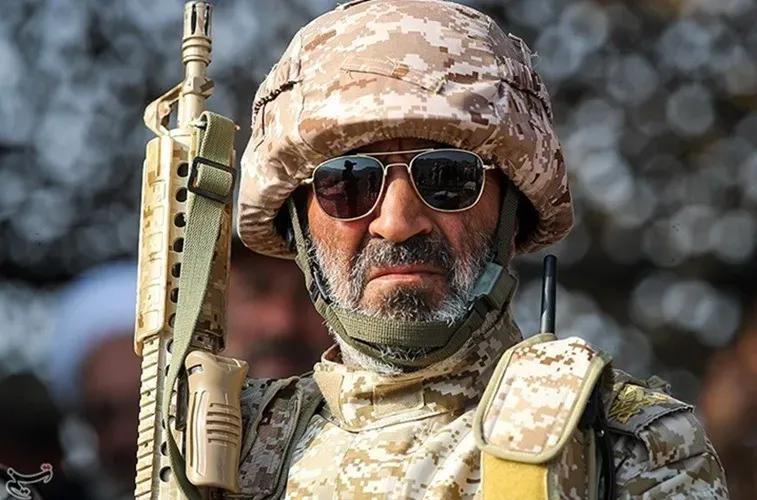
The Iranian clergy has been obliterated, the Supreme Leader, the religious figures, and their theologians have been mostly eliminated. These facts have led the Islamic Revolutionary Guard Corps (IRGC) to transcend its military function to become the core of political power, serving as an organized transnational criminal structure now with absolute state entity. This entity does not answer to the Majlis (Parliament) or the Iranian Executive; it reported directly to the religious leadership -which no longer exists-, operating under a regime of absolute financial opacity and alongside the Basij Brigades, completing the repressive tools of the state terrorism of Iran. Both organizations, along with the Iranian police, have tortured and killed -between January 5 and 11- about 30 to 40 thousand citizens who attempted to mobilize against the regime, although given the number of kidnappings and forced disappearances of a large number of citizens, there is no definitive number of victims.
The financing of these crimes was carried out through conglomerates like Khatam al-Anbiya, in Farsi: “seal of the prophets or Quranic title referring to the prophet,” and the funds are managed with total discretion by the IRGC.
However, in the current military context of Iran, it mainly refers to two key entities linked to the armed forces; the IRGC controls strategic sectors (hydrocarbons, construction, telecommunications). It is estimated that the revenues derived from these activities, which represent billions of dollars annually, are diverted, as stated, in a discretionary manner to finance the internal intelligence apparatus and shock militias, such as the Basij, responsible for control and repression in neighborhoods and universities.
The Basij force and its territorial control, with an estimated 1 million men, act as the “eye of the regime” in every social stratum. Their tactics of 2025 and 2026 have evolved towards the use of surveillance drones in residential areas and the infiltration of provocateur agents in unions and student movements to dismantle any attempt of civil resistance organization.
The IRGC has invested a substantial part of its budget in security for the development of the “National Internet” (Intranet). This allows the state to execute selective network blackouts during protest periods, facilitating massacres in the shadows without the risk of graphic evidence leaking in real-time to the international community. At the same time, it has developed an expanded structure of prisons and brutal clandestine torture centers, according to reports from human rights groups and Iranians who have had to flee the country and go into exile to save their lives. The geography of repression in Iran is articulated through a network of formal prisons and clandestine interrogation centers known as “Safe Cells.”
Institutions like Evin and Rajai Shahr have been documented by former detainees and special rapporteurs of the United Nations as centers of systematic torture. It has also been verified that “white torture” (total sensory isolation), sleep deprivation for periods of more than 72 hours, and threats of imminent execution are used to force the signing of confessions already written by the intelligence interrogators and the VEVAK (regime's intelligence ministry).
A recurring tactic in 2024 and 2025 has been the Medical Denial as Extrajudicial Execution. The denial of medical treatment to kidnapped and political detainees with chronic illnesses or torture wounds has been perfected in 2026. This practice constitutes a form of “slow” extrajudicial execution, designed to eliminate high-profile figures without the political cost of a formal death sentence.
The IRGC is also responsible for crimes against humanity in peripheral areas. While the repression in Tehran is the most visible, the provinces of Kurdistan and Balochistan have been subjected to virulent violence and brutally militarized colonial character. It is in those peripheral regions where the militarization of justice is complete and the regime applies exceptional laws that allow indefinite detention without charges. During the protests in January 2026 in Zahedan, the European Union documented the testimonies of two Iranians who managed to escape and reach Germany; they confirmed the indiscriminate use of military ammunition against unarmed crowds, resulting in massacres by the IRGC and Basij with staggering victim figures that the state refuses to officially acknowledge.
Transnational impunity and state terrorism of the regime -now in charge of the IRGC- do not limit its criminal actions to its geographical borders. The use of state terrorism as a tool of foreign policy is a constant technique in its operational manual, and for this, it relies on the Quds Brigades and its criminal networks and allied cells in Africa, Europe, and Latin America.
Between 2022 and 2026, the persecution of dissidents abroad intensified; Iranian intelligence services tripled attempts to kidnap and assassinate journalists and activists on European and Latin American soil. The use of hitmen linked to international organized crime allows the regime to maintain plausible deniability regarding these acts of transnational aggression.
Another criminal modality is “the taking of hostages” (the so-called Hostage Diplomacy), which is the arbitrary detention of foreign citizens or those with dual nationality on charges of espionage without evidence, is a state policy of Iran. These individuals are used as bargaining chips for the release of Iranian agents convicted abroad or for the unlocking of financial assets frozen by international sanctions.
Given the scenario that the IRGC presents to the regime. If the United States and Israel, beyond their military and political objectives that may differ in this war, if Washington and Jerusalem allow the Iranian regime to continue in charge of the Islamic Revolution project and do not heed the words of Rafael Grossi, director of the IAEA, who recently stated: “although it does not have them today, Iran does have the capacity to build 10 nuclear bombs with just over the enriched uranium until today and still not in the hands of the US or Israel.”
In conclusion, beyond the initial plans of the war, its political and economic objectives, should Americans and Israelis not finish what they started and end this war in the only way they should –with the ousting of the regime and the liberation of the Iranian people from Islamic yoke– in very little time (2 years perhaps), Israel will regret having allowed the regime to remain in power. As for the United States, as former Secretary John Bolton has rightly pointed out days ago, “reality and logic show that the only responsible option to eliminate the threat from Tehran is to prevent the regime from escaping its destruction and managing to rebuild itself.” If such a thing happens, it would be a huge failure for the United States.
By George Chaya (Washington DC).

Professor George Chaya is a Senior Advisor on Middle Eastern affairs in National Security and expert in OSINT (Open Source Intelligence) based in Washington DC, USA.

Comments