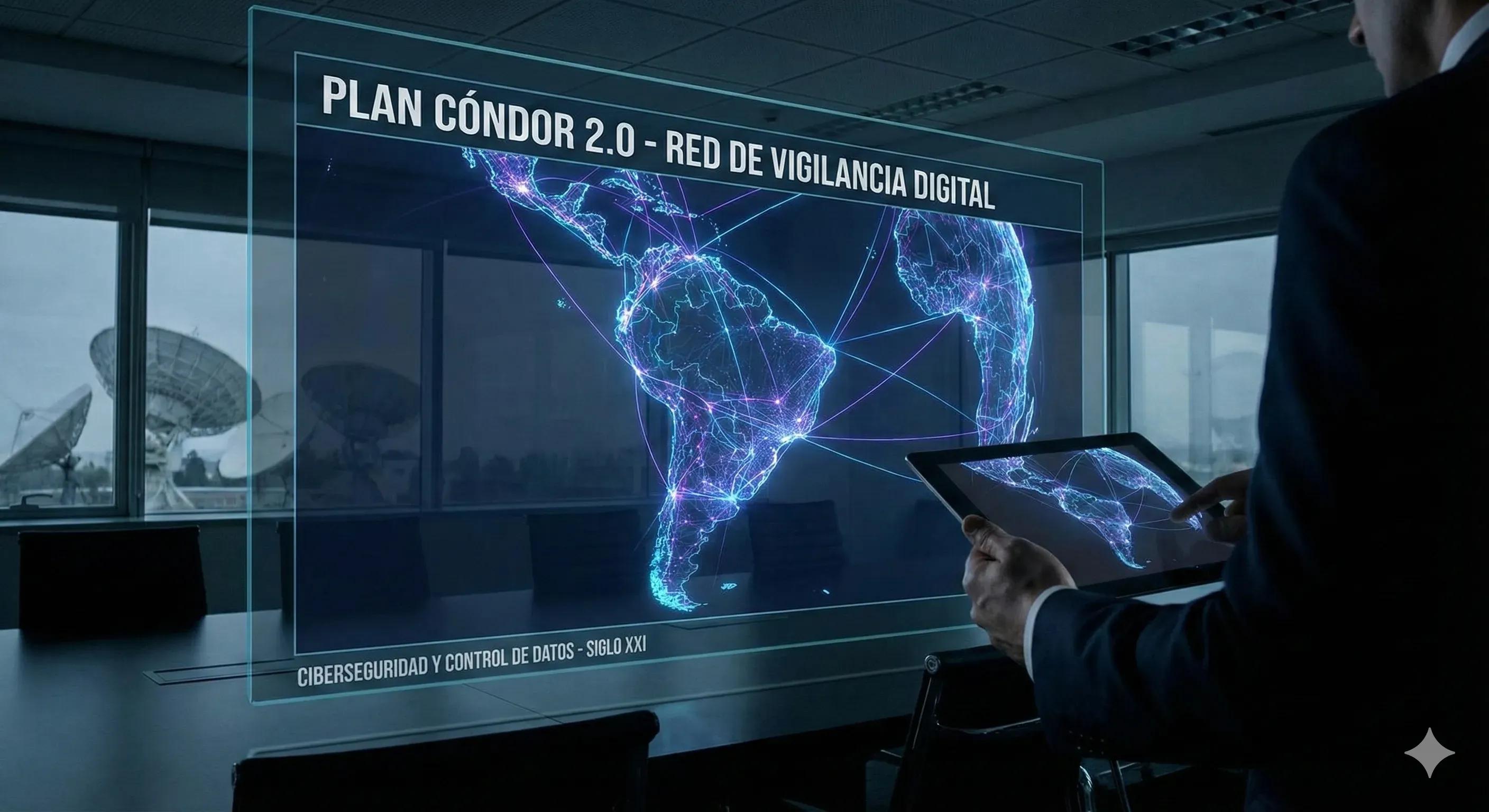
In December 2025, the Argentine Executive Power enacted the Decree of Necessity and Urgency (DNU) 941/2025, profoundly reforming the national intelligence system. In parallel, it advanced a functional redesign of the Interior Security Law, expanding the intervention scope of the Armed Forces in internal matters. Both regulatory movements, although technically independent, converge in a concerning direction: the establishment of a preventive surveillance state, where political and social dissent can be treated as a strategic threat.
A reform without Congress, without debate, without limits
The DNU 941/2025 creates, among other things, a new Federal Cyber Intelligence Agency with broad powers to collect personal information, intercept digital communications, and operate in civil environments without prior judicial order. In addition, it empowers intelligence agents to detain individuals in supposed cases of “flagrancy,” granting them police authority that Argentine democracy has historically prohibited its secret services from having.
This breaks a basic constitutional principle: the separation between strategic intelligence and repressive function. Until now, intelligence had to inform the political or judicial power; now it can act directly on people, detain them, and collect evidence, in many cases, without external control. And most alarmingly: all of this was implemented by decree, without parliamentary debate, public hearings, or consensus.
The new “internal enemy”: dissent, protest, critique
The changes to the Interior Security Law accompany this logic. In the name of “national security,” doors are opened for the Armed Forces to assist security forces in internal conflicts, especially when it comes to protecting “critical infrastructure” or preventing actions that threaten “institutional stability.” This legal ambiguity, far from being accidental, is functional: it allows a mining strike, a social protest, or a student sit-in to be categorized as strategic threats, enabling militarized responses.
In this new paradigm, the enemy is no longer an external actor, not even a common criminal. It is the citizen who protests, who critiques, who organizes. And state surveillance is presented not as control of crimes already committed, but as prevention of “potentially dangerous” behaviors. The concept of “pre-crime” –popularized in science fiction– is legitimized in cyber intelligence functions: the State analyzes, profiles, infers intentions, and acts before even a fact exists.
An imported model with geopolitical branding
This repressive turn does not happen in a vacuum. It aligns with the new defense doctrine of the United States Southern Command, which defines strategic resources such as lithium, oil, and fresh water from the Southern Cone as priorities for its hemispheric security and mistakenly considers that dictatorial right-wing regimes are the way to eliminate the left in Latin America, when that always generates a rebound effect. In this framework, any factor of social or political instability that threatens that flow of resources is treated as a regional risk.
The consequence is evident: it incentivizes national States to monitor, neutralize, or criminalize their own citizens if they question the country’s economic, environmental, or geopolitical direction. Argentina, instead of building an autonomous agenda for democratic security, seems to meekly accept an external script that redefines its own social movements as “foci of interference or destabilization.”
Democracy needs limits, not exceptions
The official argument for these reforms is predictable: “security demands modernization,” “the world has changed,” “the threat is no longer conventional.” No one disputes the need to adapt legal frameworks to new forms of crime, including digital ones. But there is a profound difference between strengthening state intelligence with judicial controls and granting intelligence services police powers without accountability.
Countries that learned from their dictatorships –and Argentina should be one of them– know that unlimited security becomes insecurity for citizens. When the State can spy without an order, detain without trial, and manipulate evidence without control, the problem is no longer crime: it is power.
A call for democratic responsibility
Congress, the Judiciary, universities, the media, and civil society must react. We cannot normalize legislating sensitive matters by decree, nor allow the reinstallation of covert internal intelligence logics. Much less when the price to pay could be the systematic silencing of all legitimate opposition.
In times when fear is used as an excuse to cut freedoms, defending rights is not an ideological luxury, but an institutional urgency. It is not about conspiracies or extremist rhetoric. It is about understanding that what is today permitted against the “other” –the activist, the critic, the marginalized– may tomorrow become the general rule for all. The rule of law is defended every day, or it is lost in silence.

Comments