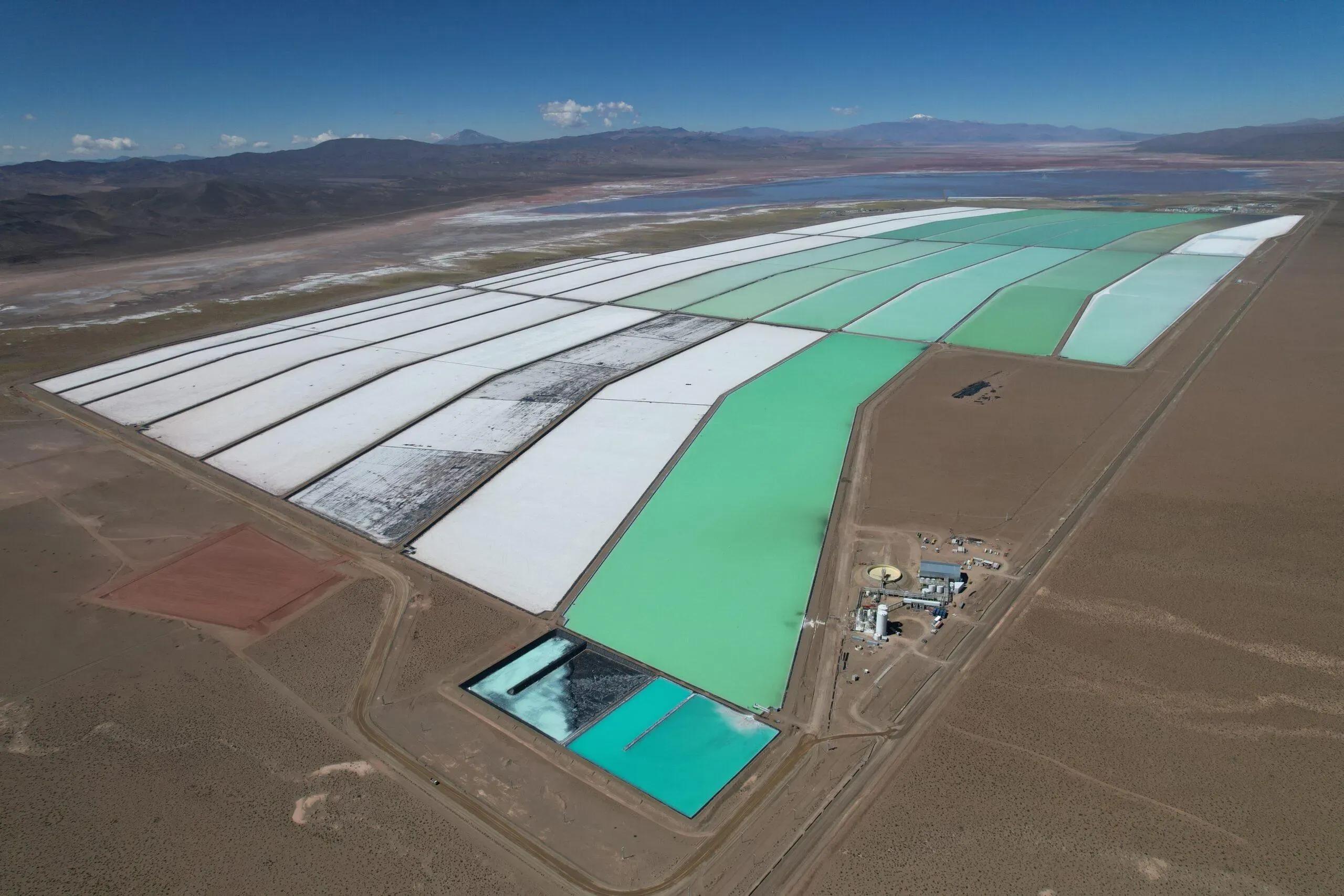
For the past few years, access to natural resources has shifted from being linked to economic growth and industrial development to having strategic value for countries. Technological and energy transformations have modified the strategic value of certain raw materials, turning lithium, copper, and rare earths into assets connected to national security and competition among major powers, ceasing to be solely economic resources.
The growing demand for these resources is driving a new dispute over control of supply chains. The United States and China are at the center of this competition, while various countries seek to secure access to minerals necessary for the production of elements that have become vital in the 21st century, such as the manufacture of batteries, semiconductors, electronic systems, energy infrastructure, and military equipment.
A dispute that goes beyond mining
The importance of this issue was again highlighted in early August when the Trump administration announced investments of around US$ 3 billion intended for projects related to critical materials and batteries.
These measures were presented as part of a strategy to strengthen American supply chains, reducing dependence on foreign suppliers, particularly from China. This move by the United States is not an isolated event but rather part of a broader strategy aimed at recovering extraction, processing, and production capabilities.
The concept of "critical materials" refers to resources considered essential for strategic sectors, and whose supply disruption could lead to economic or even security consequences. Their relevance has exponentially increased with the expansion of renewable energies, electric vehicles, and their use in industries related to defense, such as the manufacturing of electronic systems, radars, sensors, missiles, and military vehicles.
While copper is fundamental for electrical networks and infrastructure, lithium occupies a central role in the batteries used for energy storage and electric mobility, and rare earths are used in various components of defense systems, international competition is increasingly focusing on supply chains. The question is no longer who holds the largest reserves, but who has the capacity to extract, process, refine, and transform those minerals.
In this regard, China has a significant advantage, as it maintains a dominant position in various stages of processing critical and rare earth minerals, a situation that has begun to be viewed by the United States and its allies as a strategic vulnerability in recent years. For this reason, Washington is now trying to build alternative supply chains and reduce that dependency, transforming this struggle into competition for control of industrial and technological sectors that will be crucial for the economy and international security in the coming decades.
The opportunity and the risk
In this context, Argentina emerges as one of the countries with the greatest potential to become a supplier of critical minerals. The country possesses significant lithium resources and a growing portfolio of copper projects.
Argentina's incorporation into Pax Silica, an initiative launched by the United States aimed at strengthening supply chains related to critical minerals, constitutes a signal of the growing strategic importance that the bilateral relationship with the North American country is beginning to have.
This decision by Argentina takes on particular relevance in this context of growing competition between Washington and Beijing, and this dispute already has concrete expressions in Argentina. The tension between the two powers became evident in recent days through questions from U.S. Ambassador Peter Lamelas about Huawei's involvement in infrastructure projects related to Vaca Muerta. Lamelas stated that the use of Chinese technology could compromise data security and discourage U.S. investments, while China rejected these accusations and questioned U.S. pressures.
The growth of Argentine mining can generate investments, exports, jobs, and increased tax revenues. But the strategic dimension of critical minerals opens an additional possibility: to integrate into the new global value chains being built around energy transition, technology, and defense.
The real opportunity lies in advancing towards higher levels of processing, developing domestic suppliers, improving infrastructure, and generating industrial capacities related to mining activity.
In a context where major powers are seeking reliable and politically aligned suppliers, natural resources can become an international bargaining tool while also becoming a pressure factor.
Argentina has an advantage that few countries can offer: it possesses strategic resources at a time when major powers are competing to secure them. The real challenge lies in transforming that geological advantage into a geopolitical advantage, as nowadays having the resource does not necessarily mean having power over it.

Comments