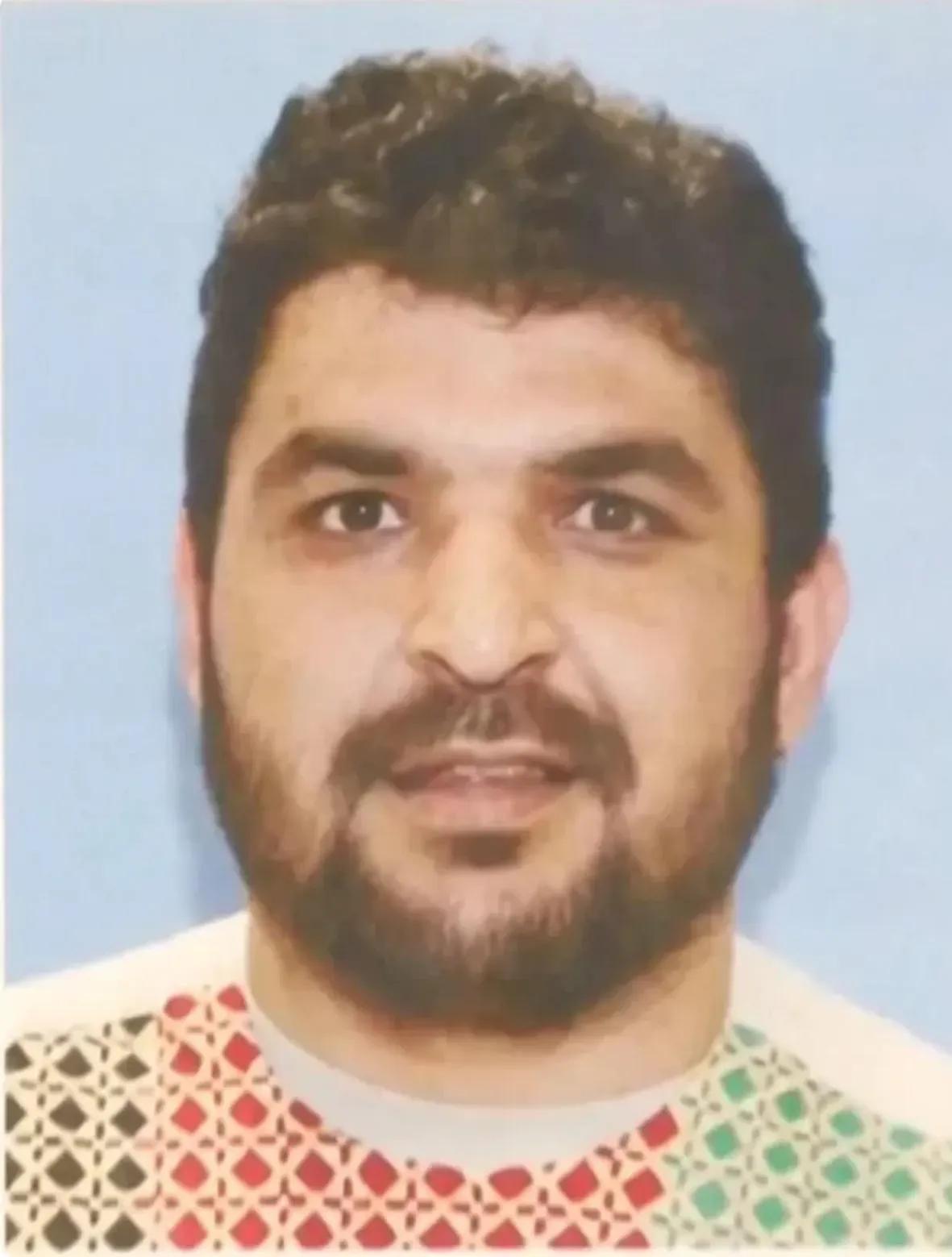
Rahmanullah Lakanwal is an Afghan man, originally from Khost province, who integrated special security units linked to the former Republic of Afghanistan for several years. He was part of two units directly supported by the CIA, although they formally appeared under the National Directorate of Security (NDS). Within that framework, his main assignment was Unit 01 (NDS‑01), a military-intelligence component with jurisdiction over the central region of the country, which included the provinces of Kabul, Parwan, Wardak, and Logar.
Training and specialized instruction
Lakanwal's training process with the agency dates back to 2007. That year he was sent to Eagle Base (also known as Eagle Camp), a CIA complex located near the Deh Sabz district, Kabul province, just a few kilometers from Hamid Karzai International Airport. Eagle Camp was built on the grounds of a former brick factory and over time became one of the most important counter-terrorism training centers for the CIA in the early 2000s. Various units backed by the agency within the NDS received training at these facilities: NDS‑01, NDS‑02, NDS‑03, NDS‑04, the Khost Protection Force (NDS‑KPF), and the Kandahar/Kabul Special Force (NDS‑KSF). The complex also housed a large ammunition depot and multiple infrastructures reserved for sensitive operations. With the withdrawal of U.S. forces in 2021, Eagle Camp was one of the last points to be evacuated and demolished, and subsequently came under the control of the Badri 313 suicide brigade, linked to the Haqqani network.
Operational assignment and combat experience
After completing his training at Eagle Base, Lakanwal was transferred to the CIA support team at the base in Kandahar. This facility served as the headquarters for the Kandahar Strike Force, a shock force used for counterinsurgency and counter-terrorism operations backed by the CIA. From there, missions were coordinated in the provinces of Kandahar, Uruzgan, and Zabul against the Taliban, al-Qaeda, and later, ISIS cells. In this context, Lakanwal participated in counter-terrorism operations deployed in Kandahar, where he worked alongside U.S. forces on the ground.
Family ties to ISKP and ISIS's reaction to the attack in DC
After the attack on National Guard personnel in Washington, DC, propaganda channels associated with ISIS were the first to publicly praise the action. One of the key factors was Lakanwal's family history of radicalization. His half-brother (son of his father's second wife) had been a recruiter for the Islamic State of Khorasan Province (ISKP). This half-brother was known under the alias Muawiyah Khurasani and also as Hayatullah. Before formally joining ISKP, he had worked with Tehrik‑e‑Taliban Pakistan (TTP) in the Orakzai Agency, Pakistan. He was later killed in a targeted operation in July 2022 in the Achin district, Nangarhar province. Within some ISIS circles, it is asserted that his death may have resulted from an action by Pakistan's Counter Terrorism Department (CTD), a claim that has not been independently confirmed.
Situation after the fall of Kabul and exposure to threats
With the fall of Kabul in August 2021, the units that Lakanwal had served in — particularly the Kandahar Protection Force and the Khost Protection Force (KPF) — became high-value targets for the Haqqani network and for ISKP. Both organizations identified former members of the KPF as priority targets, with the aim of:
• Applying pressure or blackmailing former members.
• Recruiting them by leveraging their operational experience and knowledge of procedures and Western personnel.
The interest increased due to the close ties that many of these former fighters had with U.S. personnel, especially former CIA officers stationed in the United States. This relationship heightened their potential value as sources of information, intermediaries, or recruitable assets.
Identity fraud and use of credentials from special units
Meanwhile, the Haqqani network, ISKP, and al-Qaeda recognized the operational potential of impersonating members of the Afghan special units supported by the CIA. In this context, there was a significant volume of fraudulent documentation: it is estimated that at least a couple thousand false documents and identifications were generated that allowed militants and supporters to present themselves as members of the KPF, units 01 and 02, and other special NDS groups. The primary aim of this forgery was to exploit evacuation and resettlement channels to the United States, claiming alleged prior service alongside allied forces to gain priority in the process.
This maneuver enabled certain individuals to infiltrate the evacuation and relocation mechanisms, using fictitious affiliations with these special units as cover. In the specific case of Rahmanullah Lakanwal, however, the available background indicates that both his identification and service history were authentic and correspond effectively to his trajectory in Unit 01 and in structures associated with the Kandahar Protection Force.
William Acosta is the founder and CEO of Equalizer Private Investigations & Security Services Inc. He has coordinated investigations related to international drug trafficking, money laundering, and homicides in the U.S. and other countries such as Germany, Italy, Portugal, Spain, France, England, and literally all across Latin America.
William has been a New York Police Investigator for 10 years, 2 years in the Department of Treasury, and 6 years in the U.S. Army with various international deployments related to communications and intelligence issues.

Comments